
Bocconcini Cheese vs Comté Cheese
Bocconcini Cheese
Comté Cheese
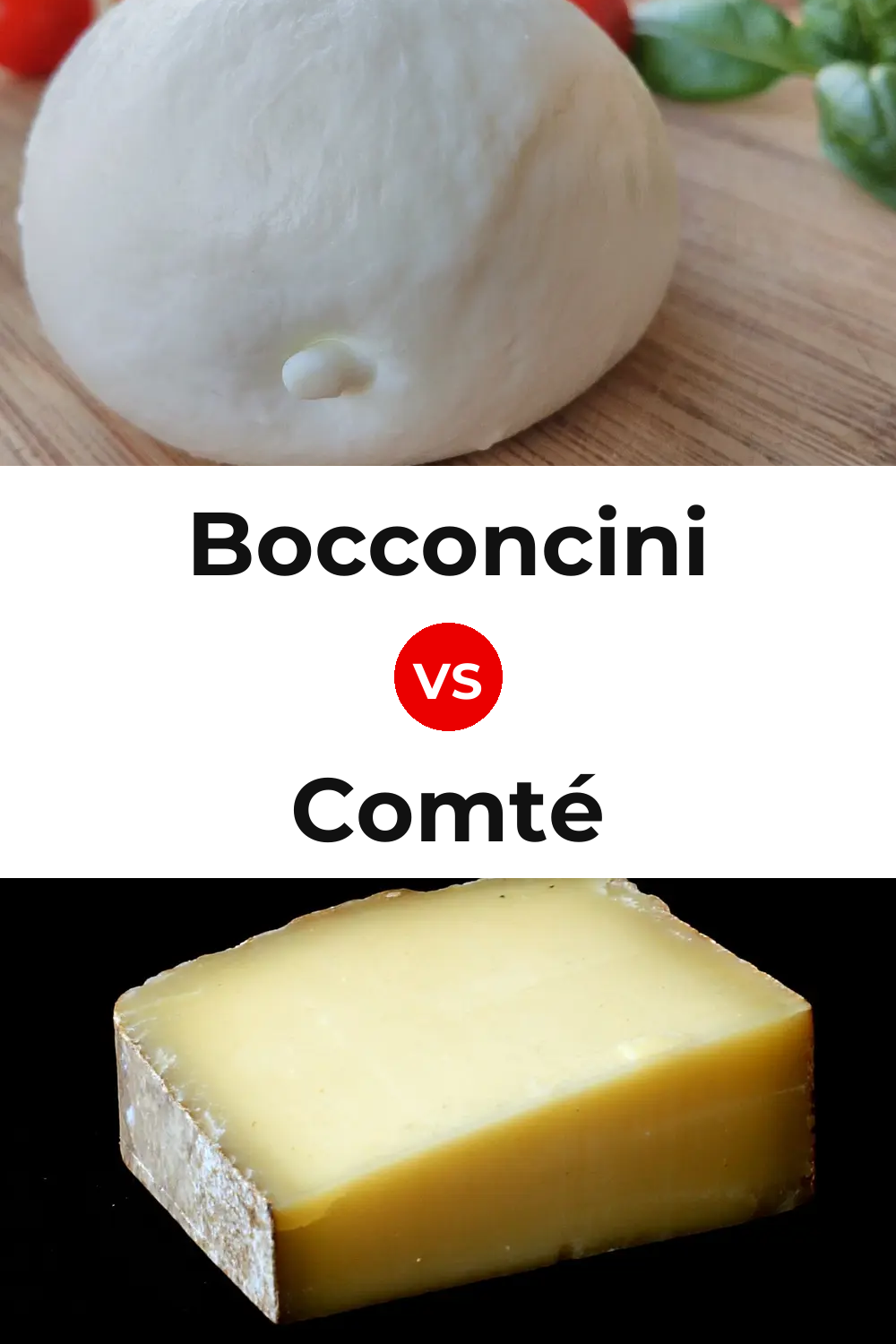
Bocconcini Cheese is a semi-soft, brined cow, goat, or buffalo-milk cheese from Italy, while Comté Cheese is smooth; semi-hard and made from cow milk, originating in France.
Buy Bocconcini Cheese
Buy Comté Cheese
What Is Bocconcini Cheese?
Bocconcini are bite-sized balls of fresh mozzarella from southern Italy, made by the stretched-curd pasta filata method. They are often skewered with cherry tomatoes as an appetiser.
What Is Comté Cheese?
Comté is a hard cheese from eastern France, made daily from raw cow's milk in village dairies called fruitières. It holds PDO status, has the largest production of any French PDO cheese, and tastes mild, nutty, salty and slightly sweet.
What's the Difference Between Bocconcini Cheese and Comté Cheese?
- Origin: Bocconcini Cheese (Italy), Comté Cheese (France)
- Milk type: Bocconcini Cheese (cow's, goat's or water buffalo's milk), Comté Cheese (Cow's Milk)
- Texture: Bocconcini Cheese (semi-soft, brined), Comté Cheese (Smooth; Semi-hard)
- Aging: Bocconcini Cheese (unaged), Comté Cheese (4 months to 3 years)
Side-by-Side Comparison
| Bocconcini Cheese | Comté Cheese | |
|---|---|---|
| Country of Origin | Italy | France |
| Specific Origin | Southern Italy | Massif Du Jura |
| Milk Type | Cow's, goat's or water buffalo's milk | Cow's Milk |
| Milk Treatment | — | Raw |
| Texture | Semi-soft, brined | Smooth; Semi-hard |
| Rind | — | Natural |
| Aging | Unaged | 4 months to 3 years |
| Taste | — | Nutty, creamy, sweet to meaty, roasted |
Taste Comparison: Does Bocconcini Cheese Taste Like Comté Cheese?
Their flavor profiles are distinct. Aging plays into this as well. Bocconcini Cheese at unaged develops a different profile than Comté Cheese at 4 months to 3 years.
Can You Substitute Bocconcini Cheese for Comté Cheese?
Bocconcini Cheese can stand in for Comté Cheese in many dishes, but the switch will shift the overall character of the recipe. Expect semi-soft, brined bite and body where the recipe calls for smooth; semi-hard.
Which Is Better, Bocconcini Cheese or Comté Cheese?
There's no single winner. It depends on your recipe and the profile you want. If you want a semi-soft, brined cheese, go with Bocconcini Cheese. For a smooth; semi-hard profile, Comté Cheese is the better fit.
Which is your favorite?
One click, anonymous. See what others chose.
Frequently Asked Questions
Is Bocconcini Cheese the same as Comté Cheese?
No, they're distinct cheeses. Bocconcini Cheese originates in Italy, while Comté Cheese comes from France. Bocconcini Cheese is made from cow, goat, or buffalo milk; Comté Cheese uses cow. Aging also differs: Bocconcini Cheese is typically aged unaged, Comté Cheese 4 months to 3 years.
Is Bocconcini Cheese similar to Comté Cheese?
Not closely. They use different milk bases and have distinct profiles.
Can I substitute Bocconcini Cheese for Comté Cheese?
You can, but expect a shift in richness and milk character.
Does Bocconcini Cheese taste like Comté Cheese?
They have distinct flavor profiles. The taste row in the table above is the best direct comparison.
What is Bocconcini Cheese made of?
Bocconcini Cheese is made from cow, goat, or buffalo milk, using animal rennet. It's typically aged unaged. It originates in Italy.
What is Comté Cheese made of?
Comté Cheese is made from cow milk (raw). It's typically aged 4 months to 3 years. It originates in France.
Which should I choose, Bocconcini Cheese or Comté Cheese?
It depends on the dish. The texture difference is the biggest practical tell. Bocconcini Cheese is semi-soft, brined, while Comté Cheese is smooth; semi-hard.