Queso de Burgos vs Queso de La Serena
Queso de Burgos
Queso de La Serena
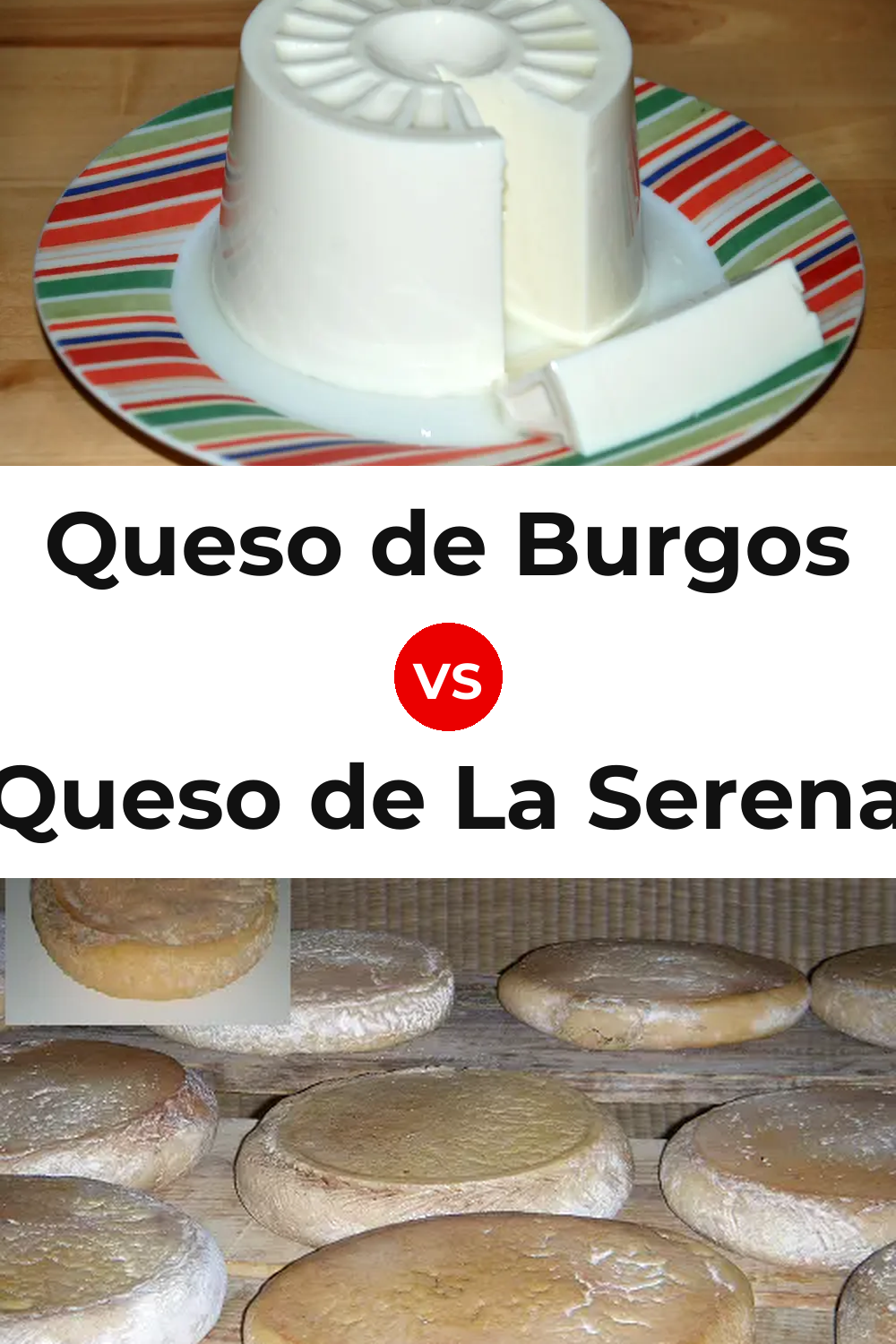
Queso de Burgos is a fresh, slightly grainy or buttery, elastic, slightly fatty cow and sheep-milk cheese from Spain, while Queso de La Serena is soft to semi-hard and made from sheep milk, originating in Spain.
What Is Queso de Burgos?
Queso de Burgos is a fresh cheese from the province of Burgos, Spain. It is made from a blend of whole, fresh, and pasteurized cow’s and sheep’s milk, with different types distinguished by the percentage of sheep’s milk used. The cheese has a cylindrical or cylindrical-conical shape and a moist, white to slightly yellowish appearance. It has no rind and features a soft, slightly grainy or buttery texture with small holes due to incomplete curd setting. The flavor is mild, milky, and slightly sweet, with varying intensities of sheep’s milk taste depending on the type. The cheese is not pressed or matured and retains a fresh milk aroma. The production process follows traditional methods specific to Burgos, emphasizing its historical reputation and unique regional characteristics.
What Is Queso de La Serena?
Queso de la Serena is a soft to semi-hard cheese made from the milk of Merino sheep in the province of Badajoz, Spain. It is a full-fat to extra full-fat cheese with a firm rind and a soft to firm paste. The cheese is wheel-shaped, weighing between 250 grams and 3 kilograms, with a minimum diameter of 8 cm. It is coagulated using a natural vegetable coagulant derived from Cynara cardunculus flowers. The cheese has a fat content of at least 50% in dry matter and a pH between 4.9 and 5.9. The unique characteristics of the cheese are influenced by the high-quality pastures of La Serena, where Merino sheep graze. The cheese may be sold whole or divided into halves or quarters while ensuring the integrity of its quality.
What's the Difference Between Queso de Burgos and Queso de La Serena?
- Milk type: Queso de Burgos (Cow’s and sheep’s milk), Queso de La Serena (Sheep)
- Milk treatment: Queso de Burgos (Pasteurized), Queso de La Serena (Unpasteurized)
- Texture: Queso de Burgos (Fresh, slightly grainy or buttery, elastic, slightly fatty), Queso de La Serena (Soft to semi-hard)
- Rind: Queso de Burgos (None), Queso de La Serena (Waxy, yellow to ochre)
- Aging: Queso de Burgos (Fresh, not matured), Queso de La Serena (60+ days)
- Taste: Queso de Burgos (Mild, milky, and slightly sweet), Queso de La Serena (Slightly bitter, pleasant)
Side-by-Side Comparison
| Queso de Burgos | Queso de La Serena | |
|---|---|---|
| Country of Origin | Spain | Spain |
| Specific Origin | Province Of Burgos | Province Of Badajoz (21 Municipalities In La Serena) |
| Milk Type | Cow’s and sheep’s milk | Sheep |
| Milk Treatment | Pasteurized | Unpasteurized |
| Texture | Fresh, slightly grainy or buttery, elastic, slightly fatty | Soft to semi-hard |
| Rind | None | Waxy, yellow to ochre |
| Aging | Fresh, not matured | 60+ days |
| Taste | Mild, milky, and slightly sweet | Slightly bitter, pleasant |
Taste Comparison: Does Queso de Burgos Taste Like Queso de La Serena?
Queso de Burgos reads as mild, milky, and slightly sweet, while Queso de La Serena brings slightly bitter, pleasant character. On the nose, Queso de Burgos offers smells of fresh milk; varies in intensity based on sheep’s milk content, contrasted with Queso de La Serena's spicy notes. More specifically, Queso de Burgos shows slightly salty or not salty, no acidity or bitterness; varying intensity of sheep’s milk aftertaste depending on type, while Queso de La Serena leans toward ancestral cheese with a runny texture when fully ripened, achieved through coagulation with vegetable (cynara cardunculus) rennet at moderate temperatures. features spicy notes, a lingering aftertaste, and a creamy consistency that becomes quite liquid ("atortado" phenomenon) after twenty days.. Aging plays into this as well. Queso de Burgos at fresh, not matured develops a different profile than Queso de La Serena at 60+ days.
Can You Substitute Queso de Burgos for Queso de La Serena?
Queso de Burgos can stand in for Queso de La Serena in many dishes, but the switch will shift the overall character of the recipe. Expect fresh, slightly grainy or buttery, elastic, slightly fatty bite and body where the recipe calls for soft to semi-hard. Flavor-wise, Queso de Burgos reads as mild, milky, and slightly sweet while Queso de La Serena brings slightly bitter, pleasant notes.
Which Is Better, Queso de Burgos or Queso de La Serena?
There's no single winner. It depends on your recipe and the profile you want. If you want a fresh, slightly grainy or buttery, elastic, slightly fatty cheese, go with Queso de Burgos. For a soft to semi-hard profile, Queso de La Serena is the better fit. Flavor-wise, Queso de Burgos suits recipes that want mild, milky, and slightly sweet notes, while Queso de La Serena fits dishes calling for slightly bitter, pleasant.
Which is your favorite?
One click, anonymous. See what others chose.
Frequently Asked Questions
Is Queso de Burgos the same as Queso de La Serena?
No, they're distinct cheeses. Queso de Burgos is made from cow and sheep milk; Queso de La Serena uses sheep. Aging also differs: Queso de Burgos is typically aged fresh, not matured, Queso de La Serena 60+ days.
Is Queso de Burgos similar to Queso de La Serena?
Not closely. They use different milk bases and have distinct profiles.
Can I substitute Queso de Burgos for Queso de La Serena?
You can, but expect a shift in richness and milk character.
Does Queso de Burgos taste like Queso de La Serena?
Queso de Burgos reads as mild, milky, and slightly sweet, while Queso de La Serena is slightly bitter, pleasant. Aromas also diverge. Queso de Burgos leans smells of fresh milk; varies in intensity based on sheep’s milk content, and Queso de La Serena is closer to spicy notes.
What is Queso de Burgos made of?
Queso de Burgos is made from cow and sheep milk (pasteurized). It's typically aged fresh, not matured. It originates in Spain.
What is Queso de La Serena made of?
Queso de La Serena is made from sheep milk (unpasteurized), using vegetable (cynara cardunculus) rennet. It's typically aged 60+ days. It originates in Spain.
Which should I choose, Queso de Burgos or Queso de La Serena?
It depends on the dish. The texture difference is the biggest practical tell. Queso de Burgos is fresh, slightly grainy or buttery, elastic, slightly fatty, while Queso de La Serena is soft to semi-hard.