Queso de Burgos vs Queijo de Évora
Queso de Burgos
Queijo de Évora
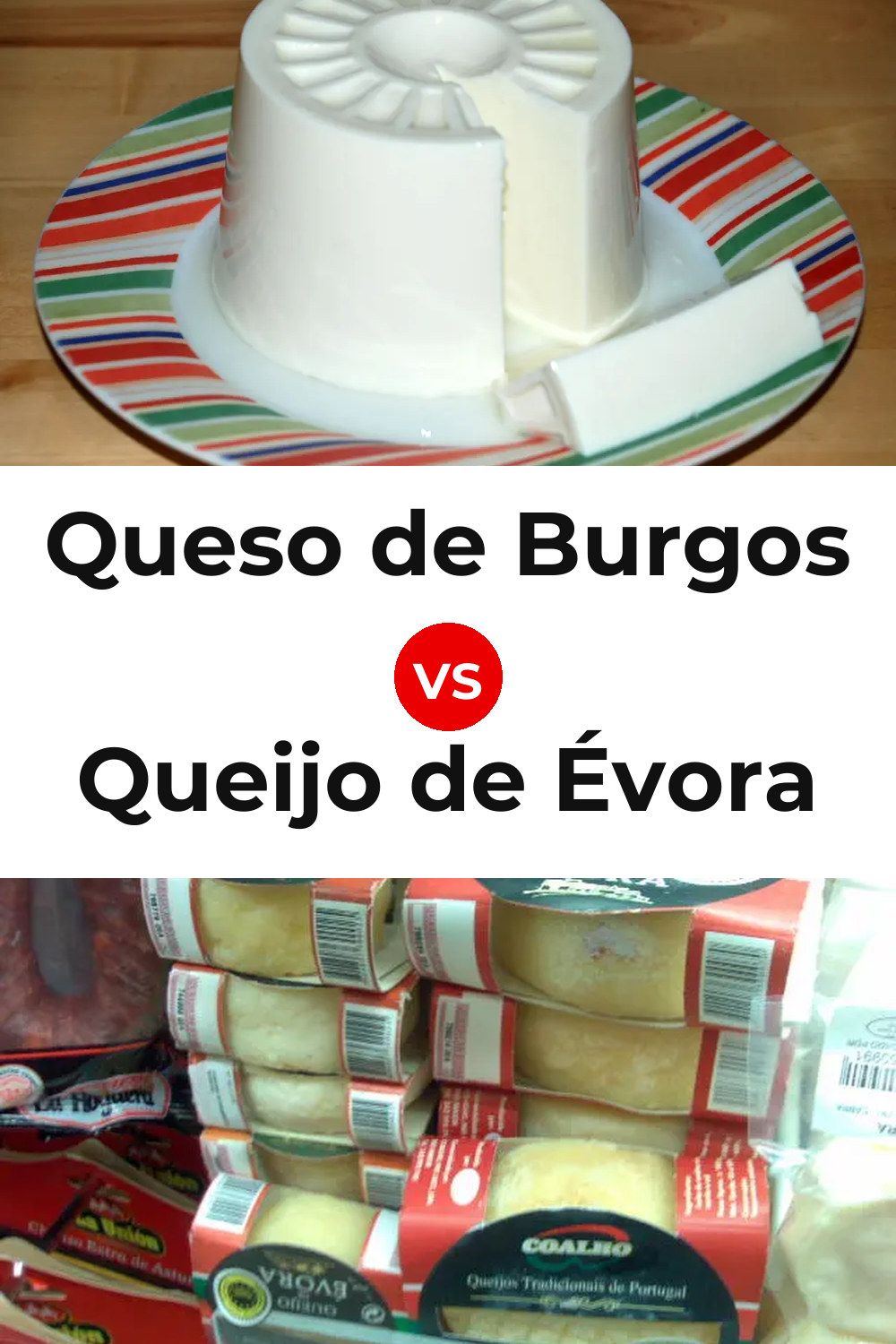
Queso de Burgos is a fresh, slightly grainy or buttery, elastic, slightly fatty cow and sheep-milk cheese from Spain, while Queijo de Évora is semi-hard and made from sheep milk.
What Is Queso de Burgos?
Queso de Burgos is a fresh cheese from the province of Burgos, Spain. It is made from a blend of whole, fresh, and pasteurized cow’s and sheep’s milk, with different types distinguished by the percentage of sheep’s milk used. The cheese has a cylindrical or cylindrical-conical shape and a moist, white to slightly yellowish appearance. It has no rind and features a soft, slightly grainy or buttery texture with small holes due to incomplete curd setting. The flavor is mild, milky, and slightly sweet, with varying intensities of sheep’s milk taste depending on the type. The cheese is not pressed or matured and retains a fresh milk aroma. The production process follows traditional methods specific to Burgos, emphasizing its historical reputation and unique regional characteristics.
What Is Queijo de Évora?
Queijo de Nisa is a traditional ewe's milk cheese from Portugal. It is a cured cheese with a semi-hard consistency and a white-yellow color. The cheese is known for its small holes and is produced using raw ewe's milk. The production method involves slowly draining the curds after coagulation using cardoon. The cheese is linked to the natural pastures and Mediterranean flora of its region, which contribute to its distinctive characteristics. Queijo de Nisa is recognized as a Protected Designation of Origin (PDO) product. It is produced in several subdistricts in the Alentejo region of Portugal.
What's the Difference Between Queso de Burgos and Queijo de Évora?
- Milk type: Queso de Burgos (Cow’s and sheep’s milk), Queijo de Évora (Ewe's milk)
- Milk treatment: Queso de Burgos (Pasteurized), Queijo de Évora (Raw)
- Texture: Queso de Burgos (Fresh, slightly grainy or buttery, elastic, slightly fatty), Queijo de Évora (Semi-hard)
- Rind: Queso de Burgos (None), Queijo de Évora (Sealed)
Side-by-Side Comparison
| Queso de Burgos | Queijo de Évora | |
|---|---|---|
| Country of Origin | Spain | — |
| Specific Origin | Province Of Burgos | Subdistricts Of Nisa, Crato, Castelo De Vide, Marvão, Portalegre, Monforte, Arronches, And Alter Do Chão |
| Milk Type | Cow’s and sheep’s milk | Ewe's milk |
| Milk Treatment | Pasteurized | Raw |
| Texture | Fresh, slightly grainy or buttery, elastic, slightly fatty | Semi-hard |
| Rind | None | Sealed |
| Aging | Fresh, not matured | — |
| Taste | Mild, milky, and slightly sweet | — |
Taste Comparison: Does Queso de Burgos Taste Like Queijo de Évora?
Their flavor profiles are distinct.
Can You Substitute Queso de Burgos for Queijo de Évora?
Queso de Burgos can stand in for Queijo de Évora in many dishes, but the switch will shift the overall character of the recipe. Expect fresh, slightly grainy or buttery, elastic, slightly fatty bite and body where the recipe calls for semi-hard.
Which Is Better, Queso de Burgos or Queijo de Évora?
There's no single winner. It depends on your recipe and the profile you want. If you want a fresh, slightly grainy or buttery, elastic, slightly fatty cheese, go with Queso de Burgos. For a semi-hard profile, Queijo de Évora is the better fit.
Which is your favorite?
One click, anonymous. See what others chose.
Frequently Asked Questions
Is Queso de Burgos the same as Queijo de Évora?
No, they're distinct cheeses. Queso de Burgos is made from cow and sheep milk; Queijo de Évora uses sheep.
Is Queso de Burgos similar to Queijo de Évora?
Not closely. They use different milk bases and have distinct profiles.
Can I substitute Queso de Burgos for Queijo de Évora?
You can, but expect a shift in richness and milk character.
Does Queso de Burgos taste like Queijo de Évora?
They have distinct flavor profiles. The taste row in the table above is the best direct comparison.
What is Queso de Burgos made of?
Queso de Burgos is made from cow and sheep milk (pasteurized). It's typically aged fresh, not matured. It originates in Spain.
What is Queijo de Évora made of?
Queijo de Évora is made from sheep milk (raw), using cardoon (cynara cardunculus) rennet.
Which should I choose, Queso de Burgos or Queijo de Évora?
It depends on the dish. The texture difference is the biggest practical tell. Queso de Burgos is fresh, slightly grainy or buttery, elastic, slightly fatty, while Queijo de Évora is semi-hard.