
Danish Blue Cheese vs Saint-Nectaire Cheese
Danish Blue Cheese
Saint-Nectaire Cheese
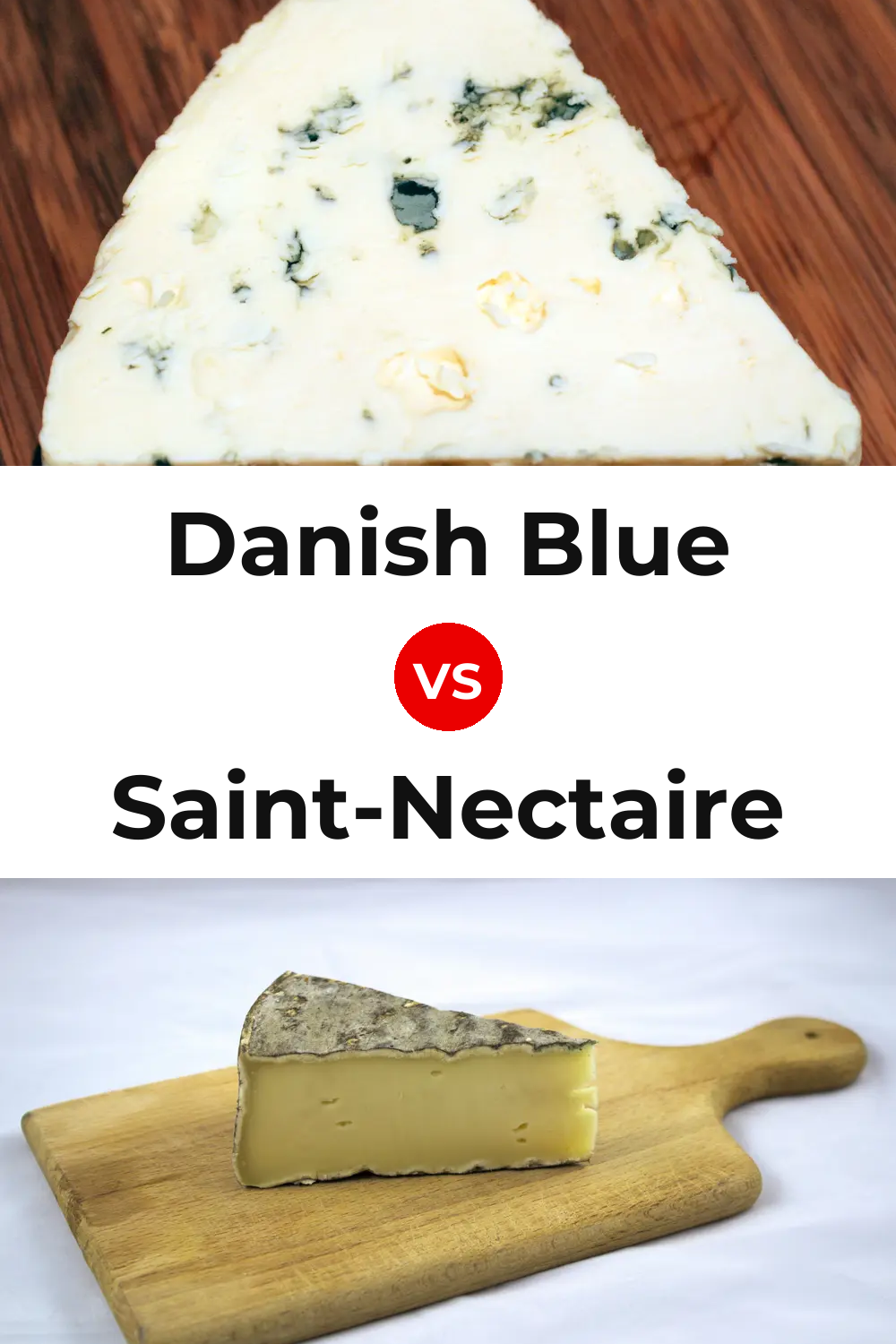
Danish Blue Cheese is a semi-soft, blue-veined cow-milk cheese from Denmark, while Saint-Nectaire Cheese is soft and tender and made from cow milk, originating in France.
What Is Danish Blue Cheese?
Danablu, sold as Danish Blue Cheese in North America, is a semi-soft blue-veined cheese made from full fat cow's milk and homogenized cream. It is known for its sharp, salty taste and its EU protected status, which limits production to approved Danish dairies.
What Is Saint-Nectaire Cheese?
Saint-Nectaire is a pressed cow's milk cheese from the volcanic hills around the Monts-Dore in Auvergne, France. It ages on rye straw for at least 28 days and is known for its soft, creamy paste and hint of hazelnut.
What's the Difference Between Danish Blue Cheese and Saint-Nectaire Cheese?
- Origin: Danish Blue Cheese (Denmark), Saint-Nectaire Cheese (France)
- Texture: Danish Blue Cheese (Semi-soft, Blue-veined), Saint-Nectaire Cheese (Soft and tender)
- Rind: Danish Blue Cheese (edible, slightly moist), Saint-Nectaire Cheese (Washed-rind)
- Aging: Danish Blue Cheese (8 to 12 weeks), Saint-Nectaire Cheese (At least twenty-eight days)
- Taste: Danish Blue Cheese (Salty, tangy), Saint-Nectaire Cheese (Delicate hazelnut)
Side-by-Side Comparison
| Danish Blue Cheese | Saint-Nectaire Cheese | |
|---|---|---|
| Country of Origin | Denmark | France |
| Specific Origin | Denmark | Massif Du Sancy, Auvergne |
| Milk Type | Cow | Cow’s milk (Holstein, Montbéliarde, sometimes Salers) |
| Milk Treatment | — | Raw for fermier, pasteurized for laitier |
| Texture | Semi-soft, Blue-veined | Soft and tender |
| Rind | Edible, slightly moist | Washed-rind |
| Aging | 8 to 12 weeks | At least twenty-eight days |
| Taste | Salty, tangy | Delicate hazelnut |
Taste Comparison: Does Danish Blue Cheese Taste Like Saint-Nectaire Cheese?
Danish Blue Cheese reads as salty, tangy, while Saint-Nectaire Cheese brings delicate hazelnut character. Aging plays into this as well. Danish Blue Cheese at 8 to 12 weeks develops a different profile than Saint-Nectaire Cheese at at least twenty-eight days.
Can You Substitute Danish Blue Cheese for Saint-Nectaire Cheese?
In most recipes, Danish Blue Cheese and Saint-Nectaire Cheese can be swapped with reasonable results. Both are cow-milk cheeses, so the base character carries over. Expect semi-soft, blue-veined bite and body where the recipe calls for soft and tender. Flavor-wise, Danish Blue Cheese reads as salty, tangy while Saint-Nectaire Cheese brings delicate hazelnut notes.
Which Is Better, Danish Blue Cheese or Saint-Nectaire Cheese?
There's no single winner. It depends on your recipe and the profile you want. If you want a semi-soft, blue-veined cheese, go with Danish Blue Cheese. For a soft and tender profile, Saint-Nectaire Cheese is the better fit. Flavor-wise, Danish Blue Cheese suits recipes that want salty, tangy notes, while Saint-Nectaire Cheese fits dishes calling for delicate hazelnut.
Which is your favorite?
One click, anonymous. See what others chose.
Frequently Asked Questions
Is Danish Blue Cheese the same as Saint-Nectaire Cheese?
No, they're distinct cheeses. Danish Blue Cheese originates in Denmark, while Saint-Nectaire Cheese comes from France. Aging also differs: Danish Blue Cheese is typically aged 8 to 12 weeks, Saint-Nectaire Cheese at least twenty-eight days.
Is Danish Blue Cheese similar to Saint-Nectaire Cheese?
Somewhat. They share a cow-milk base but diverge in texture and flavor.
Can I substitute Danish Blue Cheese for Saint-Nectaire Cheese?
You can, but expect a shift in bite and mouthfeel.
Does Danish Blue Cheese taste like Saint-Nectaire Cheese?
Danish Blue Cheese reads as salty, tangy, while Saint-Nectaire Cheese is delicate hazelnut.
What is Danish Blue Cheese made of?
Danish Blue Cheese is made from cow milk. It's typically aged 8 to 12 weeks. It originates in Denmark.
What is Saint-Nectaire Cheese made of?
Saint-Nectaire Cheese is made from cow milk (raw for fermier, pasteurized for laitier). It's typically aged at least twenty-eight days. It originates in France.
Which should I choose, Danish Blue Cheese or Saint-Nectaire Cheese?
It depends on the dish. The texture difference is the biggest practical tell. Danish Blue Cheese is semi-soft, blue-veined, while Saint-Nectaire Cheese is soft and tender.