Fiore Sardo Cheese vs Queso de Guía
Fiore Sardo Cheese
Queso de Guía
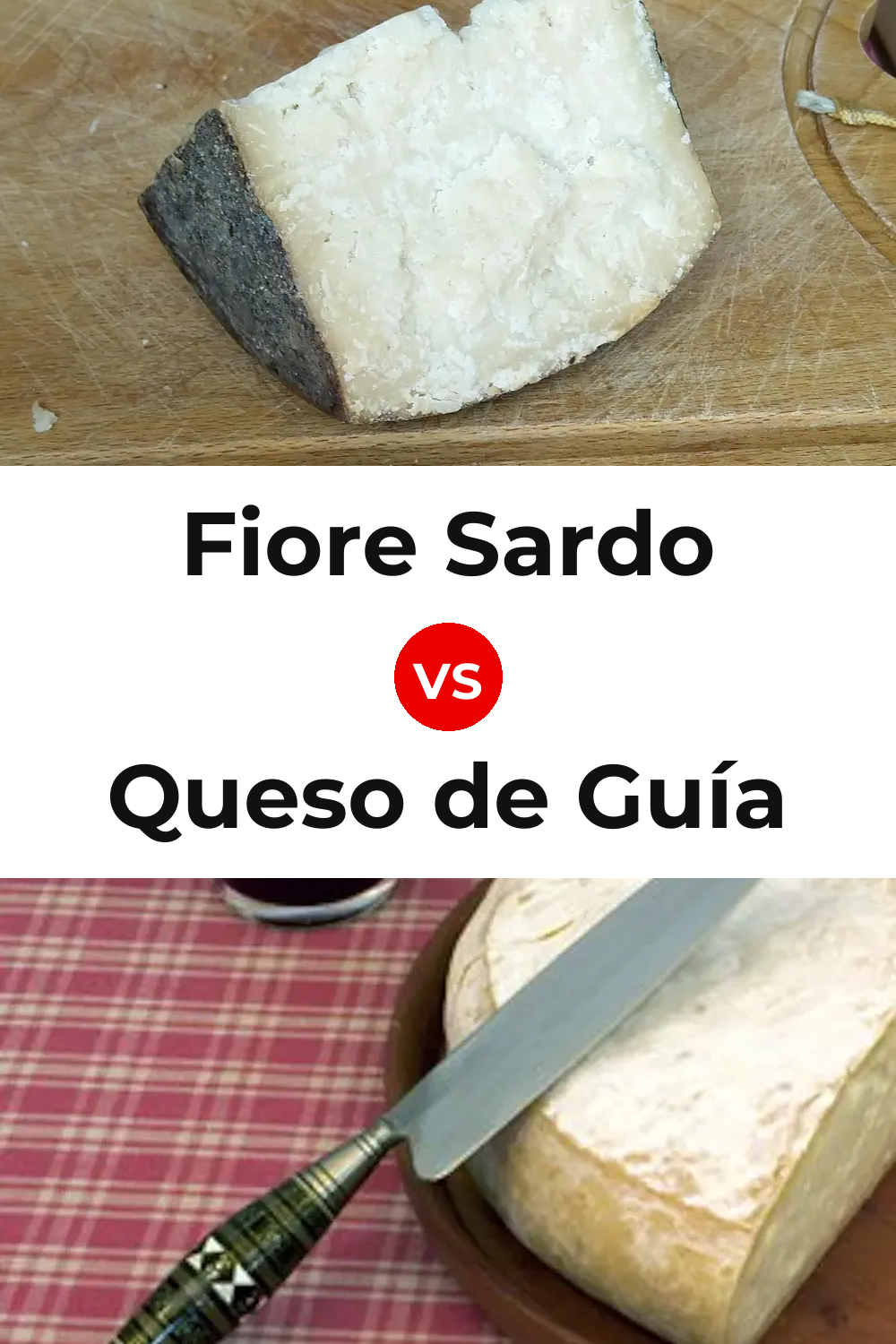
Fiore Sardo Cheese is a hard sheep-milk cheese from Italy, while Queso de Guía is dense, compact, sometimes creamy and made from cow, goat, and sheep milk.
What Is Fiore Sardo Cheese?
Fiore Sardo is a hard sheep's milk cheese from Sardinia, made with raw milk and lamb's rennet. Light smoking and months of cellar aging give it a smoky aroma and a sharp, herbaceous flavor that works grated or sliced.
What Is Queso de Guía?
Queso de Guía is a Spanish cheese from Gran Canaria, made mostly from sheep's milk with some cow and goat milk added. It carries a protected designation of origin granted in 2006 and is sold either soft and creamy or hard and sharp.
What's the Difference Between Fiore Sardo Cheese and Queso de Guía?
- Milk type: Fiore Sardo Cheese (sheep's milk), Queso de Guía (Sheep (Canary Island breed), with up to 40% cow and 10% goat milk)
- Milk treatment: Fiore Sardo Cheese (unpasteurized), Queso de Guía (raw, for the artesano designation)
- Texture: Fiore Sardo Cheese (Hard), Queso de Guía (Dense, compact, sometimes creamy)
- Rind: Fiore Sardo Cheese (Lightly smoked), Queso de Guía (Ivory when young, thick and dark brown when mature)
- Aging: Fiore Sardo Cheese (4 months to longer), Queso de Guía (15+ days (semi-mature), 60+ days (mature))
- Taste: Fiore Sardo Cheese (Spicy, herbaceous), Queso de Guía (Salty and acidic, with occasional bitterness and sharpness)
Side-by-Side Comparison
| Fiore Sardo Cheese | Queso de Guía | |
|---|---|---|
| Country of Origin | Italy | — |
| Specific Origin | Sardinia | Gran Canaria, Canary Islands, Spain |
| Milk Type | Sheep's milk | Sheep (Canary Island breed), with up to 40% cow and 10% goat milk |
| Milk Treatment | Unpasteurized | Raw, for the artesano designation |
| Texture | Hard | Dense, compact, sometimes creamy |
| Rind | Lightly smoked | Ivory when young, thick and dark brown when mature |
| Aging | 4 months to longer | 15+ days (semi-mature), 60+ days (mature) |
| Taste | Spicy, herbaceous | Salty and acidic, with occasional bitterness and sharpness |
Taste Comparison: Does Fiore Sardo Cheese Taste Like Queso de Guía?
Fiore Sardo Cheese reads as spicy, herbaceous, while Queso de Guía brings salty and acidic, with occasional bitterness and sharpness character. On the nose, Fiore Sardo Cheese offers smoky aroma, contrasted with Queso de Guía's medium intensity, mainly lactic. More specifically, Fiore Sardo Cheese shows historically made by shepherds, smoked, aged in cool sardinian cellars, flavors of wild herbs, brush, and earthen tastes from sheep's diet. can range from a grating cheese to a more robust table cheese depending on age., while Queso de Guía leans toward predominantly lactic, with animal notes. Aging plays into this as well. Fiore Sardo Cheese at 4 months to longer develops a different profile than Queso de Guía at 15+ days (semi-mature), 60+ days (mature).
Can You Substitute Fiore Sardo Cheese for Queso de Guía?
Fiore Sardo Cheese can stand in for Queso de Guía in many dishes, but the switch will shift the overall character of the recipe. Expect hard bite and body where the recipe calls for dense, compact, sometimes creamy. Flavor-wise, Fiore Sardo Cheese reads as spicy, herbaceous while Queso de Guía brings salty and acidic, with occasional bitterness and sharpness notes.
Which Is Better, Fiore Sardo Cheese or Queso de Guía?
There's no single winner. It depends on your recipe and the profile you want. If you want a hard cheese, go with Fiore Sardo Cheese. For a dense, compact, sometimes creamy profile, Queso de Guía is the better fit. Flavor-wise, Fiore Sardo Cheese suits recipes that want spicy, herbaceous notes, while Queso de Guía fits dishes calling for salty and acidic, with occasional bitterness and sharpness.
Which is your favorite?
One click, anonymous. See what others chose.
Frequently Asked Questions
Is Fiore Sardo Cheese the same as Queso de Guía?
No, they're distinct cheeses. Fiore Sardo Cheese is made from sheep milk; Queso de Guía uses cow, goat, and sheep. Aging also differs: Fiore Sardo Cheese is typically aged 4 months to longer, Queso de Guía 15+ days (semi-mature), 60+ days (mature).
Is Fiore Sardo Cheese similar to Queso de Guía?
Not closely. They use different milk bases and have distinct profiles.
Can I substitute Fiore Sardo Cheese for Queso de Guía?
You can, but expect a shift in richness and milk character.
Does Fiore Sardo Cheese taste like Queso de Guía?
Fiore Sardo Cheese reads as spicy, herbaceous, while Queso de Guía is salty and acidic, with occasional bitterness and sharpness. Aromas also diverge. Fiore Sardo Cheese leans smoky aroma, and Queso de Guía is closer to medium intensity, mainly lactic.
What is Fiore Sardo Cheese made of?
Fiore Sardo Cheese is made from sheep milk (unpasteurized), using lamb's rennet. It's typically aged 4 months to longer. It originates in Italy.
What is Queso de Guía made of?
Queso de Guía is made from cow, goat, and sheep milk (raw, for the artesano designation), using animal rennet and/or vegetable rennet (cynara cardunculus var. ferocissima, cynara scolymus) and/or starter cultures rennet. It's typically aged 15+ days (semi-mature), 60+ days (mature).
Which should I choose, Fiore Sardo Cheese or Queso de Guía?
It depends on the dish. The texture difference is the biggest practical tell. Fiore Sardo Cheese is hard, while Queso de Guía is dense, compact, sometimes creamy.