
Fontina Cheese vs Langres Cheese
Fontina Cheese
Langres Cheese
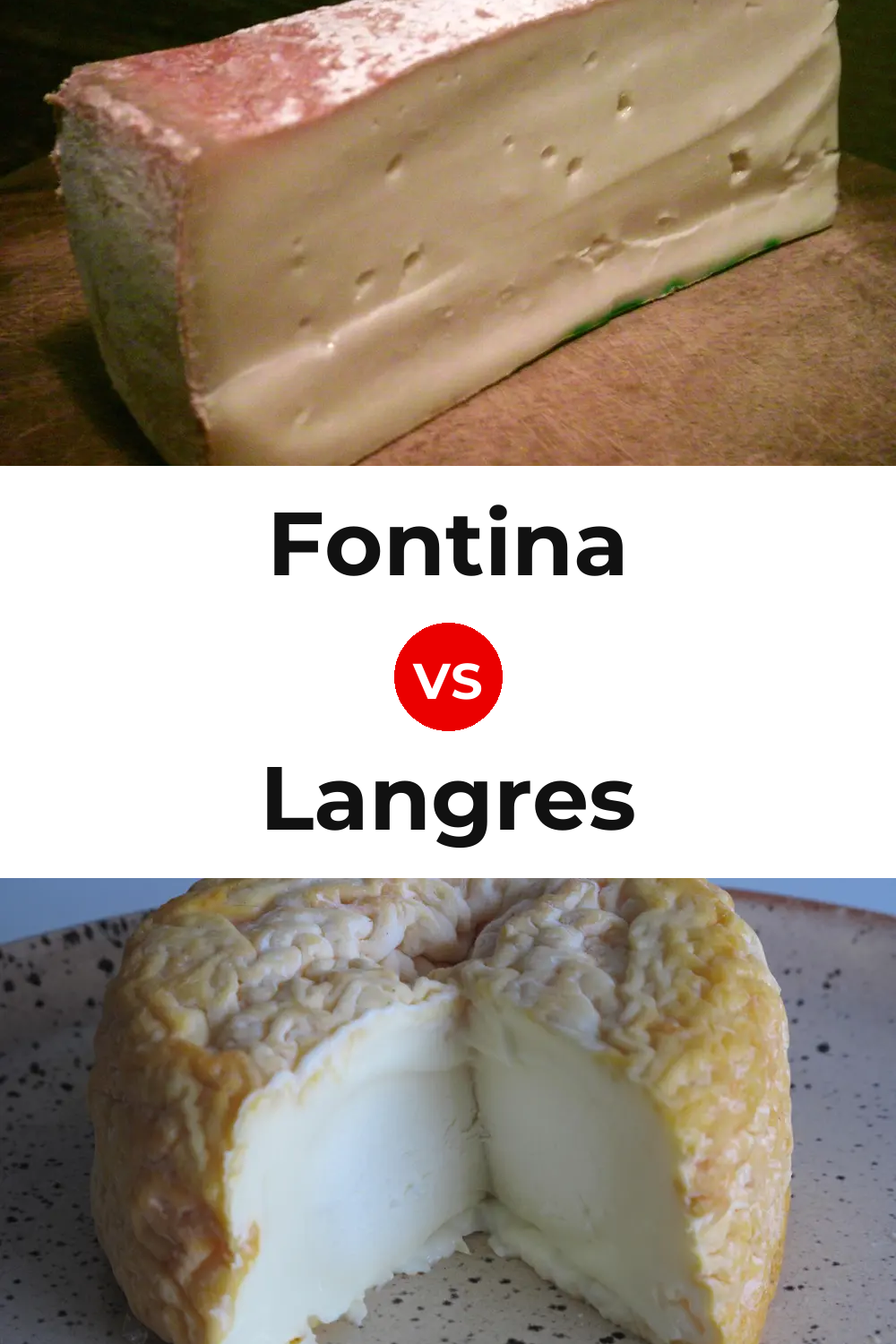
Fontina Cheese is a semi-soft cow-milk cheese from Italy, while Langres Cheese is semisoft and made from cow milk, originating in France.
What Is Fontina Cheese?
Fontina is a cow's milk cheese from Italy's Aosta Valley, made there since the 12th century. It runs semisoft to hard, tastes creamy and nutty with earthy, mushroomy notes, and melts well enough to carry a fondue.
What Is Langres Cheese?
Langres is a cow's milk cheese from the plateau of Langres in Champagne-Ardenne, France. It is a small cylinder with a Penicillium candidum rind tinted orange by annatto, known for the concave dent in its top called the fontaine.
What's the Difference Between Fontina Cheese and Langres Cheese?
- Origin: Fontina Cheese (Italy), Langres Cheese (France)
- Milk treatment: Fontina Cheese (Raw (for traditional Italian Fontina), Pasteurized (for most American versions)), Langres Cheese (unpasteurized)
- Texture: Fontina Cheese (Semi-Soft), Langres Cheese (Semisoft)
- Rind: Fontina Cheese (Natural, Often Washed), Langres Cheese (Soft, orange)
- Aging: Fontina Cheese (Typically 2-3 months (can be aged longer for stronger flavor)), Langres Cheese (5 weeks)
- Taste: Fontina Cheese (Mild, Buttery, Nutty), Langres Cheese (Creamy, nutty)
Side-by-Side Comparison
| Fontina Cheese | Langres Cheese | |
|---|---|---|
| Country of Origin | Italy | France |
| Specific Origin | Aosta Valley, Italy | Plateau De Langres, Champagne Region |
| Milk Type | Cow's milk | Cow's milk |
| Milk Treatment | Raw (for traditional Italian Fontina), Pasteurized (for most American versions) | Unpasteurized |
| Texture | Semi-Soft | Semisoft |
| Rind | Natural, Often Washed | Soft, orange |
| Aging | Typically 2-3 months (can be aged longer for stronger flavor) | 5 weeks |
| Taste | Mild, Buttery, Nutty | Creamy, nutty |
Taste Comparison: Does Fontina Cheese Taste Like Langres Cheese?
Fontina Cheese reads as mild, buttery, nutty, while Langres Cheese brings creamy, nutty character. On the nose, Fontina Cheese offers mild to pungent (earthier in aged versions), contrasted with Langres Cheese's creamy aromas. More specifically, Fontina Cheese shows buttery, earthy, mildly nutty, slightly fruity, while Langres Cheese leans toward characterized by a soft-rind with an orange rind colored by annatto and a naturally formed bowl on the top called the “fontaine.” known for its creamy aromas and hazelnut taste, enhanced by slow maturation of milk and ripening with salt water. can be consumed alone, paired with pinot noir or champagne, or used in recipes like fondue champenoise.. Aging plays into this as well. Fontina Cheese at typically 2-3 months (can be aged longer for stronger flavor) develops a different profile than Langres Cheese at 5 weeks.
Can You Substitute Fontina Cheese for Langres Cheese?
In most recipes, Fontina Cheese and Langres Cheese can be swapped with reasonable results. Both are cow-milk cheeses, so the base character carries over. Expect semi-soft bite and body where the recipe calls for semisoft. Flavor-wise, Fontina Cheese reads as mild, buttery, nutty while Langres Cheese brings creamy, nutty notes.
Which Is Better, Fontina Cheese or Langres Cheese?
There's no single winner. It depends on your recipe and the profile you want. If you want a semi-soft cheese, go with Fontina Cheese. For a semisoft profile, Langres Cheese is the better fit. Flavor-wise, Fontina Cheese suits recipes that want mild, buttery, nutty notes, while Langres Cheese fits dishes calling for creamy, nutty.
Which is your favorite?
One click, anonymous. See what others chose.
Frequently Asked Questions
Is Fontina Cheese the same as Langres Cheese?
No, they're distinct cheeses. Fontina Cheese originates in Italy, while Langres Cheese comes from France. Aging also differs: Fontina Cheese is typically aged typically 2-3 months (can be aged longer for stronger flavor), Langres Cheese 5 weeks.
Is Fontina Cheese similar to Langres Cheese?
Somewhat. They share a cow-milk base but diverge in texture and flavor.
Can I substitute Fontina Cheese for Langres Cheese?
You can, but expect a shift in bite and mouthfeel.
Does Fontina Cheese taste like Langres Cheese?
Fontina Cheese reads as mild, buttery, nutty, while Langres Cheese is creamy, nutty. Aromas also diverge. Fontina Cheese leans mild to pungent (earthier in aged versions), and Langres Cheese is closer to creamy aromas.
What is Fontina Cheese made of?
Fontina Cheese is made from cow milk (raw (for traditional italian fontina), pasteurized (for most american versions)), using traditional (animal) or microbial (varies by producer) rennet. It's typically aged typically 2-3 months (can be aged longer for stronger flavor). It originates in Italy.
What is Langres Cheese made of?
Langres Cheese is made from cow milk (unpasteurized). It's typically aged 5 weeks. It originates in France.
Which should I choose, Fontina Cheese or Langres Cheese?
It depends on the dish. The texture difference is the biggest practical tell. Fontina Cheese is semi-soft, while Langres Cheese is semisoft.