
Fontina Cheese vs Mahón-Menorca Cheese
Fontina Cheese
Mahón-Menorca Cheese
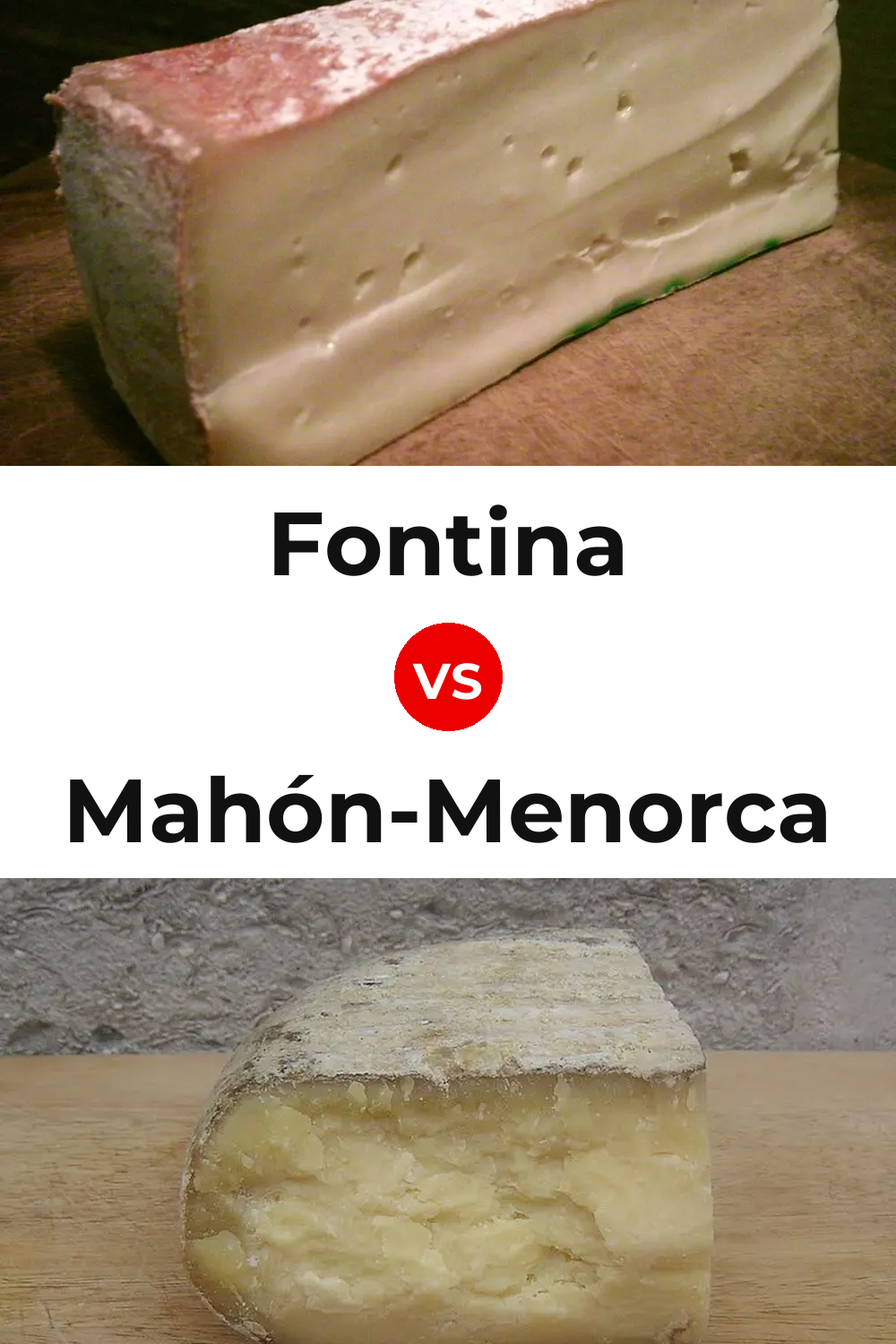
Fontina Cheese is a semi-soft cow-milk cheese from Italy, while Mahón-Menorca Cheese is firm and made from cow or sheep milk, originating in Spain.
What Is Fontina Cheese?
Fontina is a cow's milk cheese from Italy's Aosta Valley, made there since the 12th century. It runs semisoft to hard, tastes creamy and nutty with earthy, mushroomy notes, and melts well enough to carry a fondue.
What Is Mahón-Menorca Cheese?
Mahón-Menorca is a white cow's milk cheese from the island of Menorca, named after the town and port of Mahón. It runs soft to hard depending on age, with an orange rind rubbed with butter or oil and paprika and a buttery, sharp, slightly salty taste.
What's the Difference Between Fontina Cheese and Mahón-Menorca Cheese?
- Origin: Fontina Cheese (Italy), Mahón-Menorca Cheese (Spain)
- Milk type: Fontina Cheese (cow's milk), Mahón-Menorca Cheese (Friesian, Menorcan, Brown Alpine cow’s milk, some ewe’s milk (max 5%))
- Milk treatment: Fontina Cheese (Raw (for traditional Italian Fontina), Pasteurized (for most American versions)), Mahón-Menorca Cheese (Raw or any authorized preservation technology)
- Texture: Fontina Cheese (Semi-Soft), Mahón-Menorca Cheese (Firm)
- Rind: Fontina Cheese (Natural, Often Washed), Mahón-Menorca Cheese (Characteristic orangish)
- Aging: Fontina Cheese (Typically 2-3 months (can be aged longer for stronger flavor)), Mahón-Menorca Cheese (Tender: 21-60 days, Semi-cured: 2-5 months, Vintage: >5 months)
- Taste: Fontina Cheese (Mild, Buttery, Nutty), Mahón-Menorca Cheese (Salty and spicy)
Side-by-Side Comparison
| Fontina Cheese | Mahón-Menorca Cheese | |
|---|---|---|
| Country of Origin | Italy | Spain |
| Specific Origin | Aosta Valley, Italy | Menorca, Balearic Islands |
| Milk Type | Cow's milk | Friesian, Menorcan, Brown Alpine cow’s milk, some ewe’s milk (max 5%) |
| Milk Treatment | Raw (for traditional Italian Fontina), Pasteurized (for most American versions) | Raw or any authorized preservation technology |
| Texture | Semi-Soft | Firm |
| Rind | Natural, Often Washed | Characteristic orangish |
| Aging | Typically 2-3 months (can be aged longer for stronger flavor) | Tender: 21-60 days, Semi-cured: 2-5 months, Vintage: >5 months |
| Taste | Mild, Buttery, Nutty | Salty and spicy |
Taste Comparison: Does Fontina Cheese Taste Like Mahón-Menorca Cheese?
Fontina Cheese reads as mild, buttery, nutty, while Mahón-Menorca Cheese brings salty and spicy character. On the nose, Fontina Cheese offers mild to pungent (earthier in aged versions), contrasted with Mahón-Menorca Cheese's lactic, buttery. More specifically, Fontina Cheese shows buttery, earthy, mildly nutty, slightly fruity, while Mahón-Menorca Cheese leans toward distinctive molding, treatment of the rind with cow’s butter or olive oil, variations based on ripening time. Aging plays into this as well. Fontina Cheese at typically 2-3 months (can be aged longer for stronger flavor) develops a different profile than Mahón-Menorca Cheese at tender: 21-60 days, semi-cured: 2-5 months, vintage: >5 months.
Can You Substitute Fontina Cheese for Mahón-Menorca Cheese?
Fontina Cheese can stand in for Mahón-Menorca Cheese in many dishes, but the switch will shift the overall character of the recipe. Expect semi-soft bite and body where the recipe calls for firm. Flavor-wise, Fontina Cheese reads as mild, buttery, nutty while Mahón-Menorca Cheese brings salty and spicy notes.
Which Is Better, Fontina Cheese or Mahón-Menorca Cheese?
There's no single winner. It depends on your recipe and the profile you want. If you want a semi-soft cheese, go with Fontina Cheese. For a firm profile, Mahón-Menorca Cheese is the better fit. Flavor-wise, Fontina Cheese suits recipes that want mild, buttery, nutty notes, while Mahón-Menorca Cheese fits dishes calling for salty and spicy.
Which is your favorite?
One click, anonymous. See what others chose.
Frequently Asked Questions
Is Fontina Cheese the same as Mahón-Menorca Cheese?
No, they're distinct cheeses. Fontina Cheese originates in Italy, while Mahón-Menorca Cheese comes from Spain. Fontina Cheese is made from cow milk; Mahón-Menorca Cheese uses cow or sheep. Aging also differs: Fontina Cheese is typically aged typically 2-3 months (can be aged longer for stronger flavor), Mahón-Menorca Cheese tender: 21-60 days, semi-cured: 2-5 months, vintage: >5 months.
Is Fontina Cheese similar to Mahón-Menorca Cheese?
Not closely. They use different milk bases and have distinct profiles.
Can I substitute Fontina Cheese for Mahón-Menorca Cheese?
You can, but expect a shift in richness and milk character.
Does Fontina Cheese taste like Mahón-Menorca Cheese?
Fontina Cheese reads as mild, buttery, nutty, while Mahón-Menorca Cheese is salty and spicy. Aromas also diverge. Fontina Cheese leans mild to pungent (earthier in aged versions), and Mahón-Menorca Cheese is closer to lactic, buttery.
What is Fontina Cheese made of?
Fontina Cheese is made from cow milk (raw (for traditional italian fontina), pasteurized (for most american versions)), using traditional (animal) or microbial (varies by producer) rennet. It's typically aged typically 2-3 months (can be aged longer for stronger flavor). It originates in Italy.
What is Mahón-Menorca Cheese made of?
Mahón-Menorca Cheese is made from cow or sheep milk (raw or any authorized preservation technology), using vegetable (cynara cardunculus) rennet. It's typically aged tender: 21-60 days, semi-cured: 2-5 months, vintage: >5 months. It originates in Spain.
Which should I choose, Fontina Cheese or Mahón-Menorca Cheese?
It depends on the dish. The texture difference is the biggest practical tell. Fontina Cheese is semi-soft, while Mahón-Menorca Cheese is firm.