Queso Garrotxa vs Queijo de Cabra Transmontano
Queso Garrotxa
Queijo de Cabra Transmontano
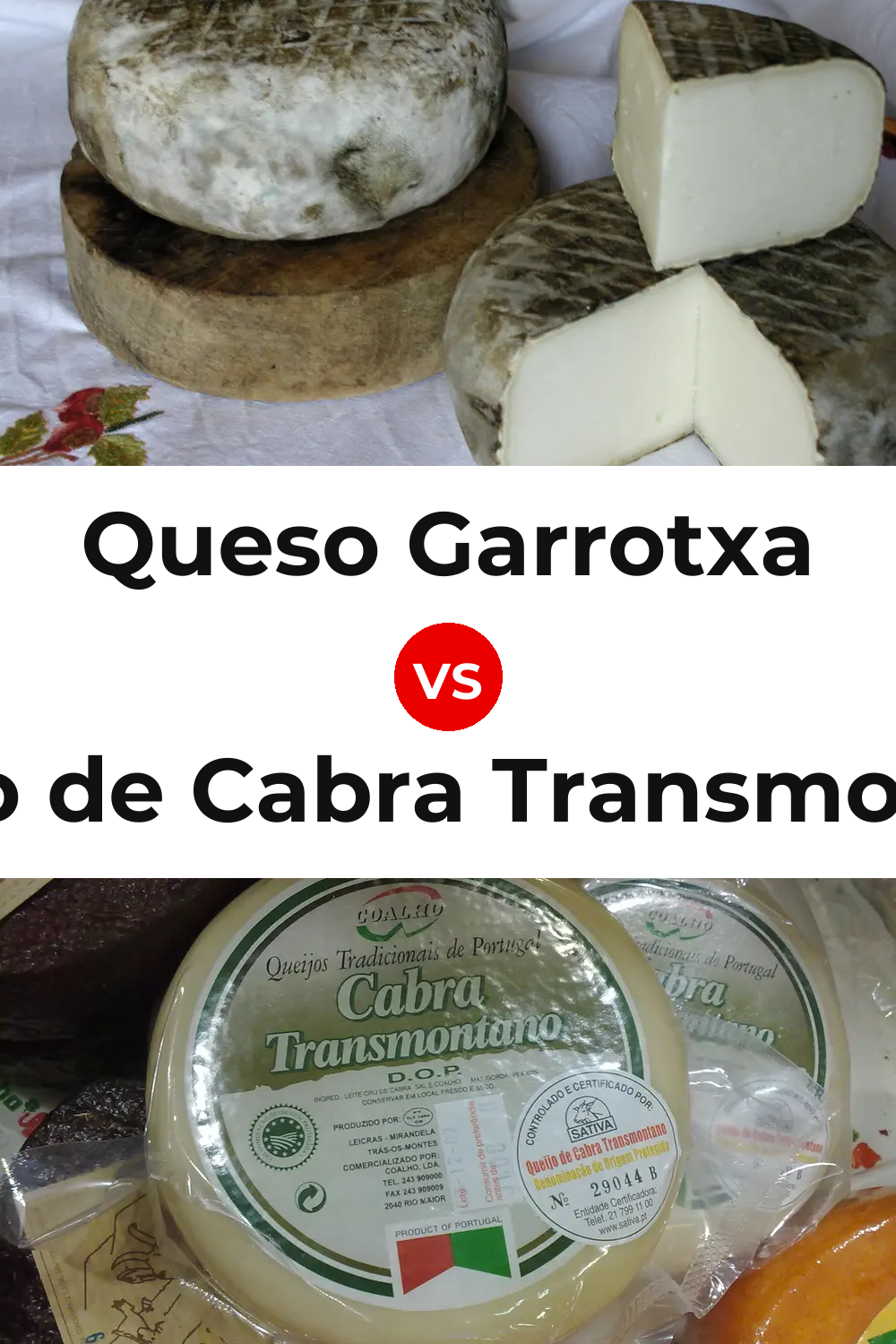
Queso Garrotxa is a firm, smooth goat-milk cheese from Spain, while Queijo de Cabra Transmontano is closed, semi-hard to extra-hard, not buttery and made from goat milk.
What Is Queso Garrotxa?
Formatge Garrotxa is a traditional goat’s milk cheese from Catalonia, Spain, recognized under the Protected Geographical Indication (PGI) system. It is made exclusively from whole goat’s milk using the mixed curdling technique. The cheese has a regular cylindrical shape with rounded edges, and its size varies between 0.5 kg and 1 kg. Its defining feature is its bloomy rind, covered in blue-grey mold, giving it a fuzzy, ashy appearance. The paste is off-white, firm, and smooth, with a mild lactic flavor and aromas of fresh goat’s milk and butter, while the rind contributes damp, cellar-like notes. The cheese is matured for at least 21 days, during which it is carefully handled to develop its characteristic rind naturally. It is never artificially inoculated with mold. Packaging is done exclusively in the production area to preserve the delicate rind. This cheese is an important part of Catalan culinary heritage and has gained international recognition.
What Is Queijo de Cabra Transmontano?
Queijo de Cabra Transmontano is a traditional Portuguese cheese made from raw goat's milk. It is produced in the Trás-os-Montes region, specifically in parts of the Bragança and Vila Real districts. The cheese is known for its semi-hard to extra-hard texture and is available in two varieties: Queijo de Cabra Transmontano and Queijo de Cabra Transmontano Velho. The cheese has a closed texture with little creaminess and a few holes, and it is white in color. It has an intense, pleasant aroma and a clean taste with a slight tang. The cheese is ripened for a minimum of 60 to 90 days, depending on the variety. It is protected under the European Union's Protected Designation of Origin (PDO) status.
What's the Difference Between Queso Garrotxa and Queijo de Cabra Transmontano?
- Milk treatment: Queso Garrotxa (Pasteurized), Queijo de Cabra Transmontano (Raw)
- Texture: Queso Garrotxa (Firm, smooth), Queijo de Cabra Transmontano (Closed, semi-hard to extra-hard, not buttery)
- Rind: Queso Garrotxa (Bloomy, ashy, blue-grey mold-covered), Queijo de Cabra Transmontano (Semi-hard to extra-hard, unbroken, well-formed, smooth, white or paprika-red in color)
- Aging: Queso Garrotxa (Minimum 21 days), Queijo de Cabra Transmontano (Minimum ripening time of 60 to 90 days)
- Taste: Queso Garrotxa (Mild lactic notes), Queijo de Cabra Transmontano (Clean taste, usually with a slight tang)
Side-by-Side Comparison
| Queso Garrotxa | Queijo de Cabra Transmontano | |
|---|---|---|
| Country of Origin | Spain | — |
| Specific Origin | Catalonia | Trás-Os-Montes Region, Including Municipalities In The Districts Of Bragança And Vila Real |
| Milk Type | Goat | Goat's milk |
| Milk Treatment | Pasteurized | Raw |
| Texture | Firm, smooth | Closed, semi-hard to extra-hard, not buttery |
| Rind | Bloomy, ashy, blue-grey mold-covered | Semi-hard to extra-hard, unbroken, well-formed, smooth, white or paprika-red in color |
| Aging | Minimum 21 days | Minimum ripening time of 60 to 90 days |
| Taste | Mild lactic notes | Clean taste, usually with a slight tang |
Taste Comparison: Does Queso Garrotxa Taste Like Queijo de Cabra Transmontano?
Queso Garrotxa reads as mild lactic notes, while Queijo de Cabra Transmontano brings clean taste, usually with a slight tang character. On the nose, Queso Garrotxa offers medium intensity; fresh goat’s milk, butter, and cellar notes, contrasted with Queijo de Cabra Transmontano's intense, pleasant. Aging plays into this as well. Queso Garrotxa at minimum 21 days develops a different profile than Queijo de Cabra Transmontano at minimum ripening time of 60 to 90 days.
Can You Substitute Queso Garrotxa for Queijo de Cabra Transmontano?
In most recipes, Queso Garrotxa and Queijo de Cabra Transmontano can be swapped with reasonable results. Both are goat-milk cheeses, so the base character carries over. Expect firm, smooth bite and body where the recipe calls for closed, semi-hard to extra-hard, not buttery. Flavor-wise, Queso Garrotxa reads as mild lactic notes while Queijo de Cabra Transmontano brings clean taste, usually with a slight tang notes.
Which Is Better, Queso Garrotxa or Queijo de Cabra Transmontano?
There's no single winner. It depends on your recipe and the profile you want. If you want a firm, smooth cheese, go with Queso Garrotxa. For a closed, semi-hard to extra-hard, not buttery profile, Queijo de Cabra Transmontano is the better fit. Flavor-wise, Queso Garrotxa suits recipes that want mild lactic notes notes, while Queijo de Cabra Transmontano fits dishes calling for clean taste, usually with a slight tang.
Which is your favorite?
One click, anonymous. See what others chose.
Frequently Asked Questions
Is Queso Garrotxa the same as Queijo de Cabra Transmontano?
No, they're distinct cheeses. Aging also differs: Queso Garrotxa is typically aged minimum 21 days, Queijo de Cabra Transmontano minimum ripening time of 60 to 90 days.
Is Queso Garrotxa similar to Queijo de Cabra Transmontano?
Somewhat. They share a goat-milk base but diverge in texture and flavor.
Can I substitute Queso Garrotxa for Queijo de Cabra Transmontano?
You can, but expect a shift in bite and mouthfeel.
Does Queso Garrotxa taste like Queijo de Cabra Transmontano?
Queso Garrotxa reads as mild lactic notes, while Queijo de Cabra Transmontano is clean taste, usually with a slight tang. Aromas also diverge. Queso Garrotxa leans medium intensity; fresh goat’s milk, butter, and cellar notes, and Queijo de Cabra Transmontano is closer to intense, pleasant.
What is Queso Garrotxa made of?
Queso Garrotxa is made from goat milk (pasteurized). It's typically aged minimum 21 days. It originates in Spain.
What is Queijo de Cabra Transmontano made of?
Queijo de Cabra Transmontano is made from goat milk (raw), using animal rennet. It's typically aged minimum ripening time of 60 to 90 days.
Which should I choose, Queso Garrotxa or Queijo de Cabra Transmontano?
It depends on the dish. The texture difference is the biggest practical tell. Queso Garrotxa is firm, smooth, while Queijo de Cabra Transmontano is closed, semi-hard to extra-hard, not buttery.