Gouda Cheese vs Queso de Media Flor de Guía
Gouda Cheese
Queso de Media Flor de Guía
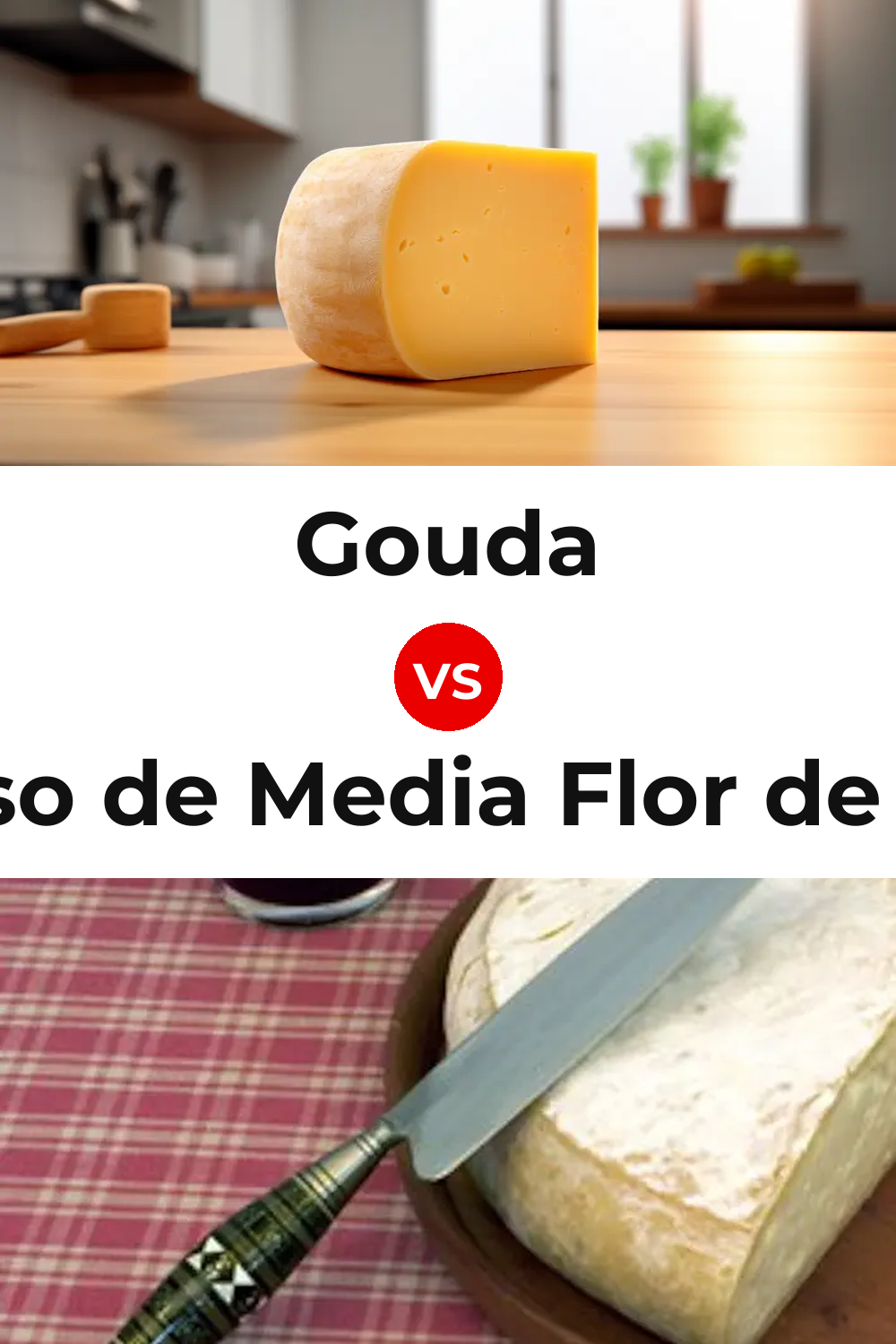
Gouda Cheese is a solid and springy; smooth when young, firm and crumbly when aged cow-milk cheese from Netherlands, while Queso de Media Flor de Guía is dense, compact, sometimes rubbery or creamy and made from cow, goat, and sheep milk.
What Is Gouda Cheese?
Gouda is a yellow cow's milk cheese from the Netherlands, named after the city of Gouda in South Holland. It runs from young and elastic to old and hard, picking up a caramel sweetness and small crunchy crystals with age.
What Is Queso de Media Flor de Guía?
Queso de Media Flor de Guía is a full-fat or half-fat cheese produced in the same region as Queso de Flor de Guía, using the same milk proportions. However, its curdling process involves at least 50% vegetable rennet, with the remainder being animal rennet or other starter cultures. It has a cylindrical shape, with a diameter of 15–30 cm and a height of 4–8 cm. Its texture varies from creamy to very hard depending on its maturity. The cheese has a mild acidic flavor with slight sharpness, and its aroma includes lactic, vegetal, and sometimes floral or roasted notes. It is matured for at least 15 days for semi-mature and over 60 days for mature cheese.
What's the Difference Between Gouda Cheese and Queso de Media Flor de Guía?
- Milk type: Gouda Cheese (cow's milk), Queso de Media Flor de Guía (Sheep (Canary Island breed), with up to 40% cow and 10% goat milk)
- Texture: Gouda Cheese (solid and springy; smooth when young, firm and crumbly when aged), Queso de Media Flor de Guía (Dense, compact, sometimes rubbery or creamy)
- Rind: Gouda Cheese (Durable), Queso de Media Flor de Guía (Ivory-colored when young, thick and brown when mature)
- Aging: Gouda Cheese (4 weeks to 21 months), Queso de Media Flor de Guía (15+ days (semi-mature), 60+ days (mature))
- Taste: Gouda Cheese (Sweet to nutty), Queso de Media Flor de Guía (Mildly acidic with slight sharpness)
Side-by-Side Comparison
| Gouda Cheese | Queso de Media Flor de Guía | |
|---|---|---|
| Country of Origin | Netherlands | — |
| Specific Origin | Southern Holland | Gáldar, Moya, And Santa María De Guía, Gran Canaria |
| Milk Type | Cow's milk | Sheep (Canary Island breed), with up to 40% cow and 10% goat milk |
| Milk Treatment | Pasteurized or unpasteurized | — |
| Texture | Solid and springy; smooth when young, firm and crumbly when aged | Dense, compact, sometimes rubbery or creamy |
| Rind | Durable | Ivory-colored when young, thick and brown when mature |
| Aging | 4 weeks to 21 months | 15+ days (semi-mature), 60+ days (mature) |
| Taste | Sweet to nutty | Mildly acidic with slight sharpness |
Taste Comparison: Does Gouda Cheese Taste Like Queso de Media Flor de Guía?
Gouda Cheese reads as sweet to nutty, while Queso de Media Flor de Guía brings mildly acidic with slight sharpness character. On the nose, Gouda Cheese offers sour aromatics with a cooked, milky note, contrasted with Queso de Media Flor de Guía's medium-high intensity. More specifically, Gouda Cheese shows young: mellow, fruity, sweet. aged: nutty, herbaceous, notes of chocolate, brazil nut, butterscotch., while Queso de Media Flor de Guía leans toward lactic, vegetal (cardoon and nuts), animal (rennet), sometimes floral or roasted. Aging plays into this as well. Gouda Cheese at 4 weeks to 21 months develops a different profile than Queso de Media Flor de Guía at 15+ days (semi-mature), 60+ days (mature).
Can You Substitute Gouda Cheese for Queso de Media Flor de Guía?
Gouda Cheese can stand in for Queso de Media Flor de Guía in many dishes, but the switch will shift the overall character of the recipe. Expect solid and springy; smooth when young, firm and crumbly when aged bite and body where the recipe calls for dense, compact, sometimes rubbery or creamy. Flavor-wise, Gouda Cheese reads as sweet to nutty while Queso de Media Flor de Guía brings mildly acidic with slight sharpness notes.
Which Is Better, Gouda Cheese or Queso de Media Flor de Guía?
There's no single winner. It depends on your recipe and the profile you want. If you want a solid and springy; smooth when young, firm and crumbly when aged cheese, go with Gouda Cheese. For a dense, compact, sometimes rubbery or creamy profile, Queso de Media Flor de Guía is the better fit. Flavor-wise, Gouda Cheese suits recipes that want sweet to nutty notes, while Queso de Media Flor de Guía fits dishes calling for mildly acidic with slight sharpness.
Which is your favorite?
One click, anonymous. See what others chose.
Frequently Asked Questions
Is Gouda Cheese the same as Queso de Media Flor de Guía?
No, they're distinct cheeses. Gouda Cheese is made from cow milk; Queso de Media Flor de Guía uses cow, goat, and sheep. Aging also differs: Gouda Cheese is typically aged 4 weeks to 21 months, Queso de Media Flor de Guía 15+ days (semi-mature), 60+ days (mature).
Is Gouda Cheese similar to Queso de Media Flor de Guía?
Not closely. They use different milk bases and have distinct profiles.
Can I substitute Gouda Cheese for Queso de Media Flor de Guía?
You can, but expect a shift in richness and milk character.
Does Gouda Cheese taste like Queso de Media Flor de Guía?
Gouda Cheese reads as sweet to nutty, while Queso de Media Flor de Guía is mildly acidic with slight sharpness. Aromas also diverge. Gouda Cheese leans sour aromatics with a cooked, milky note, and Queso de Media Flor de Guía is closer to medium-high intensity.
What is Gouda Cheese made of?
Gouda Cheese is made from cow milk (pasteurized or unpasteurized). It's typically aged 4 weeks to 21 months. It originates in Netherlands.
What is Queso de Media Flor de Guía made of?
Queso de Media Flor de Guía is made from cow, goat, and sheep milk, using at least 50% vegetable rennet, remainder can be animal rennet or starter cultures rennet. It's typically aged 15+ days (semi-mature), 60+ days (mature).
Which should I choose, Gouda Cheese or Queso de Media Flor de Guía?
It depends on the dish. The texture difference is the biggest practical tell. Gouda Cheese is solid and springy; smooth when young, firm and crumbly when aged, while Queso de Media Flor de Guía is dense, compact, sometimes rubbery or creamy.