Havarti Cheese vs Queso Camerano
Havarti Cheese
Queso Camerano
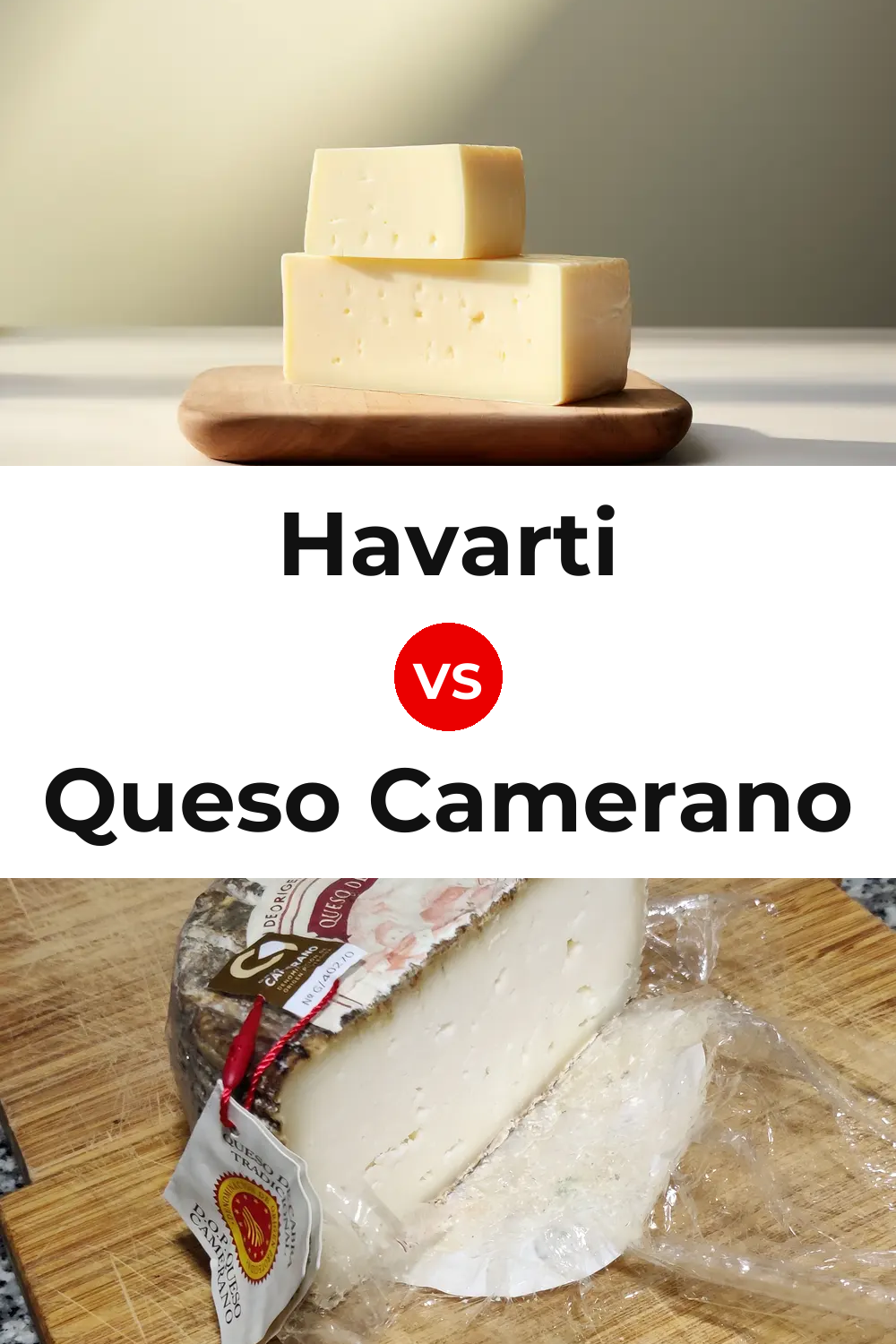
Havarti Cheese is a smooth cow-milk cheese from Denmark, while Queso Camerano is soft to semi-soft (fresh, soft); semi-hard to hard (semi-cured, cured) and made from goat milk.
What Is Havarti Cheese?
Havarti is a semisoft Danish cow's milk cheese, mild and buttery with very small irregular eyes running through a rindless, cream to yellow paste. It slices, grills, and melts, and the EU reserved the name for Denmark in 2019.
What Is Queso Camerano?
Queso Camerano is a goat's milk cheese from the Sierra de los Cameros in La Rioja, Spain, sold fresh, tierno, semi-cured or cured. It is known for the basketwork pattern left by the cilla, the wicker mold it is pressed in, and has held protected designation of origin status since 2009.
What's the Difference Between Havarti Cheese and Queso Camerano?
- Milk type: Havarti Cheese (cow's milk), Queso Camerano (Goat)
- Milk treatment: Havarti Cheese (pasteurized), Queso Camerano (Pasteurized (for fresh, soft, and semi-cured); raw or pasteurized (for cured))
- Texture: Havarti Cheese (Smooth), Queso Camerano (Soft to semi-soft (fresh, soft); semi-hard to hard (semi-cured, cured))
- Rind: Havarti Cheese (rindless), Queso Camerano (None (fresh, soft); defined with mold (semi-cured, cured))
- Aging: Havarti Cheese (about 3 months), Queso Camerano (Fresh (0 days), Soft (15+ days), Semi-cured (30+ days), Cured (75+ days))
- Taste: Havarti Cheese (Mild, buttery), Queso Camerano (Mild, slightly acidic (fresh); stronger, slightly salty, musty (aged))
Side-by-Side Comparison
| Havarti Cheese | Queso Camerano | |
|---|---|---|
| Country of Origin | Denmark | — |
| Specific Origin | Denmark | La Rioja (Rioja Alta, Sierra Rioja Alta, Sierra Rioja Media, Sierra De Rioja Baja, And Other Specified Municipalities) |
| Milk Type | Cow's milk | Goat |
| Milk Treatment | Pasteurized | Pasteurized (for fresh, soft, and semi-cured); raw or pasteurized (for cured) |
| Texture | Smooth | Soft to semi-soft (fresh, soft); semi-hard to hard (semi-cured, cured) |
| Rind | Rindless | None (fresh, soft); defined with mold (semi-cured, cured) |
| Aging | About 3 months | Fresh (0 days), Soft (15+ days), Semi-cured (30+ days), Cured (75+ days) |
| Taste | Mild, buttery | Mild, slightly acidic (fresh); stronger, slightly salty, musty (aged) |
Taste Comparison: Does Havarti Cheese Taste Like Queso Camerano?
Havarti Cheese reads as mild, buttery, while Queso Camerano brings mild, slightly acidic (fresh); stronger, slightly salty, musty (aged) character. On the nose, Havarti Cheese offers buttery, contrasted with Queso Camerano's lactic, grassy (fresh); musty, aged whey (semi-cured, cured). More specifically, Havarti Cheese shows mild, buttery, slightly acidic cheese known for its irregularly shaped small holes creating a lacy appearance. smooth and firm texture, can be complimented with herbs or jalapeño peppers. variants include creamy versions with up to 65% fat on dry matter basis. manufactured in denmark, united kingdom, canada, and the united states, including artisanal and mass-produced by arla foods and costello., while Queso Camerano leans toward whey-like in fresh and soft; musty in aged versions. Aging plays into this as well. Havarti Cheese at about 3 months develops a different profile than Queso Camerano at fresh (0 days), soft (15+ days), semi-cured (30+ days), cured (75+ days).
Can You Substitute Havarti Cheese for Queso Camerano?
Havarti Cheese can stand in for Queso Camerano in many dishes, but the switch will shift the overall character of the recipe. Expect smooth bite and body where the recipe calls for soft to semi-soft (fresh, soft); semi-hard to hard (semi-cured, cured). Flavor-wise, Havarti Cheese reads as mild, buttery while Queso Camerano brings mild, slightly acidic (fresh); stronger, slightly salty, musty (aged) notes.
Which Is Better, Havarti Cheese or Queso Camerano?
There's no single winner. It depends on your recipe and the profile you want. If you want a smooth cheese, go with Havarti Cheese. For a soft to semi-soft (fresh, soft); semi-hard to hard (semi-cured, cured) profile, Queso Camerano is the better fit. Flavor-wise, Havarti Cheese suits recipes that want mild, buttery notes, while Queso Camerano fits dishes calling for mild, slightly acidic (fresh); stronger, slightly salty, musty (aged).
Which is your favorite?
One click, anonymous. See what others chose.
Frequently Asked Questions
Is Havarti Cheese the same as Queso Camerano?
No, they're distinct cheeses. Havarti Cheese is made from cow milk; Queso Camerano uses goat. Aging also differs: Havarti Cheese is typically aged about 3 months, Queso Camerano fresh (0 days), soft (15+ days), semi-cured (30+ days), cured (75+ days).
Is Havarti Cheese similar to Queso Camerano?
Not closely. They use different milk bases and have distinct profiles.
Can I substitute Havarti Cheese for Queso Camerano?
You can, but expect a shift in richness and milk character.
Does Havarti Cheese taste like Queso Camerano?
Havarti Cheese reads as mild, buttery, while Queso Camerano is mild, slightly acidic (fresh); stronger, slightly salty, musty (aged). Aromas also diverge. Havarti Cheese leans buttery, and Queso Camerano is closer to lactic, grassy (fresh); musty, aged whey (semi-cured, cured).
What is Havarti Cheese made of?
Havarti Cheese is made from cow milk (pasteurized). It's typically aged about 3 months. It originates in Denmark.
What is Queso Camerano made of?
Queso Camerano is made from goat milk (pasteurized (for fresh, soft, and semi-cured); raw or pasteurized (for cured)), using kid, lamb or industrial rennet. It's typically aged fresh (0 days), soft (15+ days), semi-cured (30+ days), cured (75+ days).
Which should I choose, Havarti Cheese or Queso Camerano?
It depends on the dish. The texture difference is the biggest practical tell. Havarti Cheese is smooth, while Queso Camerano is soft to semi-soft (fresh, soft); semi-hard to hard (semi-cured, cured).