
Havarti Cheese vs Raclette Cheese
Havarti Cheese
Raclette Cheese
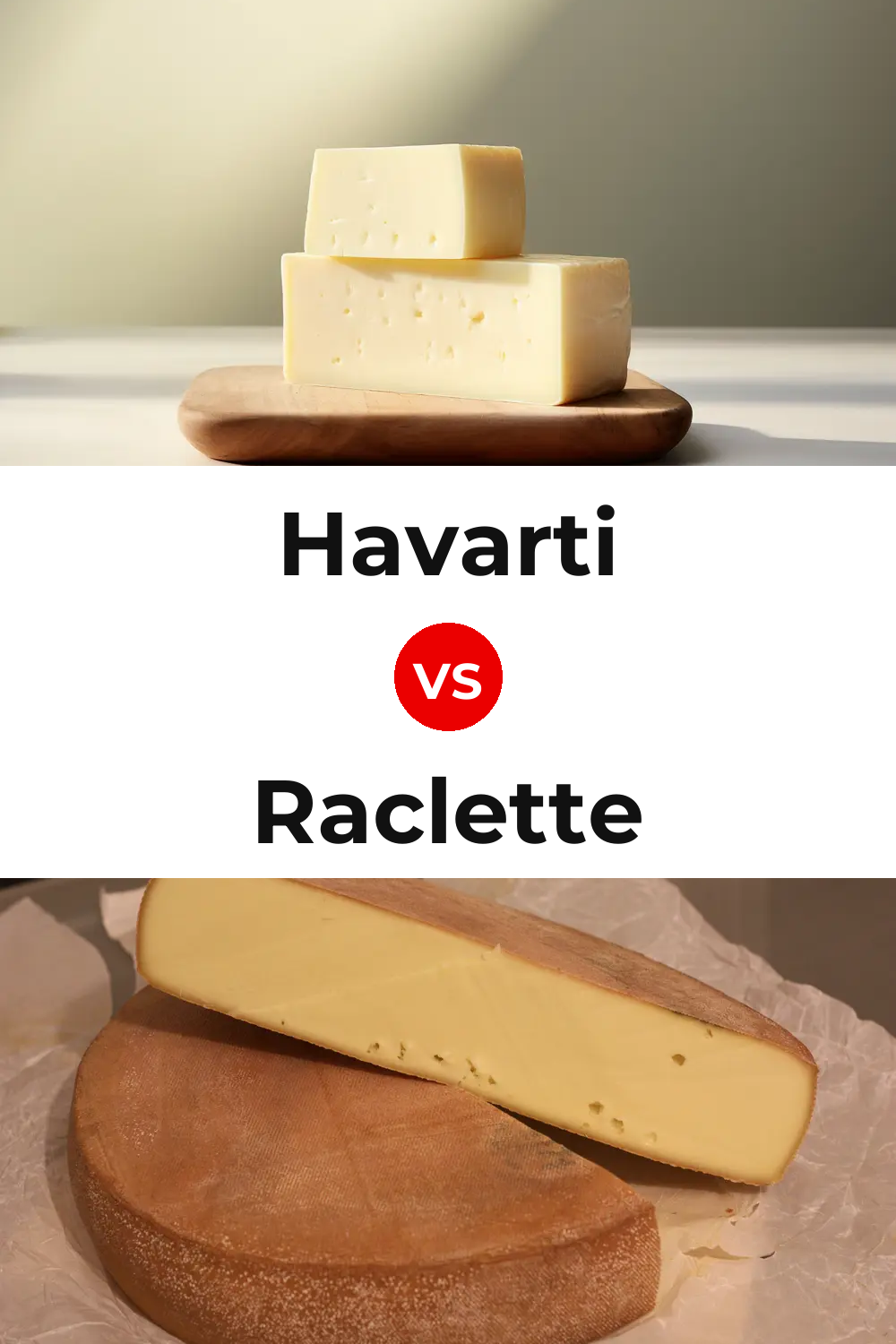
Havarti Cheese is a semi-soft cow-milk cheese from Denmark, while Raclette Cheese is semi-soft and made from cow milk, originating in Switzerland.
Buy Havarti Cheese
Buy Raclette Cheese
What Is Havarti Cheese?
Havarti is a semisoft Danish cow's milk cheese, mild and buttery with very small irregular eyes running through a rindless, cream to yellow paste. It slices, grills, and melts, and the EU reserved the name for Denmark in 2019.
What Is Raclette Cheese?
Raclette is a Swiss cheese and the dish made from it: the cheese is heated and the melted part is scraped off, usually onto boiled potatoes. It comes from the canton of Valais, where the cheese carries an AOP.
What's the Difference Between Havarti Cheese and Raclette Cheese?
- Origin: Havarti Cheese (Denmark), Raclette Cheese (Switzerland)
- Milk treatment: Havarti Cheese (pasteurized), Raclette Cheese (Raw)
- Rind: Havarti Cheese (rindless), Raclette Cheese (Washed)
- Aging: Havarti Cheese (about 3 months), Raclette Cheese (3-4 months)
- Taste: Havarti Cheese (Mild, buttery), Raclette Cheese (Mildly acidic)
Side-by-Side Comparison
| Havarti Cheese | Raclette Cheese | |
|---|---|---|
| Country of Origin | Denmark | Switzerland |
| Specific Origin | Denmark | Alpine Regions |
| Milk Type | Cow's milk | Cow's milk |
| Milk Treatment | Pasteurized | Raw |
| Texture | Semi-soft | Semi-soft |
| Rind | Rindless | Washed |
| Aging | About 3 months | 3-4 months |
| Taste | Mild, buttery | Mildly acidic |
Taste Comparison: Does Havarti Cheese Taste Like Raclette Cheese?
Havarti Cheese reads as mild, buttery, while Raclette Cheese brings mildly acidic character. More specifically, Havarti Cheese shows mild, buttery, slightly acidic cheese known for its irregularly shaped small holes creating a lacy appearance. smooth and firm texture, can be complimented with herbs or jalapeño peppers. variants include creamy versions with up to 65% fat on dry matter basis. manufactured in denmark, united kingdom, canada, and the united states, including artisanal and mass-produced by arla foods and costello., while Raclette Cheese leans toward 'slightly lactic', 'milky', 'fresh butter', 'floral', 'vegetal'. Aging plays into this as well. Havarti Cheese at about 3 months develops a different profile than Raclette Cheese at 3-4 months.
Can You Substitute Havarti Cheese for Raclette Cheese?
In most recipes, Havarti Cheese and Raclette Cheese can be swapped with reasonable results. Both are cow-milk cheeses, so the base character carries over. Flavor-wise, Havarti Cheese reads as mild, buttery while Raclette Cheese brings mildly acidic notes.
Which Is Better, Havarti Cheese or Raclette Cheese?
There's no single winner. It depends on your recipe and the profile you want. Flavor-wise, Havarti Cheese suits recipes that want mild, buttery notes, while Raclette Cheese fits dishes calling for mildly acidic.
Which is your favorite?
One click, anonymous. See what others chose.
Frequently Asked Questions
Is Havarti Cheese the same as Raclette Cheese?
No, they're distinct cheeses. Havarti Cheese originates in Denmark, while Raclette Cheese comes from Switzerland. Aging also differs: Havarti Cheese is typically aged about 3 months, Raclette Cheese 3-4 months.
Is Havarti Cheese similar to Raclette Cheese?
Yes, they share close profiles. Same milk base and similar texture make them workable alternatives in many recipes.
Can I substitute Havarti Cheese for Raclette Cheese?
Yes, quite easily. The milk base and texture are close enough that most recipes won't notice the swap.
Does Havarti Cheese taste like Raclette Cheese?
Havarti Cheese reads as mild, buttery, while Raclette Cheese is mildly acidic.
What is Havarti Cheese made of?
Havarti Cheese is made from cow milk (pasteurized). It's typically aged about 3 months. It originates in Denmark.
What is Raclette Cheese made of?
Raclette Cheese is made from cow milk (raw), using animal rennet. It's typically aged 3-4 months. It originates in Switzerland.
Which should I choose, Havarti Cheese or Raclette Cheese?
It depends on the dish. The table above is the fastest way to decide based on your recipe.