
Kalathaki Limnou Cheese vs Queso de Guía
Kalathaki Limnou Cheese
Queso de Guía
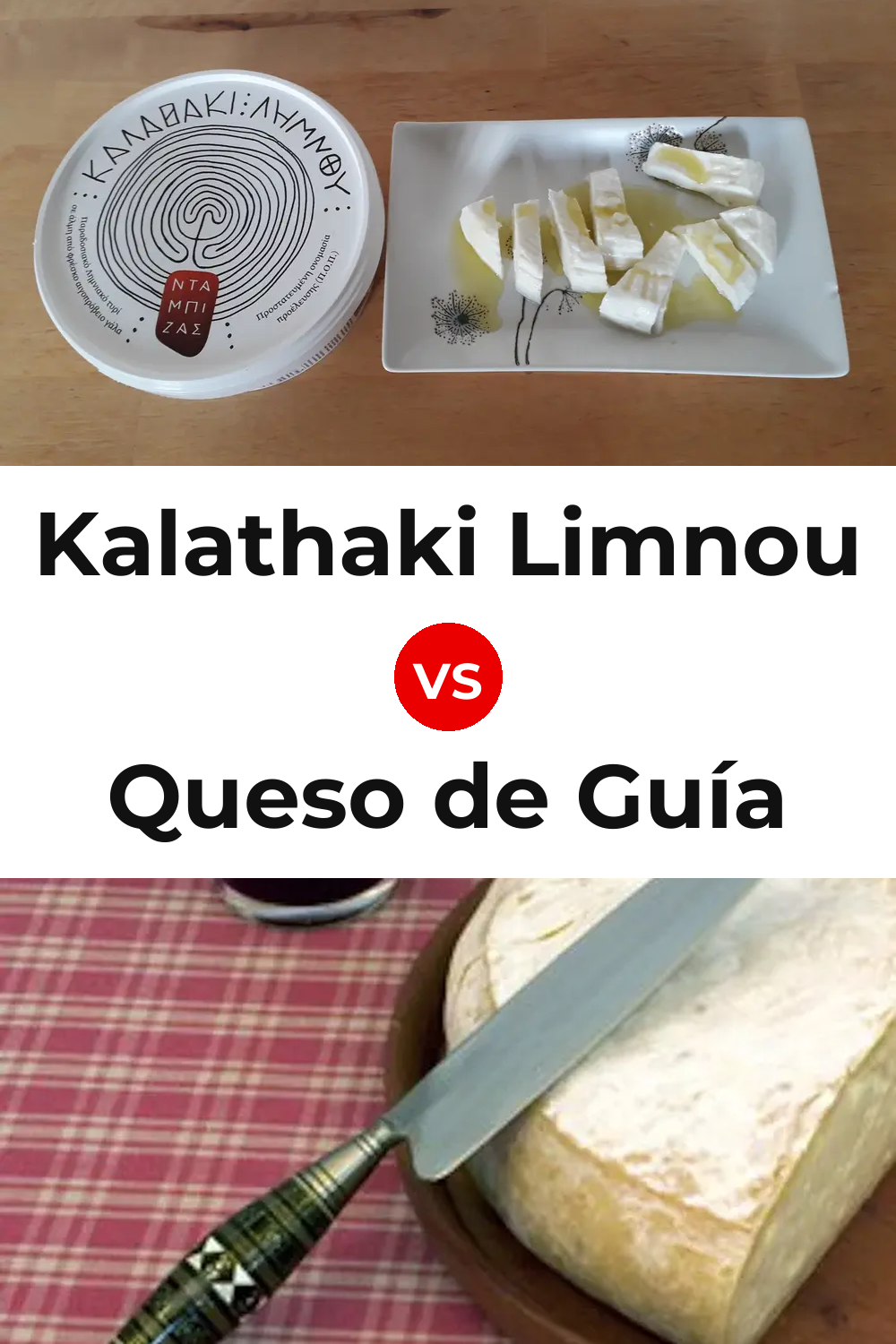
Kalathaki Limnou Cheese is a soft goat or sheep-milk cheese from Greece, while Queso de Guía is dense, compact, sometimes creamy and made from cow, goat, and sheep milk.
Buy Kalathaki Limnou Cheese
Buy Queso de Guía
What Is Kalathaki Limnou Cheese?
Kalathaki Limnou is a fresh brined cheese from the Greek island of Lemnos, made from sheep's milk with up to 30 percent goat's milk. Protected as a PDO since 1996, it is named for the small basket molds that leave their pattern on its surface.
What Is Queso de Guía?
Queso de Guía is a Spanish cheese from Gran Canaria, made mostly from sheep's milk with some cow and goat milk added. It carries a protected designation of origin granted in 2006 and is sold either soft and creamy or hard and sharp.
What's the Difference Between Kalathaki Limnou Cheese and Queso de Guía?
- Milk type: Kalathaki Limnou Cheese (Pasteurized sheep's milk, Goat’s milk (up to 30%)), Queso de Guía (Sheep (Canary Island breed), with up to 40% cow and 10% goat milk)
- Milk treatment: Kalathaki Limnou Cheese (Pasteurized), Queso de Guía (raw, for the artesano designation)
- Texture: Kalathaki Limnou Cheese (Soft), Queso de Guía (Dense, compact, sometimes creamy)
- Rind: Kalathaki Limnou Cheese (No external rind), Queso de Guía (Ivory when young, thick and dark brown when mature)
- Aging: Kalathaki Limnou Cheese (Three weeks at 14-18°C, then at least two months at <6°C), Queso de Guía (15+ days (semi-mature), 60+ days (mature))
- Taste: Kalathaki Limnou Cheese (Pleasant, slightly acidic), Queso de Guía (Salty and acidic, with occasional bitterness and sharpness)
Side-by-Side Comparison
| Kalathaki Limnou Cheese | Queso de Guía | |
|---|---|---|
| Country of Origin | Greece | — |
| Specific Origin | Lemnos, Aegean Sea | Gran Canaria, Canary Islands, Spain |
| Milk Type | Pasteurized sheep's milk, Goat’s milk (up to 30%) | Sheep (Canary Island breed), with up to 40% cow and 10% goat milk |
| Milk Treatment | Pasteurized | Raw, for the artesano designation |
| Texture | Soft | Dense, compact, sometimes creamy |
| Rind | No external rind | Ivory when young, thick and dark brown when mature |
| Aging | Three weeks at 14-18°C, then at least two months at <6°C | 15+ days (semi-mature), 60+ days (mature) |
| Taste | Pleasant, slightly acidic | Salty and acidic, with occasional bitterness and sharpness |
Taste Comparison: Does Kalathaki Limnou Cheese Taste Like Queso de Guía?
Kalathaki Limnou Cheese reads as pleasant, slightly acidic, while Queso de Guía brings salty and acidic, with occasional bitterness and sharpness character. On the nose, Kalathaki Limnou Cheese offers rich, contrasted with Queso de Guía's medium intensity, mainly lactic. More specifically, Kalathaki Limnou Cheese shows soft, white cheese with a slightly acidic taste and rich aroma. carries marks of the baskets used., while Queso de Guía leans toward predominantly lactic, with animal notes. Aging plays into this as well. Kalathaki Limnou Cheese at three weeks at 14-18°c, then at least two months at <6°c develops a different profile than Queso de Guía at 15+ days (semi-mature), 60+ days (mature).
Can You Substitute Kalathaki Limnou Cheese for Queso de Guía?
Kalathaki Limnou Cheese can stand in for Queso de Guía in many dishes, but the switch will shift the overall character of the recipe. Expect soft bite and body where the recipe calls for dense, compact, sometimes creamy. Flavor-wise, Kalathaki Limnou Cheese reads as pleasant, slightly acidic while Queso de Guía brings salty and acidic, with occasional bitterness and sharpness notes.
Which Is Better, Kalathaki Limnou Cheese or Queso de Guía?
There's no single winner. It depends on your recipe and the profile you want. If you want a soft cheese, go with Kalathaki Limnou Cheese. For a dense, compact, sometimes creamy profile, Queso de Guía is the better fit. Flavor-wise, Kalathaki Limnou Cheese suits recipes that want pleasant, slightly acidic notes, while Queso de Guía fits dishes calling for salty and acidic, with occasional bitterness and sharpness.
Which is your favorite?
One click, anonymous. See what others chose.
Frequently Asked Questions
Is Kalathaki Limnou Cheese the same as Queso de Guía?
No, they're distinct cheeses. Kalathaki Limnou Cheese is made from goat or sheep milk; Queso de Guía uses cow, goat, and sheep. Aging also differs: Kalathaki Limnou Cheese is typically aged three weeks at 14-18°c, then at least two months at <6°c, Queso de Guía 15+ days (semi-mature), 60+ days (mature).
Is Kalathaki Limnou Cheese similar to Queso de Guía?
Not closely. They use different milk bases and have distinct profiles.
Can I substitute Kalathaki Limnou Cheese for Queso de Guía?
You can, but expect a shift in richness and milk character.
Does Kalathaki Limnou Cheese taste like Queso de Guía?
Kalathaki Limnou Cheese reads as pleasant, slightly acidic, while Queso de Guía is salty and acidic, with occasional bitterness and sharpness. Aromas also diverge. Kalathaki Limnou Cheese leans rich, and Queso de Guía is closer to medium intensity, mainly lactic.
What is Kalathaki Limnou Cheese made of?
Kalathaki Limnou Cheese is made from goat or sheep milk (pasteurized), using animal rennet. It's typically aged three weeks at 14-18°c, then at least two months at <6°c. It originates in Greece.
What is Queso de Guía made of?
Queso de Guía is made from cow, goat, and sheep milk (raw, for the artesano designation), using animal rennet and/or vegetable rennet (cynara cardunculus var. ferocissima, cynara scolymus) and/or starter cultures rennet. It's typically aged 15+ days (semi-mature), 60+ days (mature).
Which should I choose, Kalathaki Limnou Cheese or Queso de Guía?
It depends on the dish. The texture difference is the biggest practical tell. Kalathaki Limnou Cheese is soft, while Queso de Guía is dense, compact, sometimes creamy.