Kashkaval Cheese vs Tête de Moine Cheese
Kashkaval Cheese
Tête de Moine Cheese
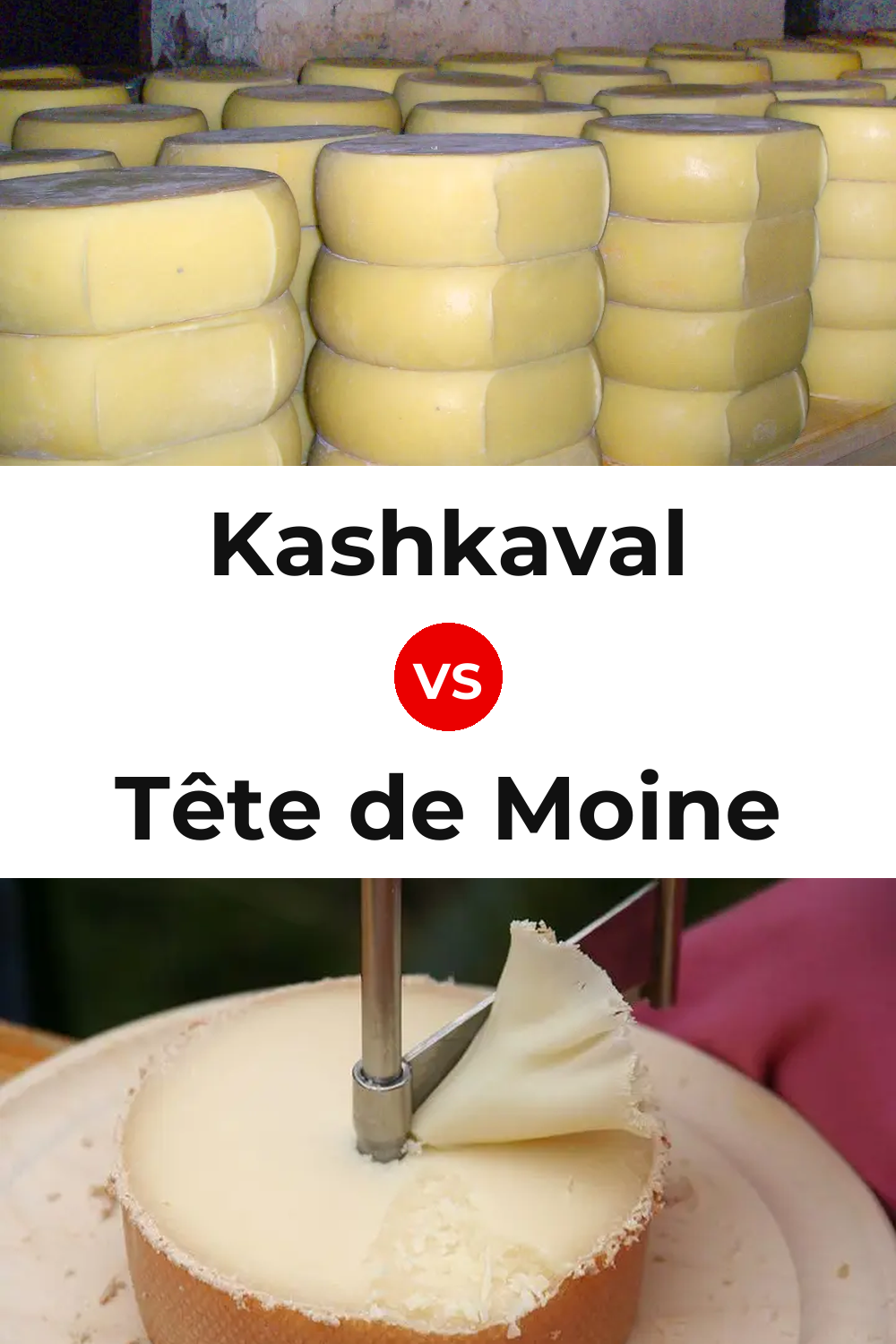
Kashkaval Cheese is a medium-hard to hard, elastic cow or sheep-milk cheese from Bulgaria, Romania, Serbia and Turkey, while Tête de Moine Cheese is semi-hard and made from cow milk, originating in Switzerland.
What Is Kashkaval Cheese?
Kashkaval is a popular type of yellow cheese made from cow's milk, or sometimes from sheep's milk, in various countries across the Balkans. It has a semi-hard texture and a rich, slightly tangy flavor that becomes sharper with age. Kashkaval is versatile in cooking, used for grating, slicing, and melting in dishes like pizzas, sandwiches, and casseroles.
What Is Tête de Moine Cheese?
Tête de Moine, meaning "monk’s head," is a Swiss cheese made from cow's milk. It is traditionally shaved into rosette-shaped slices using a girolle. The cheese has a firm texture and a rich, creamy flavor with a slightly tangy and nutty undertone, ideal for elegant cheese platters.
What's the Difference Between Kashkaval Cheese and Tête de Moine Cheese?
- Origin: Kashkaval Cheese (Bulgaria, Romania, Serbia and Turkey), Tête de Moine Cheese (Switzerland)
- Milk type: Kashkaval Cheese (cow's or sheep's milk), Tête de Moine Cheese (cow's milk)
- Milk treatment: Kashkaval Cheese (Varied), Tête de Moine Cheese (unpasteurized)
- Texture: Kashkaval Cheese (Medium-hard to hard, elastic), Tête de Moine Cheese (semi-hard)
- Taste: Kashkaval Cheese (Piquant), Tête de Moine Cheese (nutty)
Side-by-Side Comparison
| Kashkaval Cheese | Tête de Moine Cheese | |
|---|---|---|
| Country of Origin | Bulgaria, Romania, Serbia And Turkey | Switzerland |
| Specific Origin | No Specific Location | — |
| Milk Type | Cow's or sheep's milk | Cow's milk |
| Milk Treatment | Varied | Unpasteurized |
| Texture | Medium-hard to hard, elastic | Semi-hard |
| Rind | Varied | — |
| Aging | Minimum of two months | — |
| Taste | Piquant | Nutty |
Taste Comparison: Does Kashkaval Cheese Taste Like Tête de Moine Cheese?
Kashkaval Cheese reads as piquant, while Tête de Moine Cheese brings nutty character. On the nose, Kashkaval Cheese offers varied, contrasted with Tête de Moine Cheese's rich.
Can You Substitute Kashkaval Cheese for Tête de Moine Cheese?
Kashkaval Cheese can stand in for Tête de Moine Cheese in many dishes, but the switch will shift the overall character of the recipe. Expect medium-hard to hard, elastic bite and body where the recipe calls for semi-hard. Flavor-wise, Kashkaval Cheese reads as piquant while Tête de Moine Cheese brings nutty notes.
Which Is Better, Kashkaval Cheese or Tête de Moine Cheese?
There's no single winner. It depends on your recipe and the profile you want. If you want a medium-hard to hard, elastic cheese, go with Kashkaval Cheese. For a semi-hard profile, Tête de Moine Cheese is the better fit. Flavor-wise, Kashkaval Cheese suits recipes that want piquant notes, while Tête de Moine Cheese fits dishes calling for nutty.
Which is your favorite?
One click, anonymous. See what others chose.
Frequently Asked Questions
Is Kashkaval Cheese the same as Tête de Moine Cheese?
No, they're distinct cheeses. Kashkaval Cheese originates in Bulgaria, Romania, Serbia and Turkey, while Tête de Moine Cheese comes from Switzerland. Kashkaval Cheese is made from cow or sheep milk; Tête de Moine Cheese uses cow.
Is Kashkaval Cheese similar to Tête de Moine Cheese?
Not closely. They use different milk bases and have distinct profiles.
Can I substitute Kashkaval Cheese for Tête de Moine Cheese?
You can, but expect a shift in richness and milk character.
Does Kashkaval Cheese taste like Tête de Moine Cheese?
Kashkaval Cheese reads as piquant, while Tête de Moine Cheese is nutty. Aromas also diverge. Kashkaval Cheese leans varied, and Tête de Moine Cheese is closer to rich.
What is Kashkaval Cheese made of?
Kashkaval Cheese is made from cow or sheep milk (varied), using varied rennet. It's typically aged minimum of two months. It originates in Bulgaria, Romania, Serbia and Turkey.
What is Tête de Moine Cheese made of?
Tête de Moine Cheese is made from cow milk (unpasteurized). It originates in Switzerland.
Which should I choose, Kashkaval Cheese or Tête de Moine Cheese?
It depends on the dish. The texture difference is the biggest practical tell. Kashkaval Cheese is medium-hard to hard, elastic, while Tête de Moine Cheese is semi-hard.