Kefalograviera Cheese vs Robiola di Roccaverano Cheese
Kefalograviera Cheese
Robiola di Roccaverano Cheese
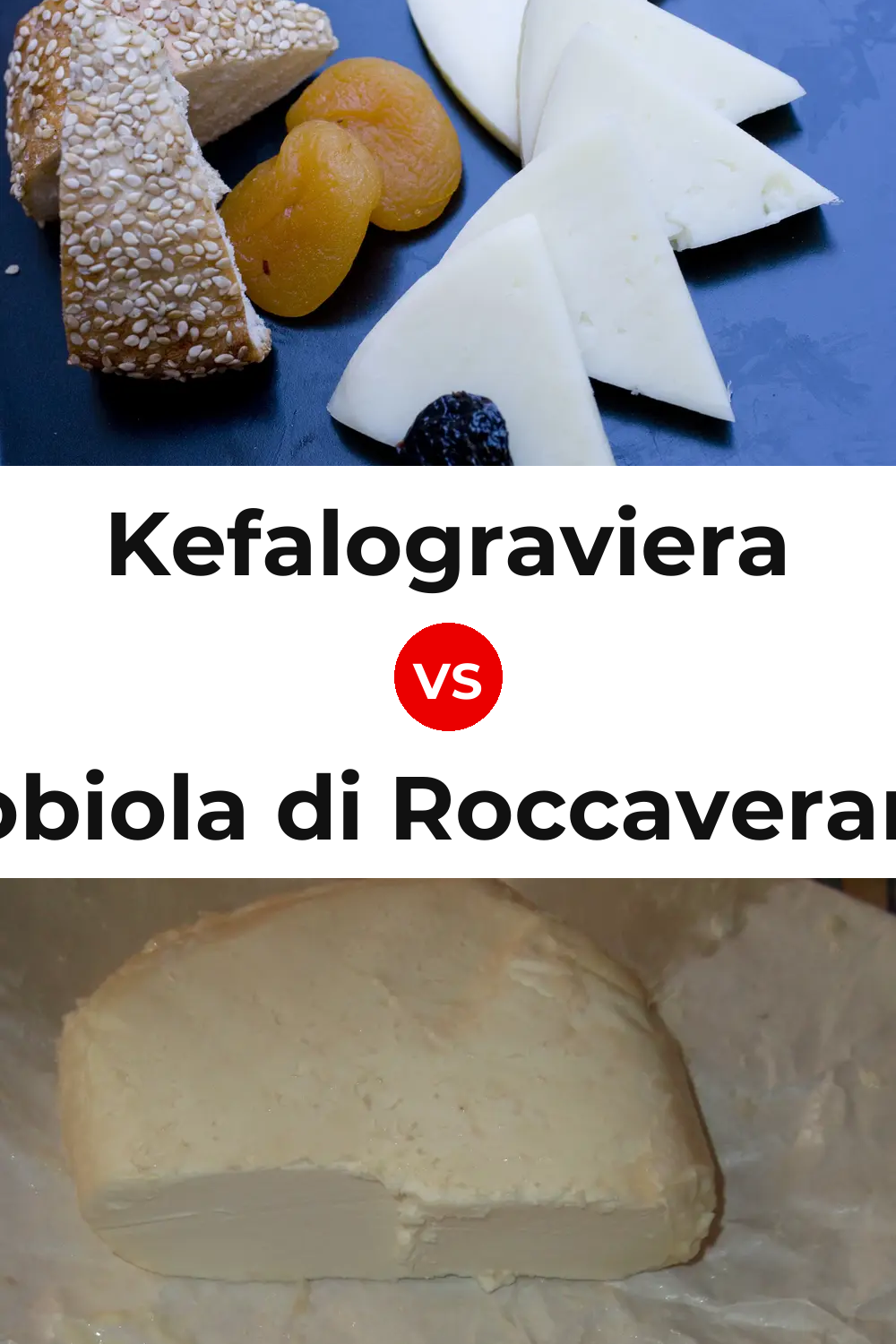
Kefalograviera Cheese is a firm, elastic cow, goat, and sheep-milk cheese from Greece, while Robiola di Roccaverano Cheese is soft, rubbery, soluble; crumbly (for affinato) and made from goat milk, originating in Italy.
What Is Kefalograviera Cheese?
Kefalograviera is a hard Greek table cheese made from sheep's milk or a mix of sheep's and goat's milk. It tastes salty, smells rich, and shows up most often fried as saganaki or grated over pasta.
What Is Robiola di Roccaverano Cheese?
Roccaverano, long called Robiola di Roccaverano, is a protected goat cheese from Piedmont, named after the village of Roccaverano in the Langa Astigiana. Since 2023 it must be made entirely from raw goat's milk, and it is eaten young or after a short ripening.
What's the Difference Between Kefalograviera Cheese and Robiola di Roccaverano Cheese?
- Origin: Kefalograviera Cheese (Greece), Robiola di Roccaverano Cheese (Italy)
- Milk type: Kefalograviera Cheese (Sheep’s milk or mixtures with up to 10% goat’s milk; sometimes cow's and sheep's milk (60:40)), Robiola di Roccaverano Cheese (goat)
- Milk treatment: Kefalograviera Cheese (Pasteurized), Robiola di Roccaverano Cheese (raw)
- Texture: Kefalograviera Cheese (Firm, elastic), Robiola di Roccaverano Cheese (Soft, rubbery, soluble; Crumbly (for affinato))
- Aging: Kefalograviera Cheese (3 months), Robiola di Roccaverano Cheese (Fresco: 4-10 days; Affinato: After 11 days)
- Taste: Kefalograviera Cheese (Pleasant), Robiola di Roccaverano Cheese (Acidic, savory)
Side-by-Side Comparison
| Kefalograviera Cheese | Robiola di Roccaverano Cheese | |
|---|---|---|
| Country of Origin | Greece | Italy |
| Specific Origin | Western Macedonia, Epirus, Etoloakarnania, Evrytania | Province Of Asti And Alessandria, Piedmont |
| Milk Type | Sheep’s milk or mixtures with up to 10% goat’s milk; sometimes cow's and sheep's milk (60:40) | Goat |
| Milk Treatment | Pasteurized | Raw |
| Texture | Firm, elastic | Soft, rubbery, soluble; Crumbly (for affinato) |
| Rind | — | Thin with molds (for affinato) |
| Aging | 3 months | Fresco: 4-10 days; Affinato: After 11 days |
| Taste | Pleasant | Acidic, savory |
Taste Comparison: Does Kefalograviera Cheese Taste Like Robiola di Roccaverano Cheese?
Kefalograviera Cheese reads as pleasant, while Robiola di Roccaverano Cheese brings acidic, savory character. On the nose, Kefalograviera Cheese offers rich, contrasted with Robiola di Roccaverano Cheese's fine and delicate; intense and pungent. More specifically, Kefalograviera Cheese shows combines graviera's taste with kefalotyri's appearance. firm, elastic body with few irregular holes., while Robiola di Roccaverano Cheese leans toward acidic; fine and delicate. Aging plays into this as well. Kefalograviera Cheese at 3 months develops a different profile than Robiola di Roccaverano Cheese at fresco: 4-10 days; affinato: after 11 days.
Can You Substitute Kefalograviera Cheese for Robiola di Roccaverano Cheese?
Kefalograviera Cheese can stand in for Robiola di Roccaverano Cheese in many dishes, but the switch will shift the overall character of the recipe. Expect firm, elastic bite and body where the recipe calls for soft, rubbery, soluble; crumbly (for affinato). Flavor-wise, Kefalograviera Cheese reads as pleasant while Robiola di Roccaverano Cheese brings acidic, savory notes.
Which Is Better, Kefalograviera Cheese or Robiola di Roccaverano Cheese?
There's no single winner. It depends on your recipe and the profile you want. If you want a firm, elastic cheese, go with Kefalograviera Cheese. For a soft, rubbery, soluble; crumbly (for affinato) profile, Robiola di Roccaverano Cheese is the better fit. Flavor-wise, Kefalograviera Cheese suits recipes that want pleasant notes, while Robiola di Roccaverano Cheese fits dishes calling for acidic, savory.
Which is your favorite?
One click, anonymous. See what others chose.
Frequently Asked Questions
Is Kefalograviera Cheese the same as Robiola di Roccaverano Cheese?
No, they're distinct cheeses. Kefalograviera Cheese originates in Greece, while Robiola di Roccaverano Cheese comes from Italy. Kefalograviera Cheese is made from cow, goat, and sheep milk; Robiola di Roccaverano Cheese uses goat. Aging also differs: Kefalograviera Cheese is typically aged 3 months, Robiola di Roccaverano Cheese fresco: 4-10 days; affinato: after 11 days.
Is Kefalograviera Cheese similar to Robiola di Roccaverano Cheese?
Not closely. They use different milk bases and have distinct profiles.
Can I substitute Kefalograviera Cheese for Robiola di Roccaverano Cheese?
You can, but expect a shift in richness and milk character.
Does Kefalograviera Cheese taste like Robiola di Roccaverano Cheese?
Kefalograviera Cheese reads as pleasant, while Robiola di Roccaverano Cheese is acidic, savory. Aromas also diverge. Kefalograviera Cheese leans rich, and Robiola di Roccaverano Cheese is closer to fine and delicate; intense and pungent.
What is Kefalograviera Cheese made of?
Kefalograviera Cheese is made from cow, goat, and sheep milk (pasteurized), using animal rennet. It's typically aged 3 months. It originates in Greece.
What is Robiola di Roccaverano Cheese made of?
Robiola di Roccaverano Cheese is made from goat milk (raw). It's typically aged fresco: 4-10 days; affinato: after 11 days. It originates in Italy.
Which should I choose, Kefalograviera Cheese or Robiola di Roccaverano Cheese?
It depends on the dish. The texture difference is the biggest practical tell. Kefalograviera Cheese is firm, elastic, while Robiola di Roccaverano Cheese is soft, rubbery, soluble; crumbly (for affinato).