Kefalograviera 
Kefalograviera is a hard Greek table cheese made from sheep's milk or a mix of sheep's and goat's milk. It tastes salty, smells rich, and shows up most often fried as saganaki or grated over pasta.
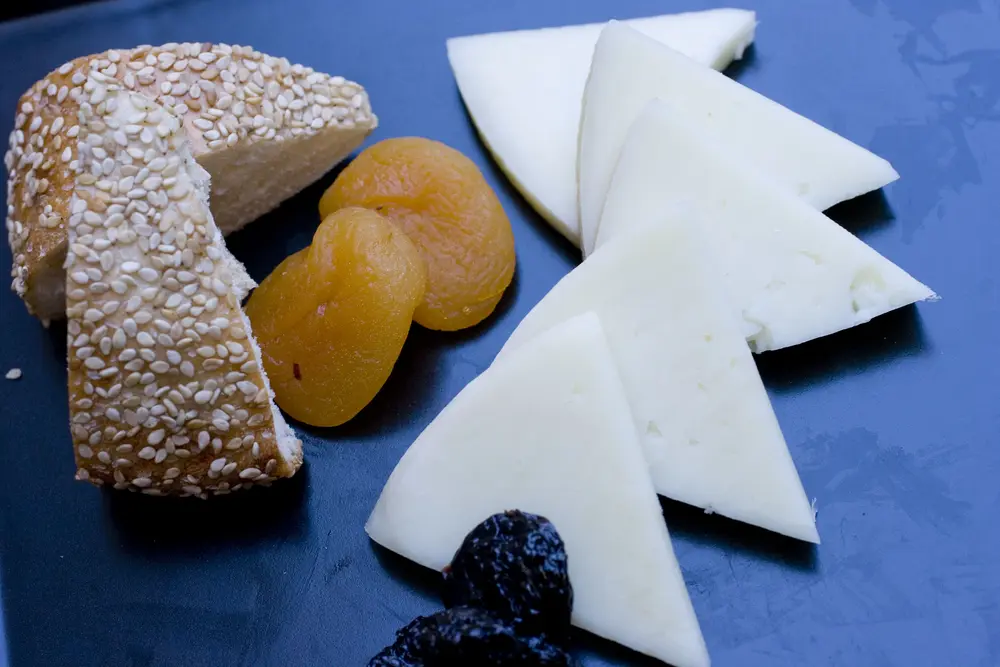
Key Facts
| Country of Origin | Greece |
| Specific Origin | Western Macedonia, Epirus, Etoloakarnania, Evrytania |
| Protection | PDO (1996) |
| Milk Type | Sheep’s milk or mixtures with up to 10% goat’s milk; sometimes cow's and sheep's milk (60:40) |
| Milk Treatment | Pasteurized |
| Fat Content | Minimum 40% in dry matter |
| Moisture Content | Maximum 40% |
| Texture | Firm, elastic |
| Flavor | Pleasant |
| Aroma | Rich |
| Age | 3 months |
| Rennet Type | Animal |
| Also Known As | Κεφαλογραβιέρα |
What is Kefalograviera Cheese?
Kefalograviera is a hard table cheese from Greece. It is made in Western Macedonia, Epirus, and the regional units of Aetolia-Acarnania and Evrytania. The name and the cheese both carry PDO status in the EU and the UK.
The milk comes from sheep, or from a mixture of sheep's and goat's milk. That is the traditional recipe and it is still the one that defines the cheese.
The flavour is salty and the aroma is rich. Kefalograviera sits very close to Kefalotyri, close enough that it is sometimes sold under that name.
In Greek kitchens it goes into saganaki: cut into triangles, rolled in seasoned flour, then fried lightly. It also grates well, which is why it turns up on pasta. One cookbook puts it plainly, saying that at its best it is as good as or better than Romano or aged Asiago.
How Does Kefalograviera Cheese Compare?
The most relevant cheeses to compare Kefalograviera against.


