Manouri 
Manouri is a Greek semi-soft fresh whey cheese made from goat or sheep milk as a by-product of feta production. Cream added to the whey makes it richer and far less salty than feta.
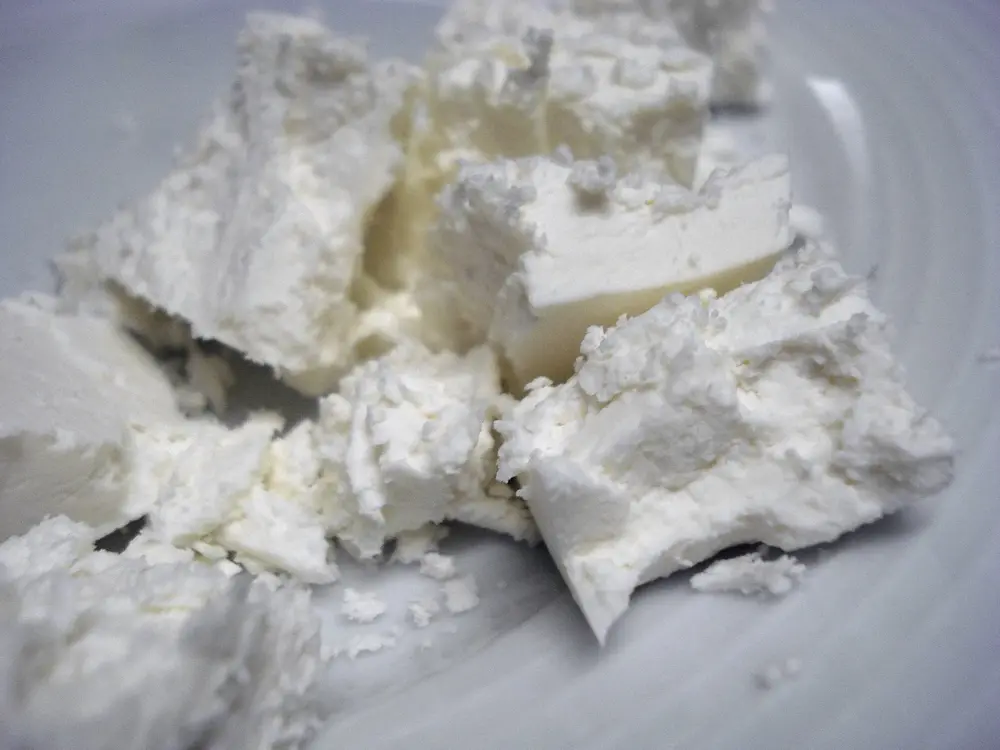
Antonio Fajardo i López, CC BY-SA 3.0, via Wikimedia Commons
Key Facts
| Country of Origin | Greece |
| Specific Origin | Central and Western Macedonia, Thessaly |
| Protection | PDO (1996) |
| Milk Type | Goat's or sheep's milk |
| Milk Treatment | Pasteurized |
| Fat Content | 36 to 38 percent |
| Rind | None |
| Texture | Smooth, dense |
| Flavor | Rich, milky, tangy, slightly citrusy |
| Aroma | Clean, nutty, subtle |
| Colors | White |
| Forms | Cylinders, sold whole or in segments |
| Age | Typically eaten young, can be aged for grating |
| Also Known As | Manoypi, Μανούρι |
What is Manouri Cheese?
Manouri is a Greek semi-soft, fresh white cheese made from a mix of milk and whey. It comes out of goat or sheep milk as a by-product of feta making. Production centers on Thessalia and Macedonia, in central and northern Greece. The cheese carries PDO status.
The whey left from feta gets cream added to it, which is what separates manouri from the leaner whey cheeses. Fat runs about 36 to 38 percent. Salt sits at only 0.8 percent, so the cheese tastes much milder than the feta it started from.
The aroma is light and slightly sour, close to fresh yogurt, though without yogurt's acidity or feta's. The flavor is clean and subtly nutty, with some sheepiness and the barest hint of tang. Texture is what people notice first.
Greeks use manouri in salads and pastries, and serve it as a dessert cheese. It stands in for cream cheese in dishes like cheesecake. Mizithra is a close relative with very similar flavor, only drier.
How Does Manouri Cheese Compare?
The most relevant cheeses to compare Manouri against.


