Kopanisti 
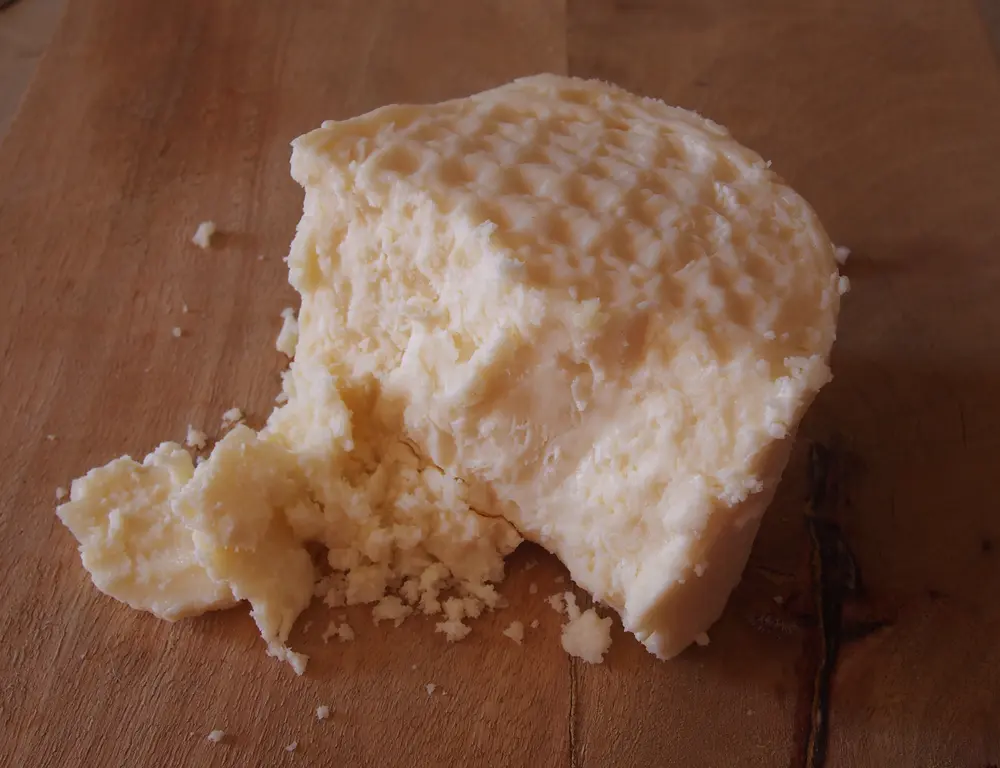
Kopanisti is a salty, spicy PDO cheese from the Cyclades, made on Mykonos for more than 300 years. Repeated kneading during ripening spreads its microbial flora through the cheese and gives it a sharp peppery bite.
Key Facts
| Country of Origin | Greece |
| Specific Origin | Cyclades islands (Mykonos and Tinos) |
| Protection | PDO (1996) |
| Milk Type | Whole raw cow’s, ewe’s, and goat’s milk or mixtures, adapted to the region |
| Milk Treatment | Raw |
| Fat Content | 43% minimum dry fat content |
| Moisture Content | Maximum 56% |
| Texture | Spreadable |
| Flavor | Intense salty and peppery |
| Colors | Off white to beige |
| Age | 30 to 40 days |
| Rennet Type | Animal |
| Also Known As | Κοπανιστή |
What is Kopanisti Cheese?
Kopanisti carries protected designation of origin status and comes from the Cyclades islands in the Aegean: Mykonos, Tinos, Andros, Syros, Naxos and others. On Mykonos it has been made for more than 300 years. The name comes from the Greek word for something that has been beaten, which describes how the cheese is handled. A related cheese is made in Turkey, where it is called kopanisti peyniri or acı peynir and is produced in the Çeşme and Karaburun districts of İzmir Province from goat's milk.
It is made from cow, sheep or goat's milk, or a mixture. Producers work with artisanal cultures, using some of the previous batch as inoculum for the next one. The milk is held at 28 to 30 °C (82 to 86 °F) with yeast for about 20 to 24 hours until it thickens. After draining, red chili peppers and salt go in, and the maker works the mixture by hand once an hour through the first 24 hours.
The mass is then wrapped in cotton cloth, set in a cooking pot and weighted with a stone to press out the remaining liquid. It stays in the cloth for a week to mature and let the fungus develop. It is mixed again and packed into containers, traditionally earthenware, to finish aging over one to two months.
Kneading is repeated three or four times until ripening is complete, after 30 to 40 days. That handling is what makes the cheese so peppery and spicy, since it distributes the microbial growth responsible for the flavor.
The best known way to eat it is mostra: dry bread topped with Kopanisti, chopped tomatoes and olive oil. Mykoniotes also serve it as a meze alongside ouzo.
How Does Kopanisti Cheese Compare?
The most relevant cheeses to compare Kopanisti against.


