Krk Cheese vs San Michali Cheese
Krk Cheese
San Michali Cheese
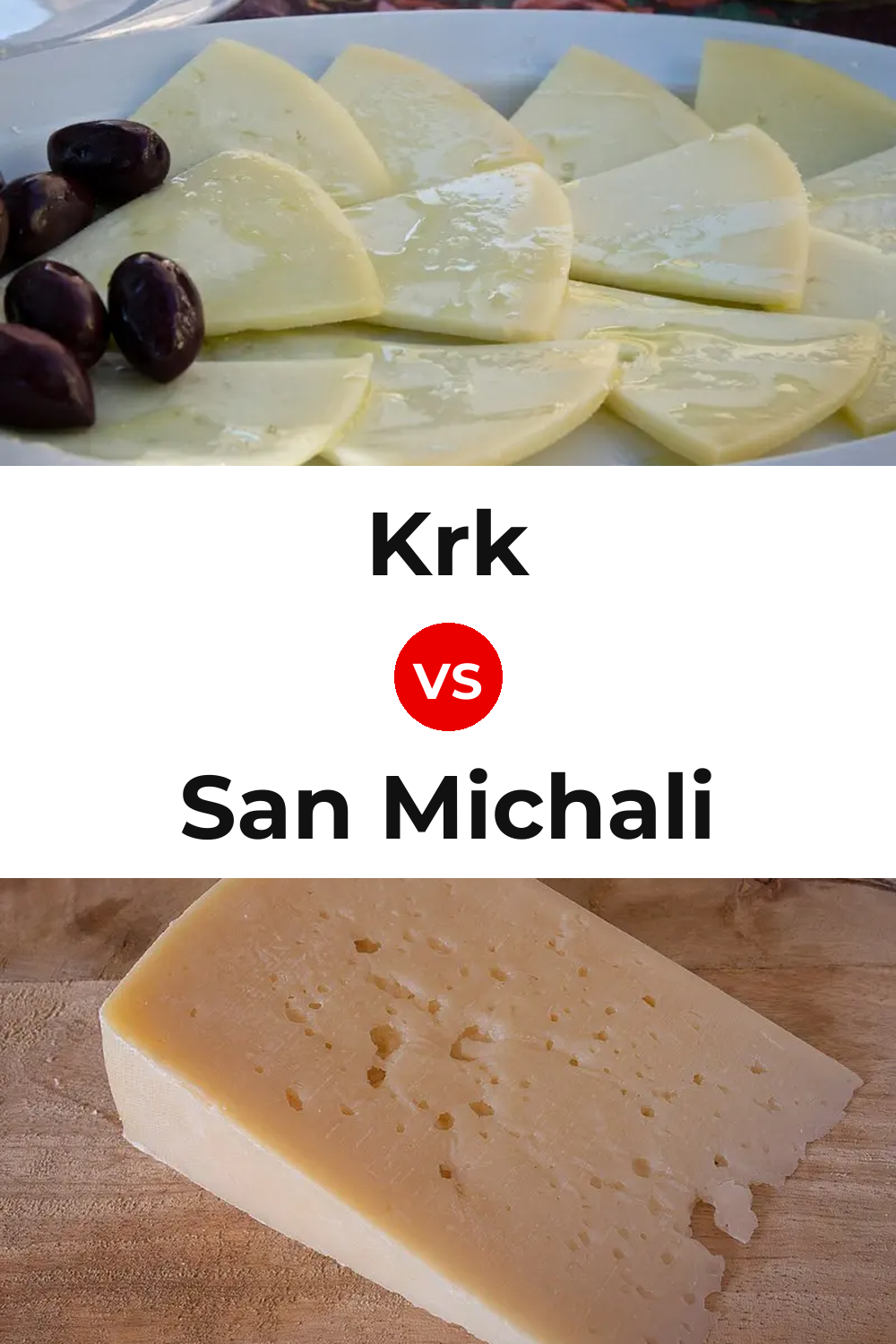
Krk Cheese is a sheep-milk cheese from Croatia, while San Michali Cheese is compact, with very small irregular holes and made from cow milk, originating in Greece.
What Is Krk Cheese?
Krk cheese is made on the Croatian island of Krk, predominantly from sheep's milk, though sometimes mixed with cow's or goat's milk. It has a hard texture and a strong, sharp flavor that is somewhat salty. This cheese is traditionally aged in the island's microclimate, giving it a distinctive taste that reflects the local flora.
What Is San Michali Cheese?
San Michali is a hard cow's milk cheese from the Greek island of Syros, aged at least four months. It carries PDO status, tastes salty and piquant, and is one of the most expensive cheeses in Greece.
What's the Difference Between Krk Cheese and San Michali Cheese?
- Origin: Krk Cheese (Croatia), San Michali Cheese (Greece)
- Milk type: Krk Cheese (Sheep’s milk), San Michali Cheese (Cow’s milk)
- Milk treatment: Krk Cheese (Raw), San Michali Cheese (Pasteurized)
- Aging: Krk Cheese (2 to 4 months), San Michali Cheese (At least four months)
- Taste: Krk Cheese (Delicate, full, strong), San Michali Cheese (Salty, peppery)
Side-by-Side Comparison
| Krk Cheese | San Michali Cheese | |
|---|---|---|
| Country of Origin | Croatia | Greece |
| Specific Origin | Island Of Krk | Island Of Syros |
| Milk Type | Sheep’s milk | Cow’s milk |
| Milk Treatment | Raw | Pasteurized |
| Texture | — | Compact, with very small irregular holes |
| Rind | — | Often covered with paraffin |
| Aging | 2 to 4 months | At least four months |
| Taste | Delicate, full, strong | Salty, peppery |
Taste Comparison: Does Krk Cheese Taste Like San Michali Cheese?
Krk Cheese reads as delicate, full, strong, while San Michali Cheese brings salty, peppery character. Aging plays into this as well. Krk Cheese at 2 to 4 months develops a different profile than San Michali Cheese at at least four months.
Can You Substitute Krk Cheese for San Michali Cheese?
Krk Cheese can stand in for San Michali Cheese in many dishes, but the switch will shift the overall character of the recipe. Flavor-wise, Krk Cheese reads as delicate, full, strong while San Michali Cheese brings salty, peppery notes.
Which Is Better, Krk Cheese or San Michali Cheese?
There's no single winner. It depends on your recipe and the profile you want. Flavor-wise, Krk Cheese suits recipes that want delicate, full, strong notes, while San Michali Cheese fits dishes calling for salty, peppery.
Which is your favorite?
One click, anonymous. See what others chose.
Frequently Asked Questions
Is Krk Cheese the same as San Michali Cheese?
No, they're distinct cheeses. Krk Cheese originates in Croatia, while San Michali Cheese comes from Greece. Krk Cheese is made from sheep milk; San Michali Cheese uses cow. Aging also differs: Krk Cheese is typically aged 2 to 4 months, San Michali Cheese at least four months.
Is Krk Cheese similar to San Michali Cheese?
Not closely. They use different milk bases and have distinct profiles.
Can I substitute Krk Cheese for San Michali Cheese?
You can, but expect a shift in richness and milk character.
Does Krk Cheese taste like San Michali Cheese?
Krk Cheese reads as delicate, full, strong, while San Michali Cheese is salty, peppery.
What is Krk Cheese made of?
Krk Cheese is made from sheep milk (raw), using natural rennet. It's typically aged 2 to 4 months. It originates in Croatia.
What is San Michali Cheese made of?
San Michali Cheese is made from cow milk (pasteurized). It's typically aged at least four months. It originates in Greece.
Which should I choose, Krk Cheese or San Michali Cheese?
It depends on the dish. The table above is the fastest way to decide based on your recipe.