Limburger Cheese vs Queijo de Évora
Limburger Cheese
Queijo de Évora
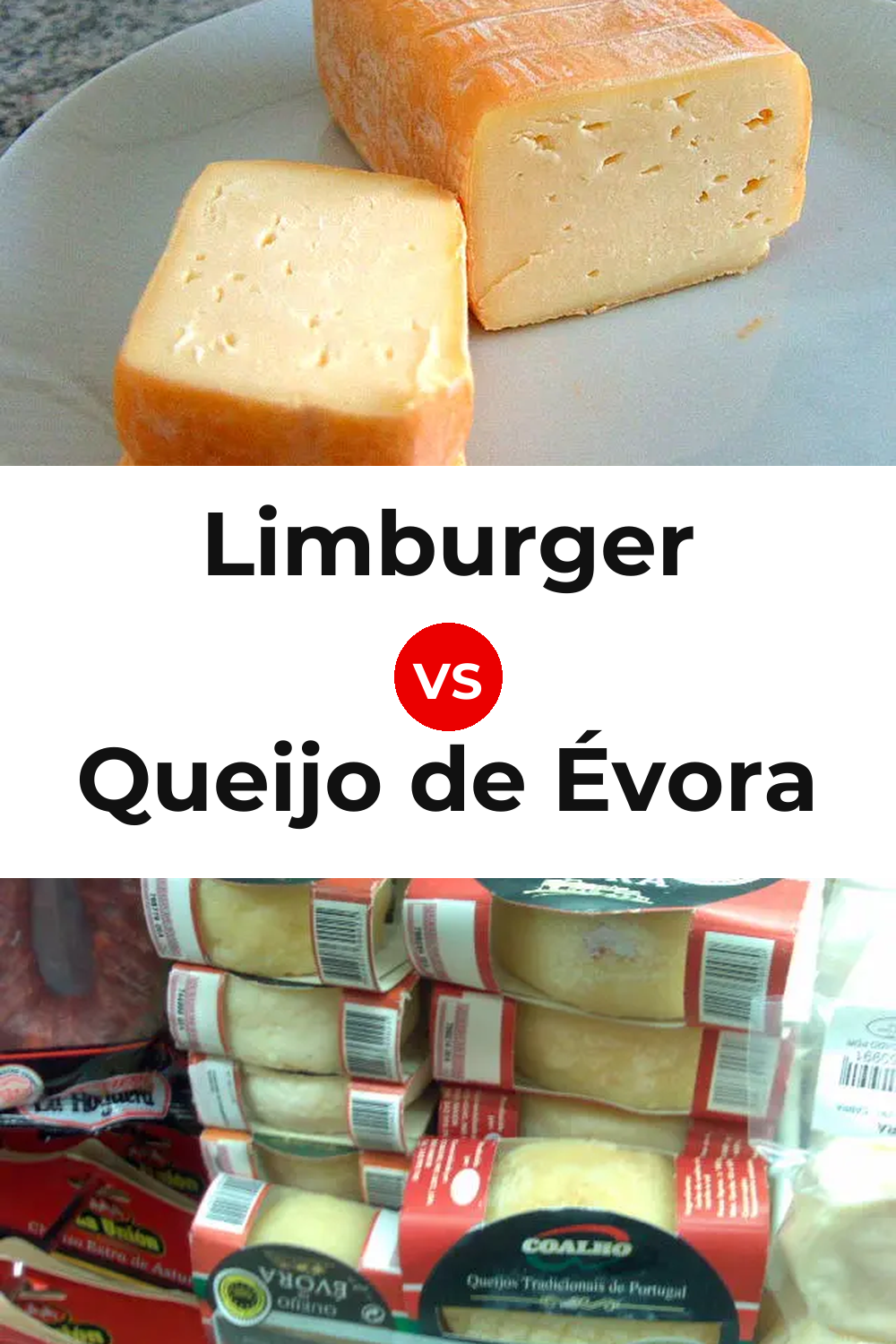
Limburger Cheese is a firm to spreadable cow-milk cheese from Belgium, while Queijo de Évora is semi-hard and made from sheep milk.
What Is Limburger Cheese?
Limburger is a washed-rind cow's milk cheese from the Herve area of the old Duchy of Limburg, now part of Belgium. It is known for the powerful smell it develops after about three months of ripening.
What Is Queijo de Évora?
Queijo de Évora is a PDO ewe's milk cheese from Évora, in Portugal's Alentejo. It is cured, hard or semi-hard, yellowish in color, and known for a slightly acidic flavor with a light peppery bite.
What's the Difference Between Limburger Cheese and Queijo de Évora?
- Milk type: Limburger Cheese (Cow’s milk), Queijo de Évora (Ewe's milk)
- Texture: Limburger Cheese (Firm to spreadable), Queijo de Évora (Semi-hard)
- Rind: Limburger Cheese (Sticky, orange-brown), Queijo de Évora (Sealed)
Side-by-Side Comparison
| Limburger Cheese | Queijo de Évora | |
|---|---|---|
| Country of Origin | Belgium | — |
| Specific Origin | Limburg, Allgäu | Évora, Alentejo, Portugal |
| Milk Type | Cow’s milk | Ewe's milk |
| Milk Treatment | Raw | Raw |
| Texture | Firm to spreadable | Semi-hard |
| Rind | Sticky, orange-brown | Sealed |
| Aging | 3 months | — |
| Taste | Meaty, farmyard | — |
Taste Comparison: Does Limburger Cheese Taste Like Queijo de Évora?
Their flavor profiles are distinct.
Can You Substitute Limburger Cheese for Queijo de Évora?
Limburger Cheese can stand in for Queijo de Évora in many dishes, but the switch will shift the overall character of the recipe. Expect firm to spreadable bite and body where the recipe calls for semi-hard.
Which Is Better, Limburger Cheese or Queijo de Évora?
There's no single winner. It depends on your recipe and the profile you want. If you want a firm to spreadable cheese, go with Limburger Cheese. For a semi-hard profile, Queijo de Évora is the better fit.
Which is your favorite?
One click, anonymous. See what others chose.
Frequently Asked Questions
Is Limburger Cheese the same as Queijo de Évora?
No, they're distinct cheeses. Limburger Cheese is made from cow milk; Queijo de Évora uses sheep.
Is Limburger Cheese similar to Queijo de Évora?
Not closely. They use different milk bases and have distinct profiles.
Can I substitute Limburger Cheese for Queijo de Évora?
You can, but expect a shift in richness and milk character.
Does Limburger Cheese taste like Queijo de Évora?
They have distinct flavor profiles. The taste row in the table above is the best direct comparison.
What is Limburger Cheese made of?
Limburger Cheese is made from cow milk (raw). It's typically aged 3 months. It originates in Belgium.
What is Queijo de Évora made of?
Queijo de Évora is made from sheep milk (raw), using cardoon (cynara cardunculus) rennet.
Which should I choose, Limburger Cheese or Queijo de Évora?
It depends on the dish. The texture difference is the biggest practical tell. Limburger Cheese is firm to spreadable, while Queijo de Évora is semi-hard.