
Marble Cheese vs Tupí Cheese
Marble Cheese
Tupí Cheese
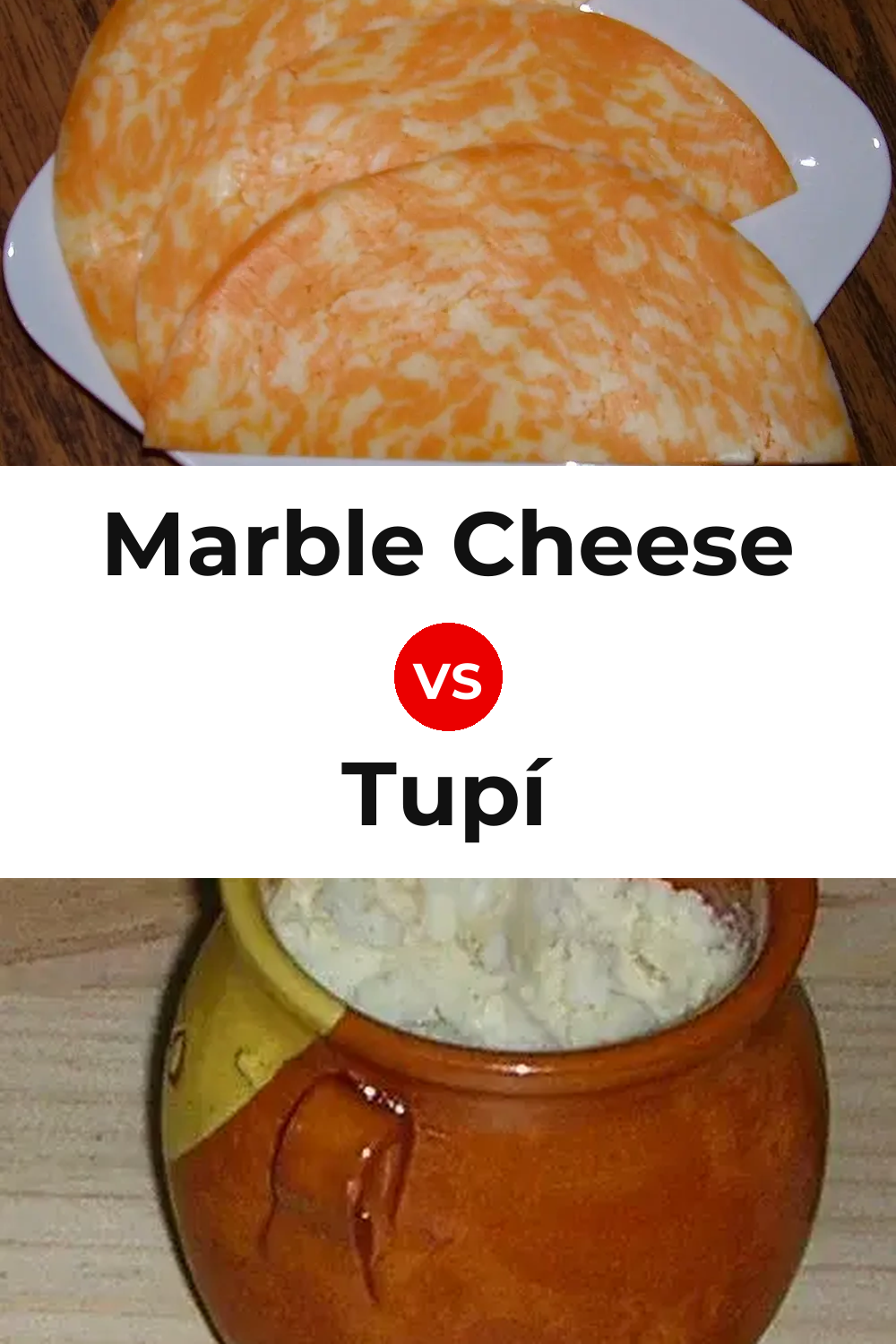
Marble Cheese is a hard, processed cow-milk cheese from United Kingdom, while Tupí Cheese is soft, artisan and made from cow or sheep milk, originating in Andorra and Spain.
Buy Marble Cheese
Buy Tupí Cheese
What Is Marble Cheese?
Marble cheese is the name for any cheese with a marbled pattern, made by combining two differently colored curds or processed cheeses. It comes from the United Kingdom and is usually a hard, processed cow's milk cheese.
What Is Tupí Cheese?
Tupí is a fermented cheese from the Pyrenees and Pre-Pyrenees, made from cow's or sheep's milk and left to ferment in a glazed ceramic jar with strong liquor. It is soft, creamy and strong tasting, and one of the few cheeses of genuine Catalan origin.
What's the Difference Between Marble Cheese and Tupí Cheese?
- Origin: Marble Cheese (United Kingdom), Tupí Cheese (Andorra and Spain)
- Milk type: Marble Cheese (cow's milk), Tupí Cheese (cow's or sheep's milk)
- Texture: Marble Cheese (hard, processed), Tupí Cheese (soft, artisan)
- Taste: Marble Cheese (mild, smooth, sweet, tangy), Tupí Cheese (spicy)
Side-by-Side Comparison
| Marble Cheese | Tupí Cheese | |
|---|---|---|
| Country of Origin | United Kingdom | Andorra And Spain |
| Specific Origin | The United Kingdom | Catalonia |
| Milk Type | Cow's milk | Cow's or sheep's milk |
| Milk Treatment | Pasteurized | Pasteurized |
| Texture | Hard, processed | Soft, artisan |
| Rind | Rindless | Rindless |
| Aging | — | Minimum 2 months |
| Taste | Mild, smooth, sweet, tangy | Spicy |
Taste Comparison: Does Marble Cheese Taste Like Tupí Cheese?
Marble Cheese reads as mild, smooth, sweet, tangy, while Tupí Cheese brings spicy character.
Can You Substitute Marble Cheese for Tupí Cheese?
Marble Cheese can stand in for Tupí Cheese in many dishes, but the switch will shift the overall character of the recipe. Expect hard, processed bite and body where the recipe calls for soft, artisan. Flavor-wise, Marble Cheese reads as mild, smooth, sweet, tangy while Tupí Cheese brings spicy notes.
Which Is Better, Marble Cheese or Tupí Cheese?
There's no single winner. It depends on your recipe and the profile you want. If you want a hard, processed cheese, go with Marble Cheese. For a soft, artisan profile, Tupí Cheese is the better fit. Flavor-wise, Marble Cheese suits recipes that want mild, smooth, sweet, tangy notes, while Tupí Cheese fits dishes calling for spicy.
Which is your favorite?
One click, anonymous. See what others chose.
Frequently Asked Questions
Is Marble Cheese the same as Tupí Cheese?
No, they're distinct cheeses. Marble Cheese originates in United Kingdom, while Tupí Cheese comes from Andorra and Spain. Marble Cheese is made from cow milk; Tupí Cheese uses cow or sheep.
Is Marble Cheese similar to Tupí Cheese?
Not closely. They use different milk bases and have distinct profiles.
Can I substitute Marble Cheese for Tupí Cheese?
You can, but expect a shift in richness and milk character.
Does Marble Cheese taste like Tupí Cheese?
Marble Cheese reads as mild, smooth, sweet, tangy, while Tupí Cheese is spicy.
What is Marble Cheese made of?
Marble Cheese is made from cow milk (pasteurized). It originates in United Kingdom.
What is Tupí Cheese made of?
Tupí Cheese is made from cow or sheep milk (pasteurized). It's typically aged minimum 2 months. It originates in Andorra and Spain.
Which should I choose, Marble Cheese or Tupí Cheese?
It depends on the dish. The texture difference is the biggest practical tell. Marble Cheese is hard, processed, while Tupí Cheese is soft, artisan.