
Pecorino di Filiano Cheese vs Romano Cheese
Pecorino di Filiano Cheese
Romano Cheese
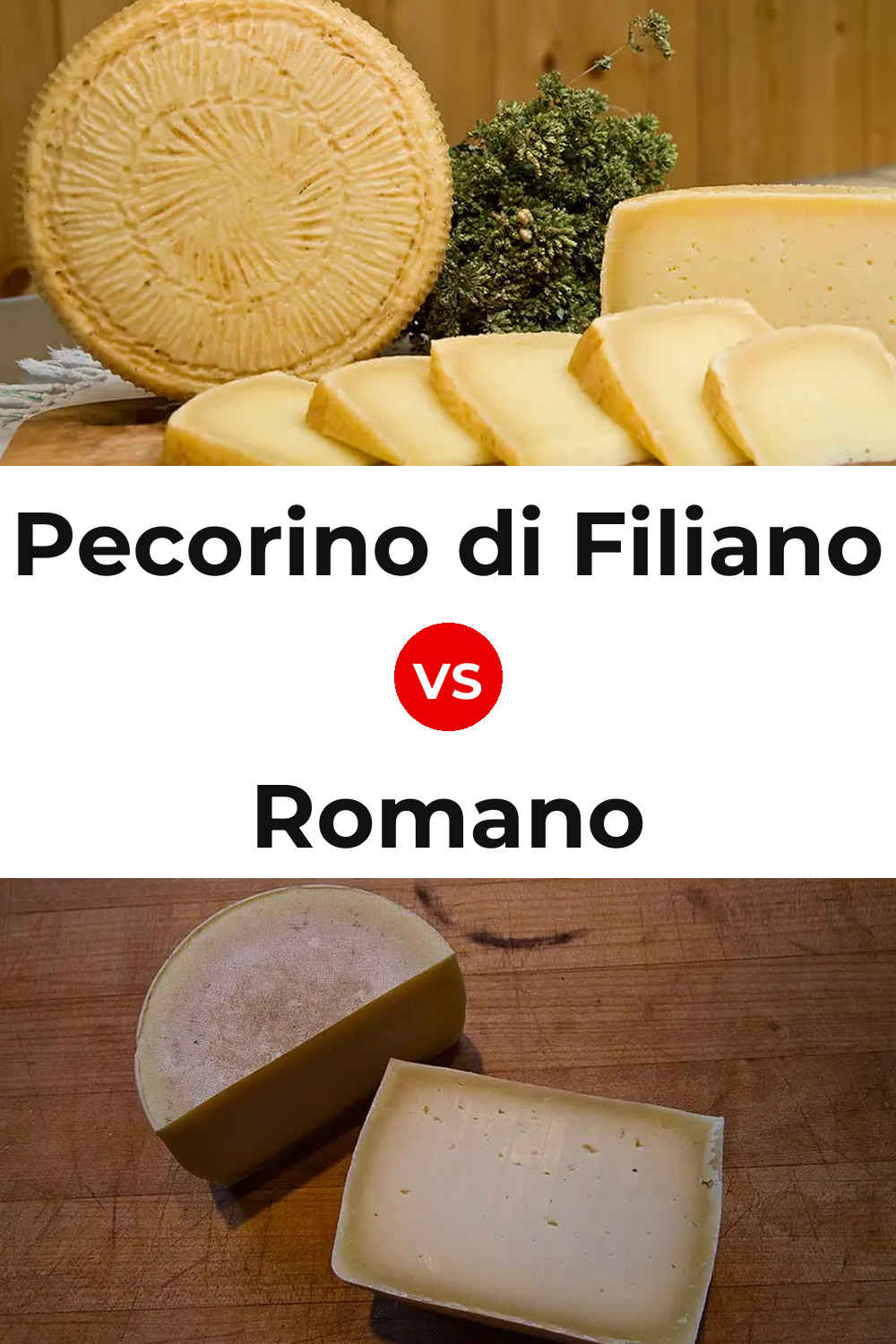
Pecorino di Filiano Cheese is a hard sheep-milk cheese from Italy, while Romano Cheese is hard and made from cow, goat, or sheep milk, originating in Italy.
Buy Pecorino di Filiano Cheese
Buy Romano Cheese
What Is Pecorino di Filiano Cheese?
Pecorino di Filiano is a firm sheep milk cheese made in the province of Potenza, in Basilicata, southern Italy. It has held protected designation of origin status since 2007, and the village of Filiano celebrates it with a festival each September.
What Is Romano Cheese?
Romano is the North American name for a class of hard, salty cheese made mainly for grating, from cow, goat and/or sheep's milk. It imitates Italian pecorino romano and must hold at least 38% milkfat and under 34% water.
What's the Difference Between Pecorino di Filiano Cheese and Romano Cheese?
- Milk type: Pecorino di Filiano Cheese (Sheep's milk), Romano Cheese (Cow's, goat's or sheep's milk)
- Milk treatment: Pecorino di Filiano Cheese (Raw), Romano Cheese (pasteurized or unpasteurized)
- Rind: Pecorino di Filiano Cheese (Golden yellow to dark brown), Romano Cheese (natural)
- Taste: Pecorino di Filiano Cheese (Sweet and delicate to strong and savoury), Romano Cheese (mild, sharp, tangy)
Side-by-Side Comparison
| Pecorino di Filiano Cheese | Romano Cheese | |
|---|---|---|
| Country of Origin | Italy | Italy |
| Specific Origin | Northwest Of The Basilicata Region | The U.S. And Canada |
| Milk Type | Sheep's milk | Cow's, goat's or sheep's milk |
| Milk Treatment | Raw | Pasteurized or unpasteurized |
| Texture | Hard | Hard |
| Rind | Golden yellow to dark brown | Natural |
| Aging | Two to five months, over six months | — |
| Taste | Sweet and delicate to strong and savoury | Mild, sharp, tangy |
Taste Comparison: Does Pecorino di Filiano Cheese Taste Like Romano Cheese?
Pecorino di Filiano Cheese reads as sweet and delicate to strong and savoury, while Romano Cheese brings mild, sharp, tangy character. More specifically, Pecorino di Filiano Cheese shows sweet in semi-aged, savoury in aged, while Romano Cheese leans toward salty.
Can You Substitute Pecorino di Filiano Cheese for Romano Cheese?
Pecorino di Filiano Cheese can stand in for Romano Cheese in many dishes, but the switch will shift the overall character of the recipe. Flavor-wise, Pecorino di Filiano Cheese reads as sweet and delicate to strong and savoury while Romano Cheese brings mild, sharp, tangy notes.
Which Is Better, Pecorino di Filiano Cheese or Romano Cheese?
There's no single winner. It depends on your recipe and the profile you want. Flavor-wise, Pecorino di Filiano Cheese suits recipes that want sweet and delicate to strong and savoury notes, while Romano Cheese fits dishes calling for mild, sharp, tangy.
Which is your favorite?
One click, anonymous. See what others chose.
Frequently Asked Questions
Is Pecorino di Filiano Cheese the same as Romano Cheese?
No, they're distinct cheeses. Pecorino di Filiano Cheese is made from sheep milk; Romano Cheese uses cow, goat, or sheep.
Is Pecorino di Filiano Cheese similar to Romano Cheese?
Not closely. They use different milk bases and have distinct profiles.
Can I substitute Pecorino di Filiano Cheese for Romano Cheese?
You can, but expect a shift in richness and milk character.
Does Pecorino di Filiano Cheese taste like Romano Cheese?
Pecorino di Filiano Cheese reads as sweet and delicate to strong and savoury, while Romano Cheese is mild, sharp, tangy.
What is Pecorino di Filiano Cheese made of?
Pecorino di Filiano Cheese is made from sheep milk (raw), using goat or lamb rennet. It's typically aged two to five months, over six months. It originates in Italy.
What is Romano Cheese made of?
Romano Cheese is made from cow, goat, or sheep milk (pasteurized or unpasteurized), using rennet not required; any suitable milk-clotting enzym rennet. It originates in Italy.
Which should I choose, Pecorino di Filiano Cheese or Romano Cheese?
It depends on the dish. The table above is the fastest way to decide based on your recipe.