Romano
Romano is the North American name for a class of hard, salty cheese made mainly for grating, from cow, goat and/or sheep's milk. It imitates Italian pecorino romano and must hold at least 38% milkfat and under 34% water.
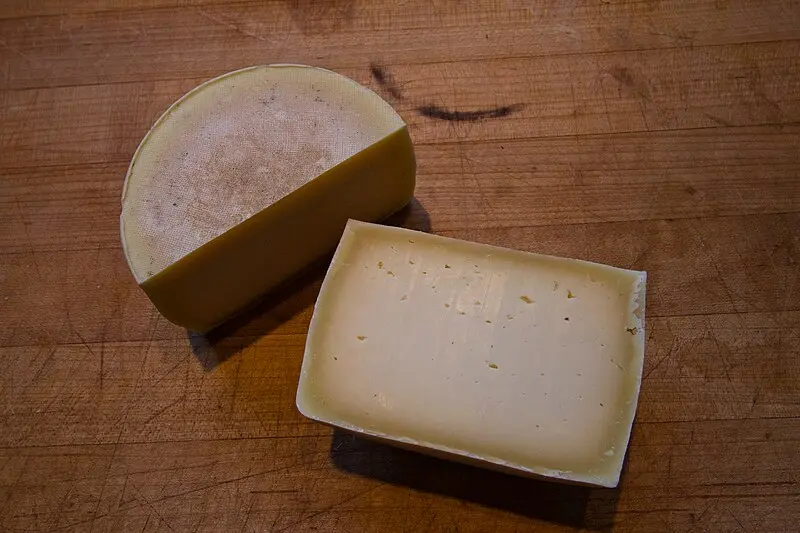
Brian Boucheron from Rochester, New York, United States of America, CC BY 2.0, via Wikimedia Commons
Key Facts
| Country of Origin | Italy |
| Specific Origin | The U.S. and Canada |
| Milk Type | Cow's, goat's or sheep's milk |
| Milk Treatment | Pasteurized or unpasteurized |
| Fat Content | At least 38% milkfat |
| Moisture Content | Less than 34% water |
| Rind | Natural |
| Texture | Hard |
| Flavor | Mild, sharp, tangy |
| Aroma | Strong |
| Colors | Pale yellow |
| Rennet Type | Rennet not required; any suitable milk-clotting enzyme |
| Also Known As | pecorino romano (only when made entirely from sheep's milk) |
What is Romano Cheese?
Romano is a term used in the United States and Canada for a class of hard, salty cheese suitable primarily for grating. The name comes from pecorino romano, the Italian cheese it copies. The two are not the same product. Pecorino romano is recognized and protected under European Union law, while Romano is a North American imitation, though U.S. law lets Romano made entirely from sheep's milk carry the pecorino romano name.
Food and Drug Administration rules let the cheese be made from cow, goat and/or sheep's milk. Cream, skim milk, dry milk and water can be added or removed to reach the required milkfat level. The milk may be bleached with benzoyl peroxide, or with benzoyl peroxide mixed with potassium alum, calcium sulfate and magnesium carbonate, in which case vitamin A has to be added after treatment. Rennet is not mandatory, and any suitable milk-clotting enzyme that produces equivalent curd formation can be used instead.
The finished cheese must contain less than 34% water and at least 38% milkfat, which keeps it dry and firm enough to grate. Color is controlled: safe artificial blue or green coloring may be added only to counter yellow tones in the milk.
How Does Romano Cheese Compare?
The most relevant cheeses to compare Romano against.


.jpg)