Pecorino Toscano Cheese vs Queso Casín
Pecorino Toscano Cheese
Queso Casín
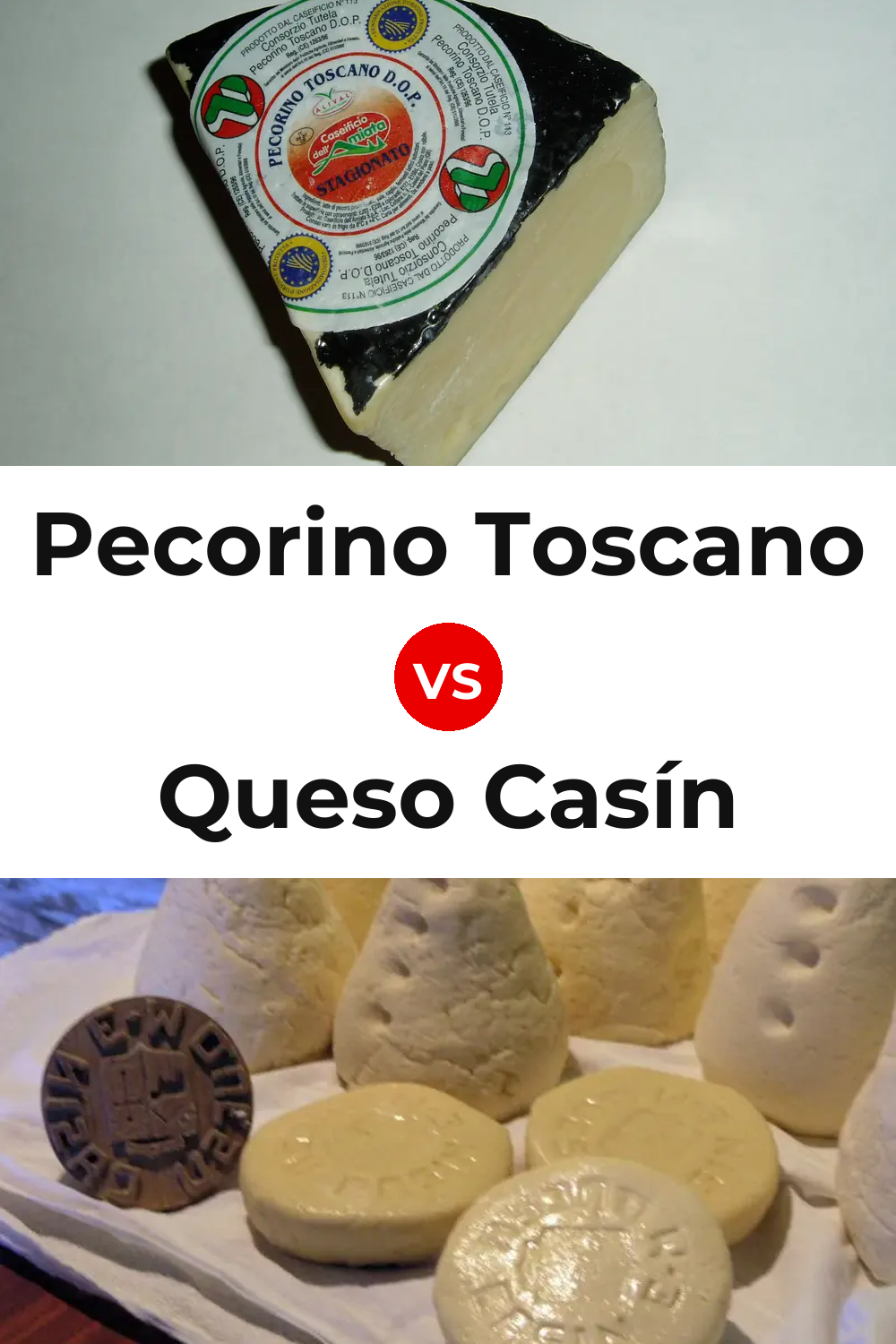
Pecorino Toscano Cheese is a soft or semihard sheep-milk cheese from Italy, while Queso Casín is hard to semi-hard, firm, crumbly, and buttery on the palate and made from cow milk.
What Is Pecorino Toscano Cheese?
Pecorino Toscano is a PDO-certified cheese from Tuscany made from sheep's milk. It has a softer texture and milder flavor compared to other Pecorinos and can be eaten fresh or aged. The fresh version is creamy and mild, while the aged version is firmer and nuttier, often served as part of an antipasti platter or grated into dishes.
What Is Queso Casín?
Queso Casín is a full-fat, hard to semi-hard cheese made from unpasteurized cow’s milk in Asturias, Spain. It has an irregular discoid shape, with one face imprinted with floral or geometric markings or the producer’s name. The cheese has a compact and crumbly texture, with a dark creamy-yellow color and slight shades of white. Its strong and potent aroma accompanies a tangy, slightly bitter taste that intensifies with additional kneading. The cheese is matured for a minimum of 60 days at controlled temperatures and humidity levels. The production process includes multiple kneading cycles, which affect its final texture and flavor intensity. The milk comes from local breeds, including Asturiana de la Montaña, Asturiana de los Valles, and Frisona cows. This traditional cheese is deeply connected to the mountainous geography and cheesemaking heritage of Asturias.
What's the Difference Between Pecorino Toscano Cheese and Queso Casín?
- Milk type: Pecorino Toscano Cheese (Sheep's milk), Queso Casín (Cow)
- Milk treatment: Pecorino Toscano Cheese (Raw or pasteurized), Queso Casín (Unpasteurized)
- Texture: Pecorino Toscano Cheese (Soft or Semihard), Queso Casín (Hard to semi-hard, firm, crumbly, and buttery on the palate)
- Rind: Pecorino Toscano Cheese (Straw-colored), Queso Casín (Smooth, fine, and almost non-existent)
- Aging: Pecorino Toscano Cheese (At least 20 days (soft), Four months (semihard)), Queso Casín (Minimum 60 days)
- Taste: Pecorino Toscano Cheese (Fragrant), Queso Casín (Strong, tangy, slightly bitter, and persistent)
Side-by-Side Comparison
| Pecorino Toscano Cheese | Queso Casín | |
|---|---|---|
| Country of Origin | Italy | — |
| Specific Origin | Tuscany, Some Municipalities Of Umbria And Lazio | Asturias (Municipalities Of Caso, Sobrescobio, And Piloña) |
| Milk Type | Sheep's milk | Cow |
| Milk Treatment | Raw or pasteurized | Unpasteurized |
| Texture | Soft or Semihard | Hard to semi-hard, firm, crumbly, and buttery on the palate |
| Rind | Straw-colored | Smooth, fine, and almost non-existent |
| Aging | At least 20 days (soft), Four months (semihard) | Minimum 60 days |
| Taste | Fragrant | Strong, tangy, slightly bitter, and persistent |
Taste Comparison: Does Pecorino Toscano Cheese Taste Like Queso Casín?
Pecorino Toscano Cheese reads as fragrant, while Queso Casín brings strong, tangy, slightly bitter, and persistent character. Aging plays into this as well. Pecorino Toscano Cheese at at least 20 days (soft), four months (semihard) develops a different profile than Queso Casín at minimum 60 days.
Can You Substitute Pecorino Toscano Cheese for Queso Casín?
Pecorino Toscano Cheese can stand in for Queso Casín in many dishes, but the switch will shift the overall character of the recipe. Expect soft or semihard bite and body where the recipe calls for hard to semi-hard, firm, crumbly, and buttery on the palate. Flavor-wise, Pecorino Toscano Cheese reads as fragrant while Queso Casín brings strong, tangy, slightly bitter, and persistent notes.
Which Is Better, Pecorino Toscano Cheese or Queso Casín?
There's no single winner. It depends on your recipe and the profile you want. If you want a soft or semihard cheese, go with Pecorino Toscano Cheese. For a hard to semi-hard, firm, crumbly, and buttery on the palate profile, Queso Casín is the better fit. Flavor-wise, Pecorino Toscano Cheese suits recipes that want fragrant notes, while Queso Casín fits dishes calling for strong, tangy, slightly bitter, and persistent.
Which is your favorite?
One click, anonymous. See what others chose.
Frequently Asked Questions
Is Pecorino Toscano Cheese the same as Queso Casín?
No, they're distinct cheeses. Pecorino Toscano Cheese is made from sheep milk; Queso Casín uses cow. Aging also differs: Pecorino Toscano Cheese is typically aged at least 20 days (soft), four months (semihard), Queso Casín minimum 60 days.
Is Pecorino Toscano Cheese similar to Queso Casín?
Not closely. They use different milk bases and have distinct profiles.
Can I substitute Pecorino Toscano Cheese for Queso Casín?
You can, but expect a shift in richness and milk character.
Does Pecorino Toscano Cheese taste like Queso Casín?
Pecorino Toscano Cheese reads as fragrant, while Queso Casín is strong, tangy, slightly bitter, and persistent.
What is Pecorino Toscano Cheese made of?
Pecorino Toscano Cheese is made from sheep milk (raw or pasteurized), using calf rennet. It's typically aged at least 20 days (soft), four months (semihard). It originates in Italy.
What is Queso Casín made of?
Queso Casín is made from cow milk (unpasteurized), using animal rennet. It's typically aged minimum 60 days.
Which should I choose, Pecorino Toscano Cheese or Queso Casín?
It depends on the dish. The texture difference is the biggest practical tell. Pecorino Toscano Cheese is soft or semihard, while Queso Casín is hard to semi-hard, firm, crumbly, and buttery on the palate.