Pecorino Cheese vs Pljevlja Cheese
Pecorino Cheese
Pljevlja Cheese
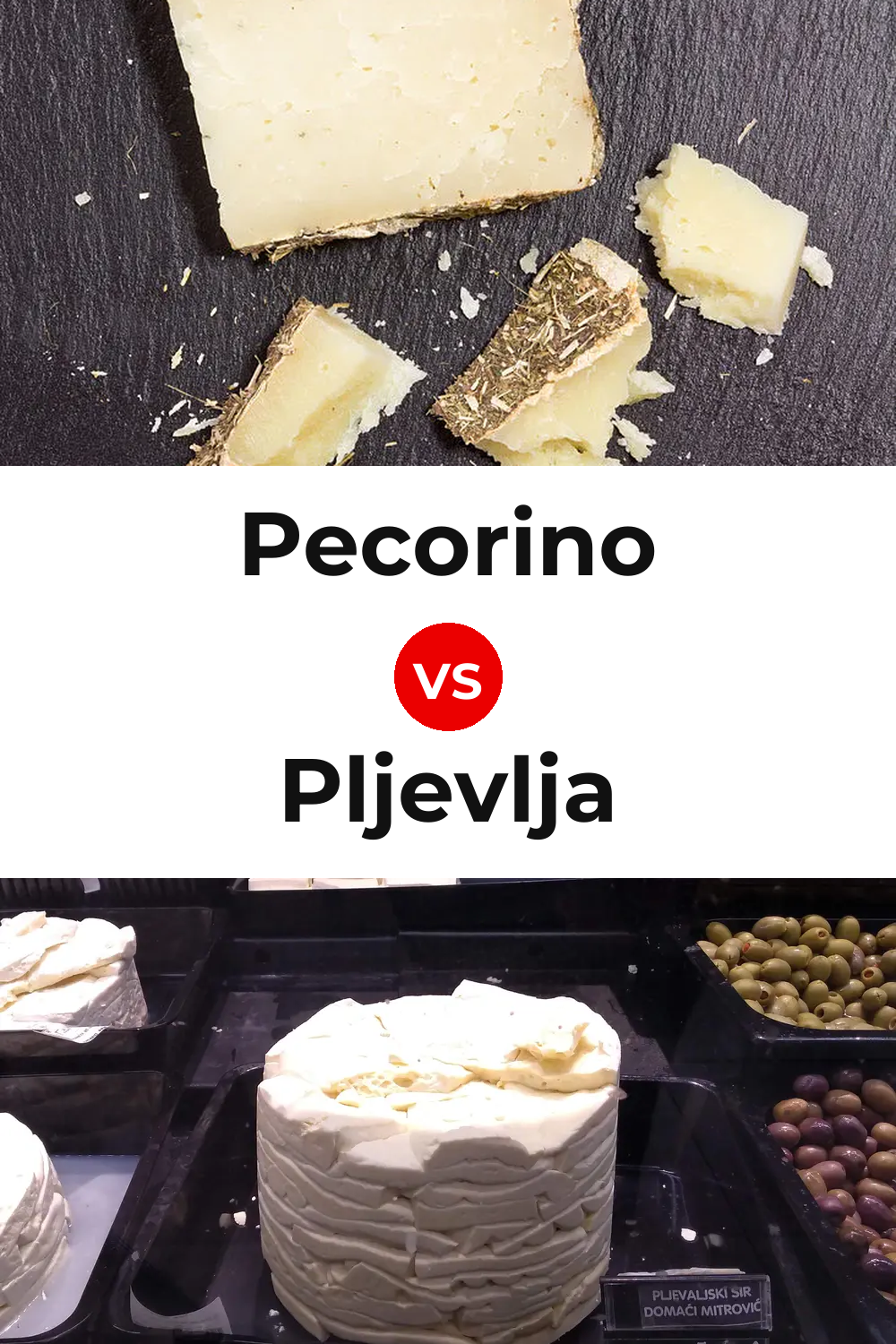
Pecorino Cheese is a hard sheep-milk cheese from Italy, while Pljevlja Cheese is soft to semihard and made from cow or sheep milk, originating in Montenegro.
What Is Pecorino Cheese?
Pecorino is an Italian hard cheese made from sheep's milk, and its name comes from pecora, the Italian word for sheep. Six main varieties carry PDO status, with Pecorino Romano the best known outside Italy.
What Is Pljevlja Cheese?
Pljevlja is a traditional cheese from the northern region of Montenegro, made from cow's milk. It has a rich, creamy texture and a strong, salty flavor. Often served as part of a mezze platter, Pljevlja cheese is enjoyed with bread, olives, and sometimes drizzled with honey for a balance of flavors.
What's the Difference Between Pecorino Cheese and Pljevlja Cheese?
- Origin: Pecorino Cheese (Italy), Pljevlja Cheese (Montenegro)
- Milk type: Pecorino Cheese (sheep's milk), Pljevlja Cheese (Sheep’s milk, cow’s milk, mixed)
- Texture: Pecorino Cheese (hard), Pljevlja Cheese (Soft to semihard)
- Aging: Pecorino Cheese (fresco, semi-stagionato or stagionato), Pljevlja Cheese (4 to 8 weeks)
Side-by-Side Comparison
| Pecorino Cheese | Pljevlja Cheese | |
|---|---|---|
| Country of Origin | Italy | Montenegro |
| Specific Origin | Italy | Northern Montenegro, Municipality Of Pljevlja |
| Milk Type | Sheep's milk | Sheep’s milk, cow’s milk, mixed |
| Texture | Hard | Soft to semihard |
| Aging | Fresco, semi-stagionato or stagionato | 4 to 8 weeks |
Taste Comparison: Does Pecorino Cheese Taste Like Pljevlja Cheese?
Their flavor profiles are distinct. Aging plays into this as well. Pecorino Cheese at fresco, semi-stagionato or stagionato develops a different profile than Pljevlja Cheese at 4 to 8 weeks.
Can You Substitute Pecorino Cheese for Pljevlja Cheese?
Pecorino Cheese can stand in for Pljevlja Cheese in many dishes, but the switch will shift the overall character of the recipe. Expect hard bite and body where the recipe calls for soft to semihard.
Which Is Better, Pecorino Cheese or Pljevlja Cheese?
There's no single winner. It depends on your recipe and the profile you want. If you want a hard cheese, go with Pecorino Cheese. For a soft to semihard profile, Pljevlja Cheese is the better fit.
Which is your favorite?
One click, anonymous. See what others chose.
Frequently Asked Questions
Is Pecorino Cheese the same as Pljevlja Cheese?
No, they're distinct cheeses. Pecorino Cheese originates in Italy, while Pljevlja Cheese comes from Montenegro. Pecorino Cheese is made from sheep milk; Pljevlja Cheese uses cow or sheep. Aging also differs: Pecorino Cheese is typically aged fresco, semi-stagionato or stagionato, Pljevlja Cheese 4 to 8 weeks.
Is Pecorino Cheese similar to Pljevlja Cheese?
Not closely. They use different milk bases and have distinct profiles.
Can I substitute Pecorino Cheese for Pljevlja Cheese?
You can, but expect a shift in richness and milk character.
Does Pecorino Cheese taste like Pljevlja Cheese?
They have distinct flavor profiles. The taste row in the table above is the best direct comparison.
What is Pecorino Cheese made of?
Pecorino Cheese is made from sheep milk. It's typically aged fresco, semi-stagionato or stagionato. It originates in Italy.
What is Pljevlja Cheese made of?
Pljevlja Cheese is made from cow or sheep milk, using traditional, industrial rennet. It's typically aged 4 to 8 weeks. It originates in Montenegro.
Which should I choose, Pecorino Cheese or Pljevlja Cheese?
It depends on the dish. The texture difference is the biggest practical tell. Pecorino Cheese is hard, while Pljevlja Cheese is soft to semihard.