Pecorino
Pecorino is an Italian hard cheese made from sheep's milk, and its name comes from pecora, the Italian word for sheep. Six main varieties carry PDO status, with Pecorino Romano the best known outside Italy.
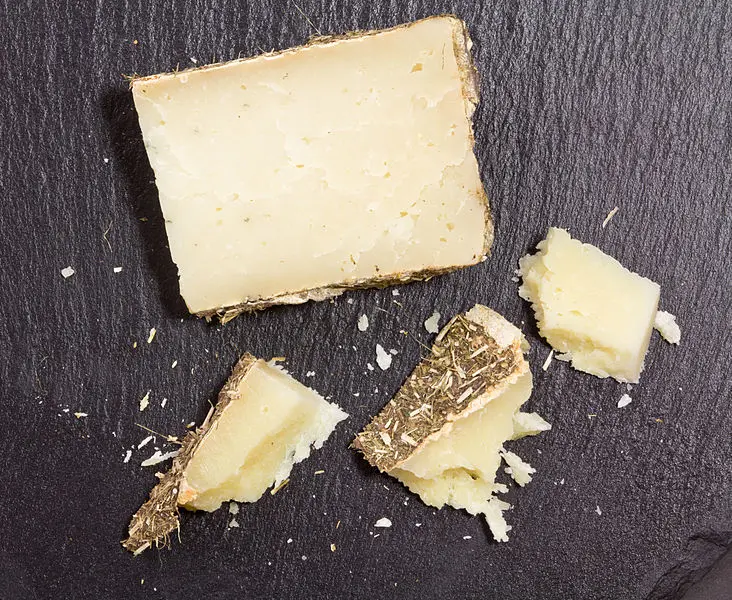
Elke Wetzig, CC BY-SA 4.0, via Wikimedia Commons
Key Facts
| Country of Origin | Italy |
| Specific Origin | Italy |
| Milk Type | Sheep's milk |
| Texture | Hard |
| Age | Fresco, semi-stagionato or stagionato |
What is Pecorino Cheese?
Pecorino is an Italian hard cheese produced from sheep's milk. The name comes from pecora, the Italian word for sheep. Six main varieties hold protected designation of origin status under European Union law, and Pecorino Romano is probably the best known outside Italy.
Most Pecorino Romano is made on the island of Sardinia, though its production zone also takes in Lazio and the Tuscan provinces of Grosseto and Siena. Ancient Roman writers described the cheese and how it was made. Pliny the Elder recorded the production of Pecorino Toscano in his Natural History. The other PDO cheeses are Pecorino Sardo from Sardinia, known as casu berbeghinu in Sardinian, Pecorino Siciliano or picurinu sicilianu, Pecorino di Filiano from Basilicata, and Pecorino Crotonese from the province of Crotone in Calabria. Pecorino di Amatrice, from the comune that gave amatriciana sauce its name, and Pecorino di Atri from Abruzzo are also well known.
Style depends on aging. The longest-aged wheels, called stagionato, turn hard but stay crumbly, with clear buttery and nutty flavors. Semi-stagionato and fresco are softer and taste milder, closer to cream and fresh milk.
Southern Italy makes pecorino pepato, studded with black peppercorns. Producers now work in walnuts, rocket and small pieces of white or black truffle as well. Red Pecorino, or Pecorino Rosso, comes from Sicily, where repeated coatings of olive oil and tomato sauce turn the outside red and build a protective layer on the rind as the cheese matures. It appears on the Italian agriculture ministry's list of traditional food products. In Sardinia, cheese fly larvae are put into Pecorino Sardo on purpose to make casu martzu, which is illegal and sold mostly on the black market.
How Does Pecorino Cheese Compare?
The most relevant cheeses to compare Pecorino against.


