Monte Veronese 
Monte Veronese is a cow's milk cheese from the Lessini Mountains in the northern province of Verona. It is made in two versions: a fresh one from whole milk, and a harder aged one called d'allevo, made from semi-skimmed milk.
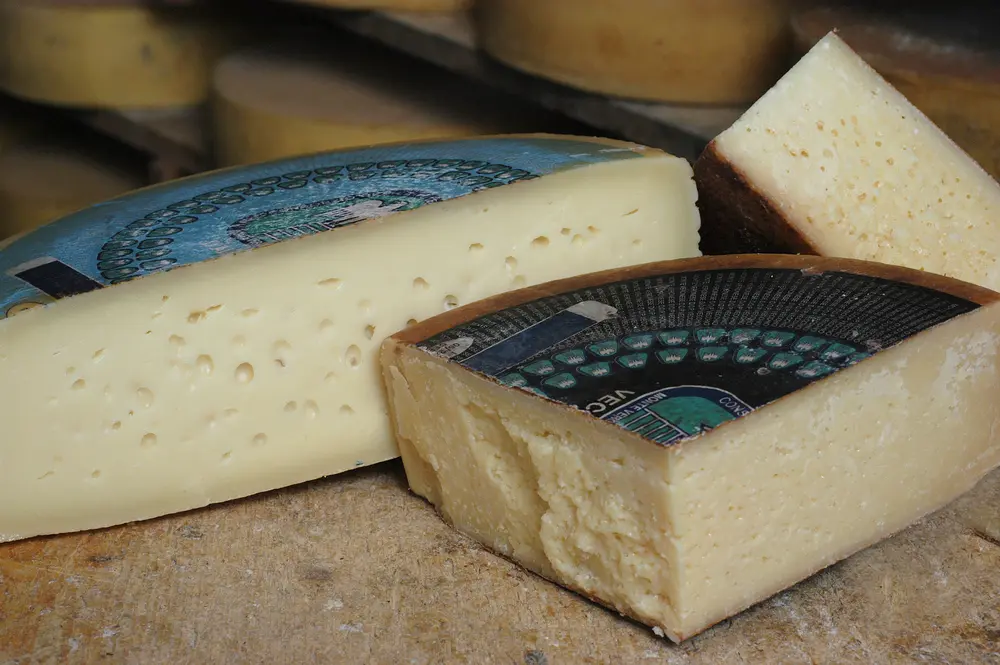
La Casara Caseificio from ronca', Verona, CC BY 2.0, via Wikimedia Commons
Key Facts
| Country of Origin | Italy |
| Specific Origin | North of Verona and east of Lake Garda |
| Protection | PDO (1996) |
| Milk Type | Cow's milk |
| Milk Treatment | Unpasteurized |
| Rind | Unique marking |
| Texture | Soft (young), Compact (aged) |
| Flavor | Sweet (young), Intense and tangy (aged) |
| Aroma | Fragrant with age |
| Colors | White to slightly yellowish paste |
| Forms | Cheese wheel |
| Age | Young for whole milk, 6 months to over 2 years for d’allevo |
What is Monte Veronese Cheese?
Monte Veronese comes from the northern part of the province of Verona, in the Lessini Mountains, also known as the Veronese prealps. Italy awarded it denominazione di origine status in 1993. European protected designation of origin status followed in 1996.
Two versions are produced, both from unpasteurized cow's milk. The fresh one, latte intero, uses whole milk and ages from a minimum of 25 days to two months. D'allevo uses semi-skimmed milk. Wheels sold as table cheese age more than 60 days, while wheels meant for grating go to six months.
The fresh cheese has a white or slightly yellowish paste with fine eyes spread evenly through it, and the flavor is sweet and intense. D'allevo shares the same pale color but has larger eyes and a hard paste. Ripening turns it fragrant and slightly piquant.
How each wheel is used depends on its age. The fresh type and the younger d'allevo go to the table. Once d'allevo reaches six months, it becomes a grating cheese.
How Does Monte Veronese Cheese Compare?
The most relevant cheeses to compare Monte Veronese against.


.jpg)