Piave 
Loved by 5 people from the United States.
Piave is a hard, cooked curd cow's milk cheese from the province of Belluno in the far north of Veneto, named after the Piave river. It carries DOP protection and comes at five ages, from a 20 day Fresco to a Riserva aged past 18 months that grates like young Parmesan.
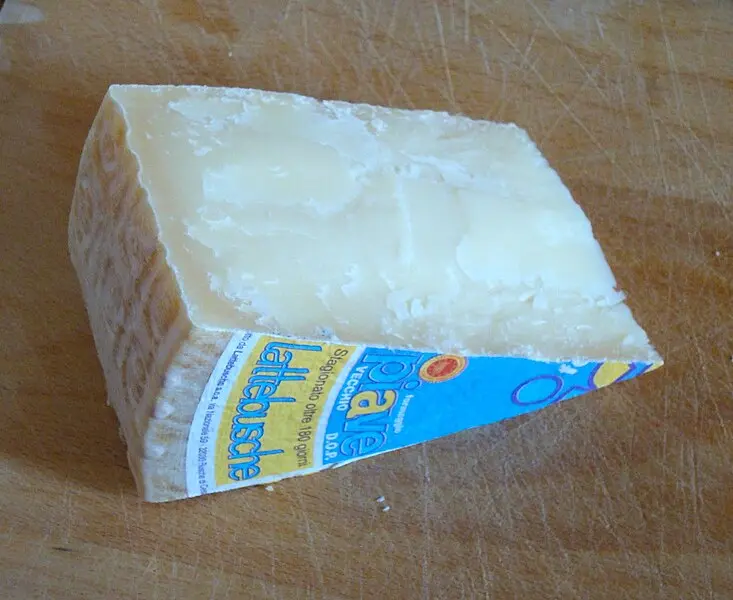
J.P.Lon, CC BY-SA 3.0, via Wikimedia Commons
Key Facts
| Country of Origin | Italy |
| Specific Origin | Northern Veneto |
| Protection | PDO (2008), DOP (2010) |
| Milk Type | Cow's milk |
| Milk Treatment | Pasteurized |
| Rind | Soft and clear to hard and brown |
| Texture | Dense and crystalline |
| Flavor | Nutty, sweet |
| Colors | White to light beige |
| Age | Twenty to sixty days (Fresco) to over eighteen months (Vecchio Riserva) |
What is Piave Cheese?
Piave takes its name from the Piave river, which runs through the Dolomites in the province of Belluno. The cheese holds a protected designation of origin, so only wheels made in that northernmost tip of the Veneto region count as official Piave.
It is a hard cow's milk cheese with a cooked curd, sold at five ages: Fresco at 20 to 60 days, Mezzano at 61 to 180 days, Vecchio past six months, Vecchio Selezione Oro past twelve months, and Vecchio Riserva past eighteen months. Blue labels mark the three younger versions, red the Selezione Oro, black the Riserva. The rind is branded again and again with the word Piave, which is how the certification is confirmed.
The paste is dense and straw-yellow with no holes. Young wheels taste slightly sweet. Age changes that: a fully mature Piave grows hard enough to grate and the flavor turns intense and full bodied, close to a young Parmesan.
Most Piave sold outside Italy is the hard, aged kind. The red label, aged at least a year, and the softer blue label both travel widely through Europe, and in the United States they turn up mostly in specialty shops.
How Does Piave Cheese Compare?
The most relevant cheeses to compare Piave against.


