
Provolone Valpadana Cheese vs Swiss Cheese
Provolone Valpadana Cheese
Swiss Cheese
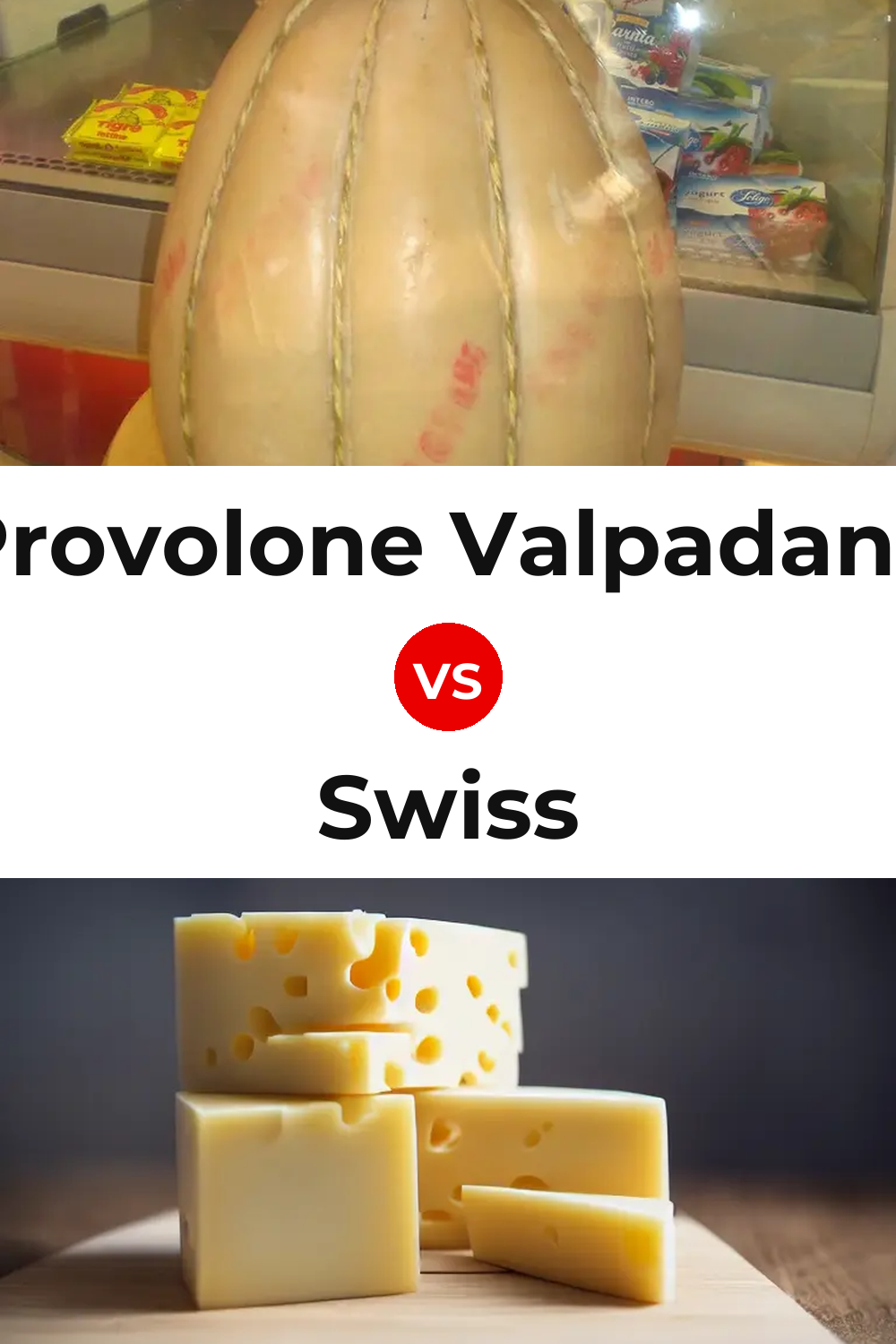
Provolone Valpadana Cheese is a semi-hard cow-milk cheese from Italy, while Swiss Cheese is semi-hard and made from cow milk, originating in United States.
Buy Provolone Valpadana Cheese
Buy Swiss Cheese
What Is Provolone Valpadana Cheese?
Provolone Valpadana is an Italian semi-hard cheese made from cow's milk by the pasta filata method. It holds protected designation of origin status in the European Union and comes in a mild dolce version and a sharp piccante version, some of them smoked.
What Is Swiss Cheese?
Swiss cheese is the North American name for any cheese made in the style of Emmental, the yellow, medium-hard cheese from the Emmental region of Switzerland. Most versions carry the round holes called eyes and a nutty, slightly sweet flavor.
What's the Difference Between Provolone Valpadana Cheese and Swiss Cheese?
- Origin: Provolone Valpadana Cheese (Italy), Swiss Cheese (United States)
- Milk treatment: Provolone Valpadana Cheese (Pasteurized or thermized), Swiss Cheese (Pasteurized)
- Rind: Provolone Valpadana Cheese (Smooth, thin, light yellow, golden, or sometimes yellow-brown (smoked version allows for paraffin use)), Swiss Cheese (None)
- Aging: Provolone Valpadana Cheese (Two to three months for Dolce, minimum of three months to more than a year for Piccante), Swiss Cheese (Typically 1-3 months)
- Taste: Provolone Valpadana Cheese (Delicate for sweet cheeses, pronounced with longer maturation for sharp cheeses), Swiss Cheese (Mild, Nutty, Slightly Sweet)
Side-by-Side Comparison
| Provolone Valpadana Cheese | Swiss Cheese | |
|---|---|---|
| Country of Origin | Italy | United States |
| Specific Origin | Lombardy, Veneto, Emilia-Romagna, Province Of Trento | Emmental, Switzerland; Now Widely Made In The U.S. |
| Milk Type | Cow's milk | Cow's milk |
| Milk Treatment | Pasteurized or thermized | Pasteurized |
| Texture | Semi-hard | Semi-hard |
| Rind | Smooth, thin, light yellow, golden, or sometimes yellow-brown (smoked version allows for paraffin use) | None |
| Aging | Two to three months for Dolce, minimum of three months to more than a year for Piccante | Typically 1-3 months |
| Taste | Delicate for sweet cheeses, pronounced with longer maturation for sharp cheeses | Mild, Nutty, Slightly Sweet |
Taste Comparison: Does Provolone Valpadana Cheese Taste Like Swiss Cheese?
Provolone Valpadana Cheese reads as delicate for sweet cheeses, pronounced with longer maturation for sharp cheeses, while Swiss Cheese brings mild, nutty, slightly sweet character. On the nose, Provolone Valpadana Cheese offers rich, contrasted with Swiss Cheese's mild, slightly nutty. More specifically, Provolone Valpadana Cheese shows delicate to pronounced depending on variety and age, with a possibility of exfoliation in long-aged cheese, while Swiss Cheese leans toward buttery, slightly sweet, nutty, less intense than traditional swiss. Aging plays into this as well. Provolone Valpadana Cheese at two to three months for dolce, minimum of three months to more than a year for piccante develops a different profile than Swiss Cheese at typically 1-3 months.
Can You Substitute Provolone Valpadana Cheese for Swiss Cheese?
In most recipes, Provolone Valpadana Cheese and Swiss Cheese can be swapped with reasonable results. Both are cow-milk cheeses, so the base character carries over. Flavor-wise, Provolone Valpadana Cheese reads as delicate for sweet cheeses, pronounced with longer maturation for sharp cheeses while Swiss Cheese brings mild, nutty, slightly sweet notes.
Which Is Better, Provolone Valpadana Cheese or Swiss Cheese?
There's no single winner. It depends on your recipe and the profile you want. Flavor-wise, Provolone Valpadana Cheese suits recipes that want delicate for sweet cheeses, pronounced with longer maturation for sharp cheeses notes, while Swiss Cheese fits dishes calling for mild, nutty, slightly sweet.
Which is your favorite?
One click, anonymous. See what others chose.
Frequently Asked Questions
Is Provolone Valpadana Cheese the same as Swiss Cheese?
No, they're distinct cheeses. Provolone Valpadana Cheese originates in Italy, while Swiss Cheese comes from United States. Aging also differs: Provolone Valpadana Cheese is typically aged two to three months for dolce, minimum of three months to more than a year for piccante, Swiss Cheese typically 1-3 months.
Is Provolone Valpadana Cheese similar to Swiss Cheese?
Yes, they share close profiles. Same milk base and similar texture make them workable alternatives in many recipes.
Can I substitute Provolone Valpadana Cheese for Swiss Cheese?
Yes, quite easily. The milk base and texture are close enough that most recipes won't notice the swap.
Does Provolone Valpadana Cheese taste like Swiss Cheese?
Provolone Valpadana Cheese reads as delicate for sweet cheeses, pronounced with longer maturation for sharp cheeses, while Swiss Cheese is mild, nutty, slightly sweet. Aromas also diverge. Provolone Valpadana Cheese leans rich, and Swiss Cheese is closer to mild, slightly nutty.
What is Provolone Valpadana Cheese made of?
Provolone Valpadana Cheese is made from cow milk (pasteurized or thermized), using calf rennet for dolce, kid or lamb rennet for picca rennet. It's typically aged two to three months for dolce, minimum of three months to more than a year for piccante. It originates in Italy.
What is Swiss Cheese made of?
Swiss Cheese is made from cow milk (pasteurized), using microbial or vegetarian rennet. It's typically aged typically 1-3 months. It originates in United States.
Which should I choose, Provolone Valpadana Cheese or Swiss Cheese?
It depends on the dish. The table above is the fastest way to decide based on your recipe.