Queso Camerano vs Rocamadour Cheese
Queso Camerano
Rocamadour Cheese
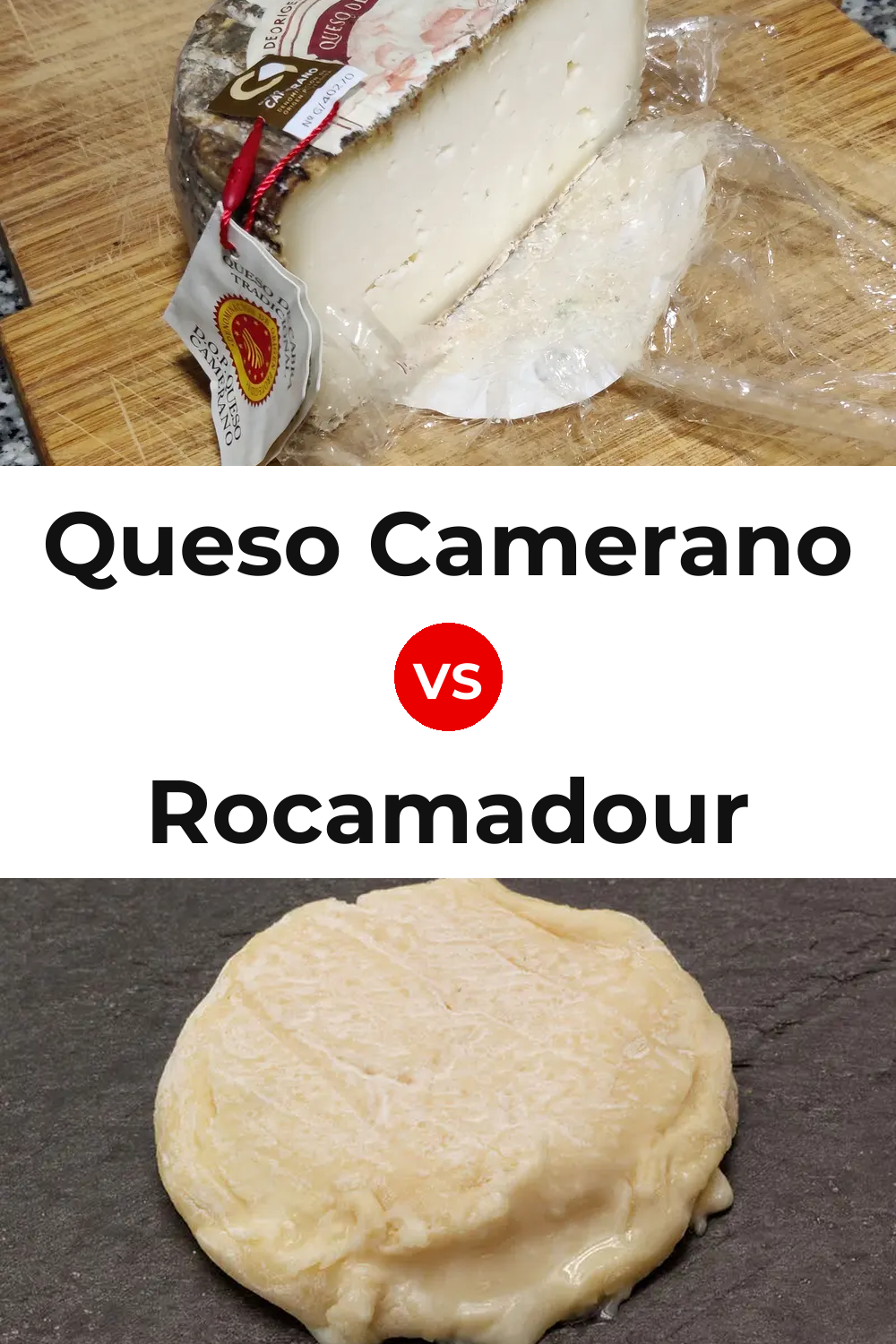
Queso Camerano is a soft to semi-soft (fresh, soft); semi-hard to hard (semi-cured, cured) goat-milk cheese, while Rocamadour Cheese is soft and creamy; becomes drier (matured) and made from goat milk, originating in France.
What Is Queso Camerano?
Queso Camerano is a traditional goat’s milk cheese from La Rioja, Spain. It has a compact and firm texture with minimal fissures, and its color ranges from white to slightly marbled. The cheese is made using natural rennet of goat origin and comes in small cylindrical shapes with a distinctive lattice pattern from the ‘cilla’ mold. It is available in different aging stages: fresh, soft (aged at least 15 days), semi-cured (30 days), and cured (75 days). Fresh and soft varieties have no rind, while semi-cured and cured versions develop a rind with some mold. The cheese has a mild, slightly acidic flavor that intensifies with aging, developing musty and whey-like notes. The aroma varies from lactic and grassy to musty, depending on the age. It is deeply linked to La Rioja’s natural pastures and traditional cheesemaking heritage.
What Is Rocamadour Cheese?
Rocamadour is a small, round goat cheese from the Midi-Pyrénées region of France. It belongs to the Cabécou family of cheeses and has a creamy texture with a nutty, sweet flavor that intensifies as it ages. Rocamadour is typically eaten on its own or melted over toast or salads.
What's the Difference Between Queso Camerano and Rocamadour Cheese?
- Milk treatment: Queso Camerano (Pasteurized (for fresh, soft, and semi-cured); raw or pasteurized (for cured)), Rocamadour Cheese (unpasteurized)
- Texture: Queso Camerano (Soft to semi-soft (fresh, soft); semi-hard to hard (semi-cured, cured)), Rocamadour Cheese (Soft and creamy; becomes drier (matured))
- Rind: Queso Camerano (None (fresh, soft); defined with mold (semi-cured, cured)), Rocamadour Cheese (White, soft (early); (matured))
- Aging: Queso Camerano (Fresh (0 days), Soft (15+ days), Semi-cured (30+ days), Cured (75+ days)), Rocamadour Cheese (Between 6 and 10 days; longer for drier, stronger flavor)
- Taste: Queso Camerano (Mild, slightly acidic (fresh); stronger, slightly salty, musty (aged)), Rocamadour Cheese (Mild; becomes stronger)
Side-by-Side Comparison
| Queso Camerano | Rocamadour Cheese | |
|---|---|---|
| Country of Origin | — | France |
| Specific Origin | La Rioja (Rioja Alta, Sierra Rioja Alta, Sierra Rioja Media, Sierra De Rioja Baja, And Other Specified Municipalities) | Communes Of The Causses Du Quercy |
| Milk Type | Goat | Goat's milk |
| Milk Treatment | Pasteurized (for fresh, soft, and semi-cured); raw or pasteurized (for cured) | Unpasteurized |
| Texture | Soft to semi-soft (fresh, soft); semi-hard to hard (semi-cured, cured) | Soft and creamy; becomes drier (matured) |
| Rind | None (fresh, soft); defined with mold (semi-cured, cured) | White, soft (early); (matured) |
| Aging | Fresh (0 days), Soft (15+ days), Semi-cured (30+ days), Cured (75+ days) | Between 6 and 10 days; longer for drier, stronger flavor |
| Taste | Mild, slightly acidic (fresh); stronger, slightly salty, musty (aged) | Mild; becomes stronger |
Taste Comparison: Does Queso Camerano Taste Like Rocamadour Cheese?
Queso Camerano reads as mild, slightly acidic (fresh); stronger, slightly salty, musty (aged), while Rocamadour Cheese brings mild; becomes stronger character. On the nose, Queso Camerano offers lactic, grassy (fresh); musty, aged whey (semi-cured, cured), contrasted with Rocamadour Cheese's creamy, buttery, distinctive goat smell. More specifically, Queso Camerano shows whey-like in fresh and soft; musty in aged versions, while Rocamadour Cheese leans toward creamy, buttery, distinctive goat smell. Aging plays into this as well. Queso Camerano at fresh (0 days), soft (15+ days), semi-cured (30+ days), cured (75+ days) develops a different profile than Rocamadour Cheese at between 6 and 10 days; longer for drier, stronger flavor.
Can You Substitute Queso Camerano for Rocamadour Cheese?
In most recipes, Queso Camerano and Rocamadour Cheese can be swapped with reasonable results. Both are goat-milk cheeses, so the base character carries over. Expect soft to semi-soft (fresh, soft); semi-hard to hard (semi-cured, cured) bite and body where the recipe calls for soft and creamy; becomes drier (matured). Flavor-wise, Queso Camerano reads as mild, slightly acidic (fresh); stronger, slightly salty, musty (aged) while Rocamadour Cheese brings mild; becomes stronger notes.
Which Is Better, Queso Camerano or Rocamadour Cheese?
There's no single winner. It depends on your recipe and the profile you want. If you want a soft to semi-soft (fresh, soft); semi-hard to hard (semi-cured, cured) cheese, go with Queso Camerano. For a soft and creamy; becomes drier (matured) profile, Rocamadour Cheese is the better fit. Flavor-wise, Queso Camerano suits recipes that want mild, slightly acidic (fresh); stronger, slightly salty, musty (aged) notes, while Rocamadour Cheese fits dishes calling for mild; becomes stronger.
Which is your favorite?
One click, anonymous. See what others chose.
Frequently Asked Questions
Is Queso Camerano the same as Rocamadour Cheese?
No, they're distinct cheeses. Aging also differs: Queso Camerano is typically aged fresh (0 days), soft (15+ days), semi-cured (30+ days), cured (75+ days), Rocamadour Cheese between 6 and 10 days; longer for drier, stronger flavor.
Is Queso Camerano similar to Rocamadour Cheese?
Somewhat. They share a goat-milk base but diverge in texture and flavor.
Can I substitute Queso Camerano for Rocamadour Cheese?
You can, but expect a shift in bite and mouthfeel.
Does Queso Camerano taste like Rocamadour Cheese?
Queso Camerano reads as mild, slightly acidic (fresh); stronger, slightly salty, musty (aged), while Rocamadour Cheese is mild; becomes stronger. Aromas also diverge. Queso Camerano leans lactic, grassy (fresh); musty, aged whey (semi-cured, cured), and Rocamadour Cheese is closer to creamy, buttery, distinctive goat smell.
What is Queso Camerano made of?
Queso Camerano is made from goat milk (pasteurized (for fresh, soft, and semi-cured); raw or pasteurized (for cured)), using animal rennet. It's typically aged fresh (0 days), soft (15+ days), semi-cured (30+ days), cured (75+ days).
What is Rocamadour Cheese made of?
Rocamadour Cheese is made from goat milk (unpasteurized). It's typically aged between 6 and 10 days; longer for drier, stronger flavor. It originates in France.
Which should I choose, Queso Camerano or Rocamadour Cheese?
It depends on the dish. The texture difference is the biggest practical tell. Queso Camerano is soft to semi-soft (fresh, soft); semi-hard to hard (semi-cured, cured), while Rocamadour Cheese is soft and creamy; becomes drier (matured).