Queso Ibores vs Telemea de Ibăneşti Cheese
Queso Ibores
Telemea de Ibăneşti Cheese
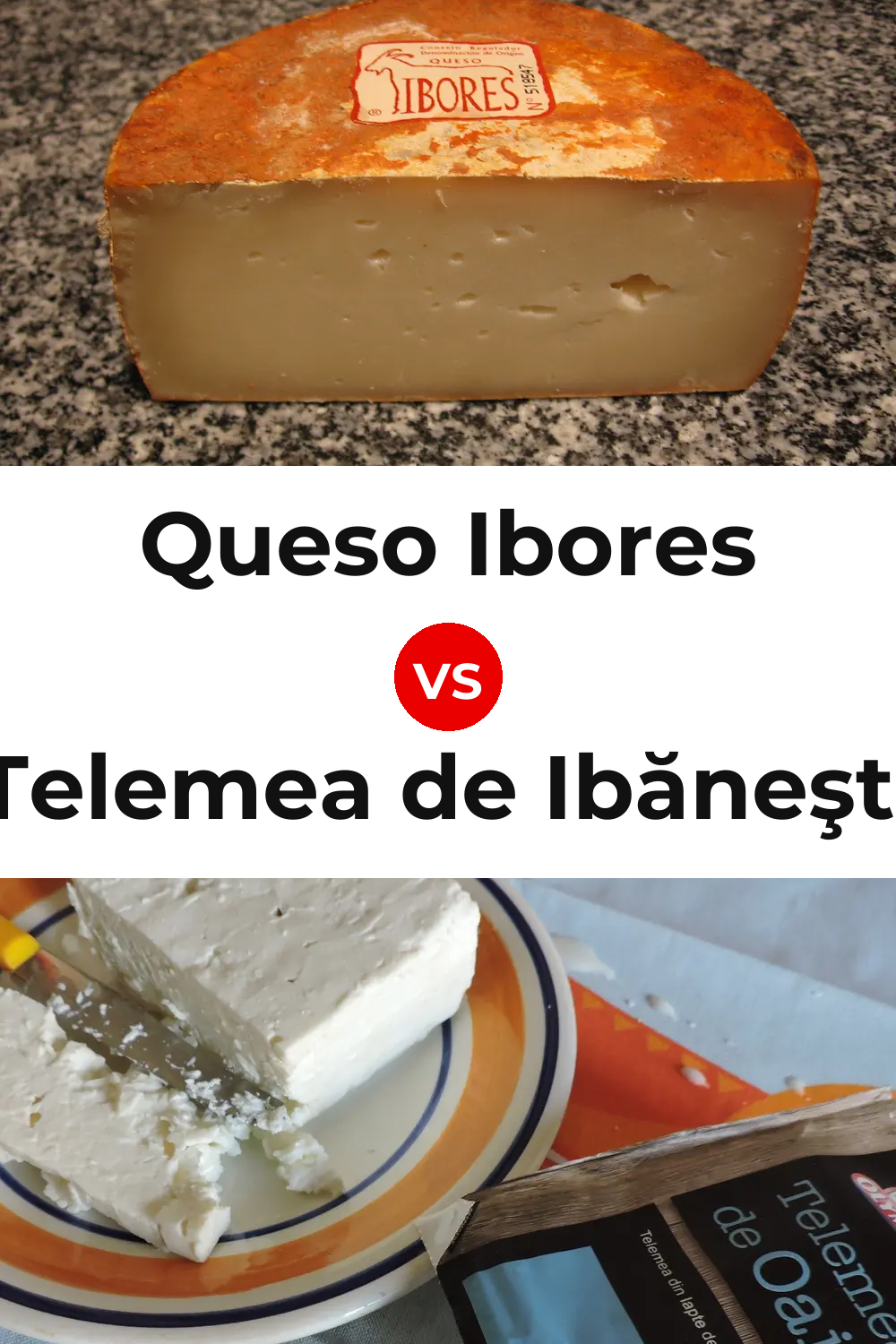
Queso Ibores is a slightly hard, moist, creamy, crumbly to spongy goat-milk cheese, while Telemea de Ibăneşti Cheese is compact, firm, smooth, and buttery and made from cow milk.
What Is Queso Ibores?
Queso Ibores is a raw goat's milk cheese from southeast Cáceres, Spain, with a protected designation of origin. It is known for its paprika-rubbed or oil-rubbed rind and a tangy, moderately piquant paste made from Serrana, Verata and Retinta goat milk.
What Is Telemea de Ibăneşti Cheese?
Telemea de Ibănești is a Romanian brined cheese from the Gurghiu Valley, part of the telemea family that was traditionally made from sheep's milk and is now often made from cow's milk. The EU gave it Protected Designation of Origin status in 2017.
What's the Difference Between Queso Ibores and Telemea de Ibăneşti Cheese?
- Milk type: Queso Ibores (Goat), Telemea de Ibăneşti Cheese (Cow)
- Texture: Queso Ibores (Slightly hard, moist, creamy, crumbly to spongy), Telemea de Ibăneşti Cheese (Compact, firm, smooth, and buttery)
- Aging: Queso Ibores (Minimum 60 days (100 days for "Artesano" variety)), Telemea de Ibăneşti Cheese (Fresh can be consumed 24 hours after manufacture; mature has a minimum maturation period of 20 days)
- Taste: Queso Ibores (Strong, slightly tart, tangy, and salty), Telemea de Ibăneşti Cheese (Slightly sweet, sour, and salty)
Side-by-Side Comparison
| Queso Ibores | Telemea de Ibăneşti Cheese | |
|---|---|---|
| Specific Origin | Ibores, Villuercas, La Jara, And Trujillo, Cáceres | Gurghiu Valley, Mureș County |
| Milk Type | Goat | Cow |
| Milk Treatment | Raw | — |
| Texture | Slightly hard, moist, creamy, crumbly to spongy | Compact, firm, smooth, and buttery |
| Rind | Smooth, medium-hard, coated in pepper or oil | — |
| Aging | Minimum 60 days (100 days for "Artesano" variety) | Fresh can be consumed 24 hours after manufacture; mature has a minimum maturation period of 20 days |
| Taste | Strong, slightly tart, tangy, and salty | Slightly sweet, sour, and salty |
Taste Comparison: Does Queso Ibores Taste Like Telemea de Ibăneşti Cheese?
Queso Ibores reads as strong, slightly tart, tangy, and salty, while Telemea de Ibăneşti Cheese brings slightly sweet, sour, and salty character. On the nose, Queso Ibores offers sweet to mild, characteristic of raw goat’s milk cheese, contrasted with Telemea de Ibăneşti Cheese's delicate and pleasant, becomes stronger with maturation. More specifically, Queso Ibores shows raw goat’s milk aftertaste, while Telemea de Ibăneşti Cheese leans toward becomes stronger with maturation. Aging plays into this as well. Queso Ibores at minimum 60 days (100 days for "artesano" variety) develops a different profile than Telemea de Ibăneşti Cheese at fresh can be consumed 24 hours after manufacture; mature has a minimum maturation period of 20 days.
Can You Substitute Queso Ibores for Telemea de Ibăneşti Cheese?
Queso Ibores can stand in for Telemea de Ibăneşti Cheese in many dishes, but the switch will shift the overall character of the recipe. Expect slightly hard, moist, creamy, crumbly to spongy bite and body where the recipe calls for compact, firm, smooth, and buttery. Flavor-wise, Queso Ibores reads as strong, slightly tart, tangy, and salty while Telemea de Ibăneşti Cheese brings slightly sweet, sour, and salty notes.
Which Is Better, Queso Ibores or Telemea de Ibăneşti Cheese?
There's no single winner. It depends on your recipe and the profile you want. If you want a slightly hard, moist, creamy, crumbly to spongy cheese, go with Queso Ibores. For a compact, firm, smooth, and buttery profile, Telemea de Ibăneşti Cheese is the better fit. Flavor-wise, Queso Ibores suits recipes that want strong, slightly tart, tangy, and salty notes, while Telemea de Ibăneşti Cheese fits dishes calling for slightly sweet, sour, and salty.
Which is your favorite?
One click, anonymous. See what others chose.
Frequently Asked Questions
Is Queso Ibores the same as Telemea de Ibăneşti Cheese?
No, they're distinct cheeses. Queso Ibores is made from goat milk; Telemea de Ibăneşti Cheese uses cow. Aging also differs: Queso Ibores is typically aged minimum 60 days (100 days for "artesano" variety), Telemea de Ibăneşti Cheese fresh can be consumed 24 hours after manufacture; mature has a minimum maturation period of 20 days.
Is Queso Ibores similar to Telemea de Ibăneşti Cheese?
Not closely. They use different milk bases and have distinct profiles.
Can I substitute Queso Ibores for Telemea de Ibăneşti Cheese?
You can, but expect a shift in richness and milk character.
Does Queso Ibores taste like Telemea de Ibăneşti Cheese?
Queso Ibores reads as strong, slightly tart, tangy, and salty, while Telemea de Ibăneşti Cheese is slightly sweet, sour, and salty. Aromas also diverge. Queso Ibores leans sweet to mild, characteristic of raw goat’s milk cheese, and Telemea de Ibăneşti Cheese is closer to delicate and pleasant, becomes stronger with maturation.
What is Queso Ibores made of?
Queso Ibores is made from goat milk (raw), using animal rennet. It's typically aged minimum 60 days (100 days for "artesano" variety).
What is Telemea de Ibăneşti Cheese made of?
Telemea de Ibăneşti Cheese is made from cow milk, using microbial rennet. It's typically aged fresh can be consumed 24 hours after manufacture; mature has a minimum maturation period of 20 days.
Which should I choose, Queso Ibores or Telemea de Ibăneşti Cheese?
It depends on the dish. The texture difference is the biggest practical tell. Queso Ibores is slightly hard, moist, creamy, crumbly to spongy, while Telemea de Ibăneşti Cheese is compact, firm, smooth, and buttery.