Telemea de Ibăneşti 
Telemea de Ibănești is a Romanian brined cheese from the Gurghiu Valley, part of the telemea family that was traditionally made from sheep's milk and is now often made from cow's milk. The EU gave it Protected Designation of Origin status in 2017.
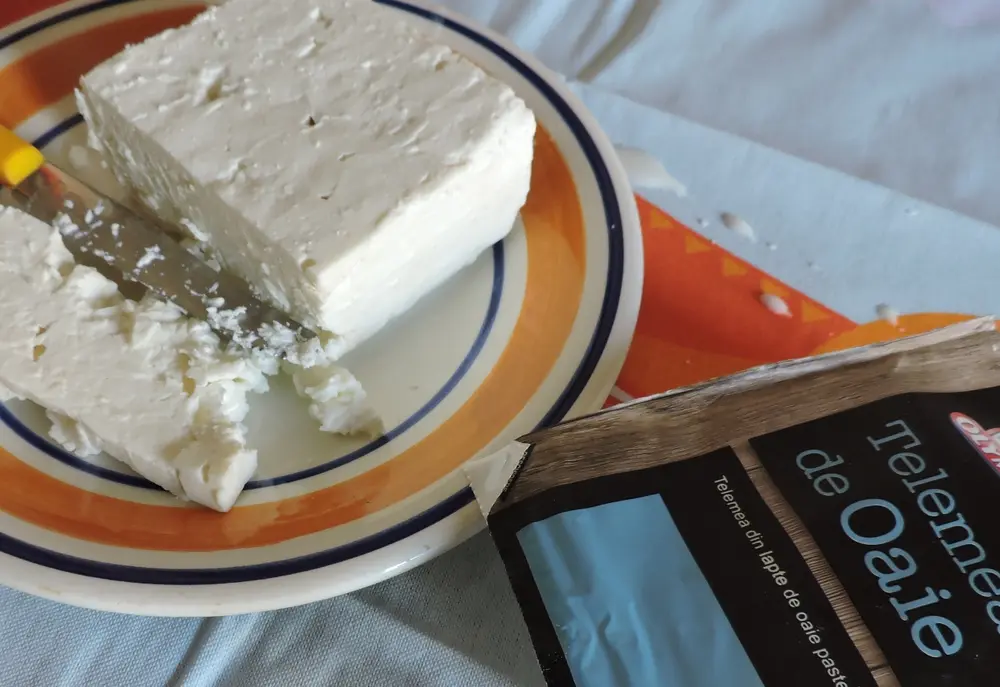
Prof.lumacorno, CC BY-SA 4.0, via Wikimedia Commons
Key Facts
| Country of Origin | Romania |
| Specific Origin | Gurghiu Valley, Mureș County |
| Protection | PDO (2013) |
| Milk Type | Cow |
| Fat Content | Less than 38% in dry matter |
| Moisture Content | Below 62% |
| Texture | Compact, firm, smooth, and buttery |
| Flavor | Slightly sweet, sour, and salty |
| Aroma | Delicate and pleasant, becomes stronger with maturation |
| Colors | White to white with slightly yellowish notes |
| Forms | Parallelepiped or cubic blocks |
| Age | Fresh can be consumed 24 hours after manufacture; mature has a minimum maturation period of 20 days |
| Rennet Type | Microbial rennet |
What is Telemea de Ibăneşti Cheese?
Telemea is a Romanian cheese that was traditionally made from sheep's milk. The name now covers cheese made from cow's milk, and in some cases goat's or buffalo's milk. From 2004 onward several regional versions sought protected status, and in 2017 the EU recognized Telemea de Ibănești with a Protected Designation of Origin. Telemea de Sibiu followed with a Protected Geographical Indication in 2019.
Production starts by adding rennet to milk to curdle it. The curd is lifted out, held in cheesecloth and pressed overnight, then cut into square pieces and left to mature in brine. At the fresh stage, when it has spent up to a couple of weeks in brine, the cheese has its own name: caș. After that it goes into wooden barrels called putini. For winter it can be held in a more concentrated brine and then desalted in fresh water before it is eaten.
The result is a white cheese. With a higher water content it stays soft or semi-soft, with a creamy texture and a tangy aftertaste. Aged longer, it turns crisper, saltier and more strongly flavoured. Cumin seeds are sometimes worked in for a spicy, nutty note.
Romanians eat it as a table cheese for snacks and in salads. It also goes into cooked dishes such as omelettes, clătite and plăcinte.
How Does Telemea de Ibăneşti Cheese Compare?
The most relevant cheeses to compare Telemea de Ibăneşti against.


