Queso Ibores vs Zázrivský korbáčik Cheese
Queso Ibores
Zázrivský korbáčik Cheese
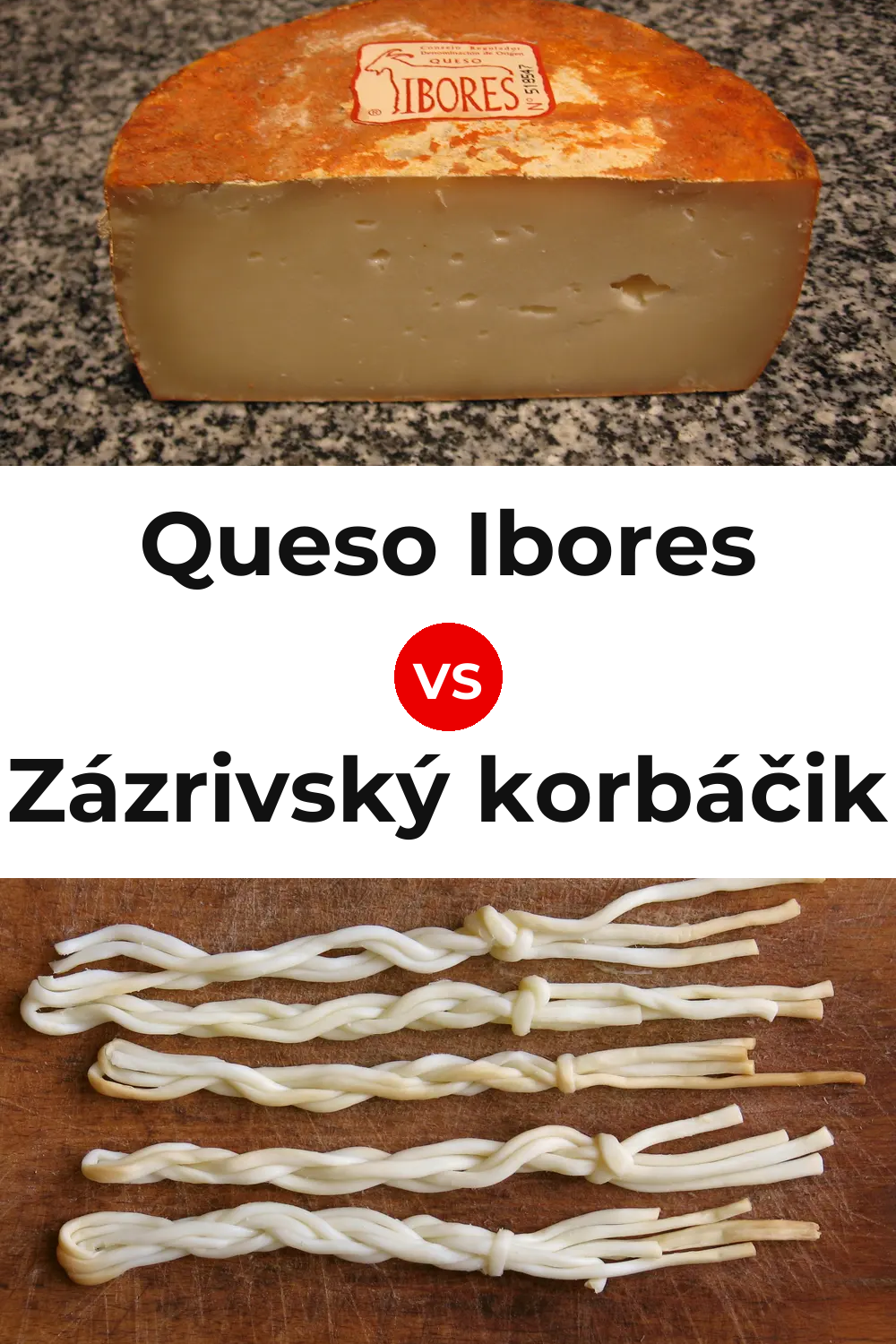
Queso Ibores is a slightly hard, moist, creamy, crumbly to spongy goat-milk cheese, while Zázrivský korbáčik Cheese is stringy, elastic and made from cow milk.
What Is Queso Ibores?
Queso Ibores is a full-fat goat’s milk cheese from the province of Cáceres, Spain. It is made exclusively from raw milk of Serrana, Verata, and Retinta goats, which graze on the Mediterranean pastures of the Ibores region. The cheese has a cylindrical shape, measuring 5–9 cm in height and 11–15 cm in diameter, with a weight between 650 and 1200 g. Its smooth, medium-hard rind is traditionally coated in pepper or oil, giving it colors ranging from waxen yellow to dark ochre. The interior is ivory-colored, slightly hard, and moist, with a creamy, crumbly to spongy texture and small irregular holes. It has a strong, slightly tart, tangy, and salty flavor, with a distinct raw goat’s milk aftertaste. The cheese is matured for at least 60 days, or 100 days for the handcrafted ("Artesano") variety. Queso Ibores has been produced in the region for centuries, with historical records dating back to 1465.
What Is Zázrivský korbáčik Cheese?
Zázrivský korbáčik is a traditional steamed cheese from the Slovak Republic, specifically from the municipality of Zázrivá. It is made from lump cheese produced using raw or pasteurized cow’s milk and formed into a distinctive whip-like shape by plaiting cheese strands. The cheese can be smoked or unsmoked, with the smoked variety having a golden-yellow color and a characteristic smoky aroma. It has a stringy, elastic texture that softens with age and a mild, savory, and slightly acidic taste. The cheese is sold in multipacks and must be packaged in its defined geographical area to preserve its unique shape. Its production follows a nearly entirely manual process, including steaming, stretching, plaiting, and optional smoking. The cheese has been made in the region since at least the 19th century and remains a popular product, especially during holidays and regional events.
What's the Difference Between Queso Ibores and Zázrivský korbáčik Cheese?
- Milk type: Queso Ibores (Goat), Zázrivský korbáčik Cheese (Cow)
- Milk treatment: Queso Ibores (Raw), Zázrivský korbáčik Cheese (Raw or pasteurized)
- Texture: Queso Ibores (Slightly hard, moist, creamy, crumbly to spongy), Zázrivský korbáčik Cheese (Stringy, elastic)
- Taste: Queso Ibores (Strong, slightly tart, tangy, and salty), Zázrivský korbáčik Cheese (Savory, mildly acidic)
Side-by-Side Comparison
| Queso Ibores | Zázrivský korbáčik Cheese | |
|---|---|---|
| Specific Origin | Ibores, Villuercas, La Jara, And Trujillo, Cáceres | Zázrivá |
| Milk Type | Goat | Cow |
| Milk Treatment | Raw | Raw or pasteurized |
| Texture | Slightly hard, moist, creamy, crumbly to spongy | Stringy, elastic |
| Rind | Smooth, medium-hard, coated in pepper or oil | — |
| Aging | Minimum 60 days (100 days for "Artesano" variety) | — |
| Taste | Strong, slightly tart, tangy, and salty | Savory, mildly acidic |
Taste Comparison: Does Queso Ibores Taste Like Zázrivský korbáčik Cheese?
Queso Ibores reads as strong, slightly tart, tangy, and salty, while Zázrivský korbáčik Cheese brings savory, mildly acidic character. On the nose, Queso Ibores offers sweet to mild, characteristic of raw goat’s milk cheese, contrasted with Zázrivský korbáčik Cheese's milky, cheesy, smoky (if smoked). More specifically, Queso Ibores shows raw goat’s milk aftertaste, while Zázrivský korbáčik Cheese leans toward milky, pleasantly cheesy, smoky (if smoked).
Can You Substitute Queso Ibores for Zázrivský korbáčik Cheese?
Queso Ibores can stand in for Zázrivský korbáčik Cheese in many dishes, but the switch will shift the overall character of the recipe. Expect slightly hard, moist, creamy, crumbly to spongy bite and body where the recipe calls for stringy, elastic. Flavor-wise, Queso Ibores reads as strong, slightly tart, tangy, and salty while Zázrivský korbáčik Cheese brings savory, mildly acidic notes.
Which Is Better, Queso Ibores or Zázrivský korbáčik Cheese?
There's no single winner. It depends on your recipe and the profile you want. If you want a slightly hard, moist, creamy, crumbly to spongy cheese, go with Queso Ibores. For a stringy, elastic profile, Zázrivský korbáčik Cheese is the better fit. Flavor-wise, Queso Ibores suits recipes that want strong, slightly tart, tangy, and salty notes, while Zázrivský korbáčik Cheese fits dishes calling for savory, mildly acidic.
Which is your favorite?
One click, anonymous. See what others chose.
Frequently Asked Questions
Is Queso Ibores the same as Zázrivský korbáčik Cheese?
No, they're distinct cheeses. Queso Ibores is made from goat milk; Zázrivský korbáčik Cheese uses cow.
Is Queso Ibores similar to Zázrivský korbáčik Cheese?
Not closely. They use different milk bases and have distinct profiles.
Can I substitute Queso Ibores for Zázrivský korbáčik Cheese?
You can, but expect a shift in richness and milk character.
Does Queso Ibores taste like Zázrivský korbáčik Cheese?
Queso Ibores reads as strong, slightly tart, tangy, and salty, while Zázrivský korbáčik Cheese is savory, mildly acidic. Aromas also diverge. Queso Ibores leans sweet to mild, characteristic of raw goat’s milk cheese, and Zázrivský korbáčik Cheese is closer to milky, cheesy, smoky (if smoked).
What is Queso Ibores made of?
Queso Ibores is made from goat milk (raw), using animal rennet. It's typically aged minimum 60 days (100 days for "artesano" variety).
What is Zázrivský korbáčik Cheese made of?
Zázrivský korbáčik Cheese is made from cow milk (raw or pasteurized).
Which should I choose, Queso Ibores or Zázrivský korbáčik Cheese?
It depends on the dish. The texture difference is the biggest practical tell. Queso Ibores is slightly hard, moist, creamy, crumbly to spongy, while Zázrivský korbáčik Cheese is stringy, elastic.