Ricotta Cheese vs Silter Cheese
Ricotta Cheese
Silter Cheese
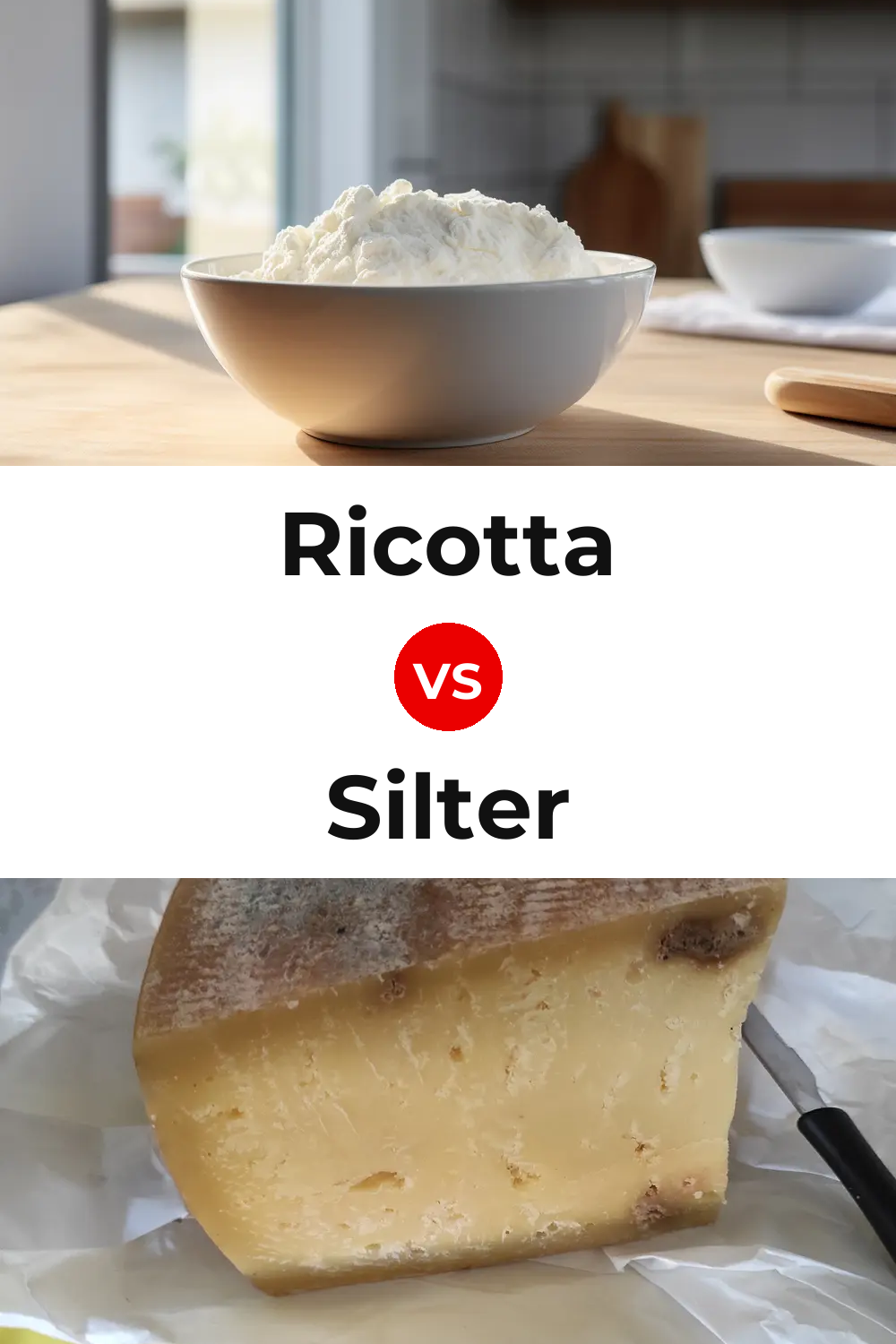
Ricotta Cheese is a soft, moist cow, goat, sheep, or buffalo-milk cheese from Italy, while Silter Cheese is firm, crumbly, not very springy, with small to medium-sized eyes and made from cow milk.
What Is Ricotta Cheese?
Ricotta is an Italian whey cheese made from the leftover whey of sheep, cow, goat, or water buffalo milk cheesemaking. The fresh curds are creamy white and slightly sweet, and they turn up in cannoli and cheesecakes as readily as in lasagne and ravioli.
What Is Silter Cheese?
Silter is a hard Italian cheese from the mountains of Lombardy, around the province of Brescia, made with unpasteurized cow's milk. It is named after the Val Camonica room where wheels are stored and aged, and it has held EU PDO status since 2015.
What's the Difference Between Ricotta Cheese and Silter Cheese?
- Milk type: Ricotta Cheese (cow's, goat's, sheep's or water buffalo's milk), Silter Cheese (Cow's milk)
- Milk treatment: Ricotta Cheese (Whey), Silter Cheese (Raw, partially skimmed)
- Texture: Ricotta Cheese (Soft, moist), Silter Cheese (Firm, crumbly, not very springy, with small to medium-sized eyes)
- Rind: Ricotta Cheese (None), Silter Cheese (Hard, straw-yellow turning to brown)
- Aging: Ricotta Cheese (Fresh), Silter Cheese (At least 100 days)
- Taste: Ricotta Cheese (Sweet, slightly creamy), Silter Cheese (Mild, without bitterness; full-bodied and/or strong notes in very mature cheeses)
Side-by-Side Comparison
| Ricotta Cheese | Silter Cheese | |
|---|---|---|
| Country of Origin | Italy | — |
| Specific Origin | Italy | Valle Camonica And Sebino Bresciano Mountain Communities, Province Of Brescia |
| Milk Type | Cow's, goat's, sheep's or water buffalo's milk | Cow's milk |
| Milk Treatment | Whey | Raw, partially skimmed |
| Texture | Soft, moist | Firm, crumbly, not very springy, with small to medium-sized eyes |
| Rind | None | Hard, straw-yellow turning to brown |
| Aging | Fresh | At least 100 days |
| Taste | Sweet, slightly creamy | Mild, without bitterness; full-bodied and/or strong notes in very mature cheeses |
| Where to Buy | Shop on Amazon | Shop on Amazon |
As an Amazon Associate, AnyCheese earns from qualifying purchases.
Taste Comparison: Does Ricotta Cheese Taste Like Silter Cheese?
Ricotta Cheese reads as sweet, slightly creamy, while Silter Cheese brings mild, without bitterness; full-bodied and/or strong notes in very mature cheeses character. On the nose, Ricotta Cheese offers mild, contrasted with Silter Cheese's lingers in the nose and on the palate, typical of the production area. More specifically, Ricotta Cheese shows depending on milk source, while Silter Cheese leans toward nuts, butter, milk of cattle at pasture, green or dried fodder, chestnut flour. Aging plays into this as well. Ricotta Cheese at fresh develops a different profile than Silter Cheese at at least 100 days.
Can You Substitute Ricotta Cheese for Silter Cheese?
Ricotta Cheese can stand in for Silter Cheese in many dishes, but the switch will shift the overall character of the recipe. Expect soft, moist bite and body where the recipe calls for firm, crumbly, not very springy, with small to medium-sized eyes. Flavor-wise, Ricotta Cheese reads as sweet, slightly creamy while Silter Cheese brings mild, without bitterness; full-bodied and/or strong notes in very mature cheeses notes.
Which Is Better, Ricotta Cheese or Silter Cheese?
There's no single winner. It depends on your recipe and the profile you want. If you want a soft, moist cheese, go with Ricotta Cheese. For a firm, crumbly, not very springy, with small to medium-sized eyes profile, Silter Cheese is the better fit. Flavor-wise, Ricotta Cheese suits recipes that want sweet, slightly creamy notes, while Silter Cheese fits dishes calling for mild, without bitterness; full-bodied and/or strong notes in very mature cheeses.
Which is your favorite?
One click, anonymous. See what others chose.
Frequently Asked Questions
Is Ricotta Cheese the same as Silter Cheese?
No, they're distinct cheeses. Ricotta Cheese is made from cow, goat, sheep, or buffalo milk; Silter Cheese uses cow. Aging also differs: Ricotta Cheese is typically aged fresh, Silter Cheese at least 100 days.
Is Ricotta Cheese similar to Silter Cheese?
Not closely. They use different milk bases and have distinct profiles.
Can I substitute Ricotta Cheese for Silter Cheese?
You can, but expect a shift in richness and milk character.
Does Ricotta Cheese taste like Silter Cheese?
Ricotta Cheese reads as sweet, slightly creamy, while Silter Cheese is mild, without bitterness; full-bodied and/or strong notes in very mature cheeses. Aromas also diverge. Ricotta Cheese leans mild, and Silter Cheese is closer to lingers in the nose and on the palate, typical of the production area.
What is Ricotta Cheese made of?
Ricotta Cheese is made from cow, goat, sheep, or buffalo milk (whey), using animal or microbial rennet. It's typically aged fresh. It originates in Italy.
What is Silter Cheese made of?
Silter Cheese is made from cow milk (raw, partially skimmed). It's typically aged at least 100 days.
Which should I choose, Ricotta Cheese or Silter Cheese?
It depends on the dish. The texture difference is the biggest practical tell. Ricotta Cheese is soft, moist, while Silter Cheese is firm, crumbly, not very springy, with small to medium-sized eyes.