
Roncal Cheese vs Sirene Cheese
Roncal Cheese
Sirene Cheese
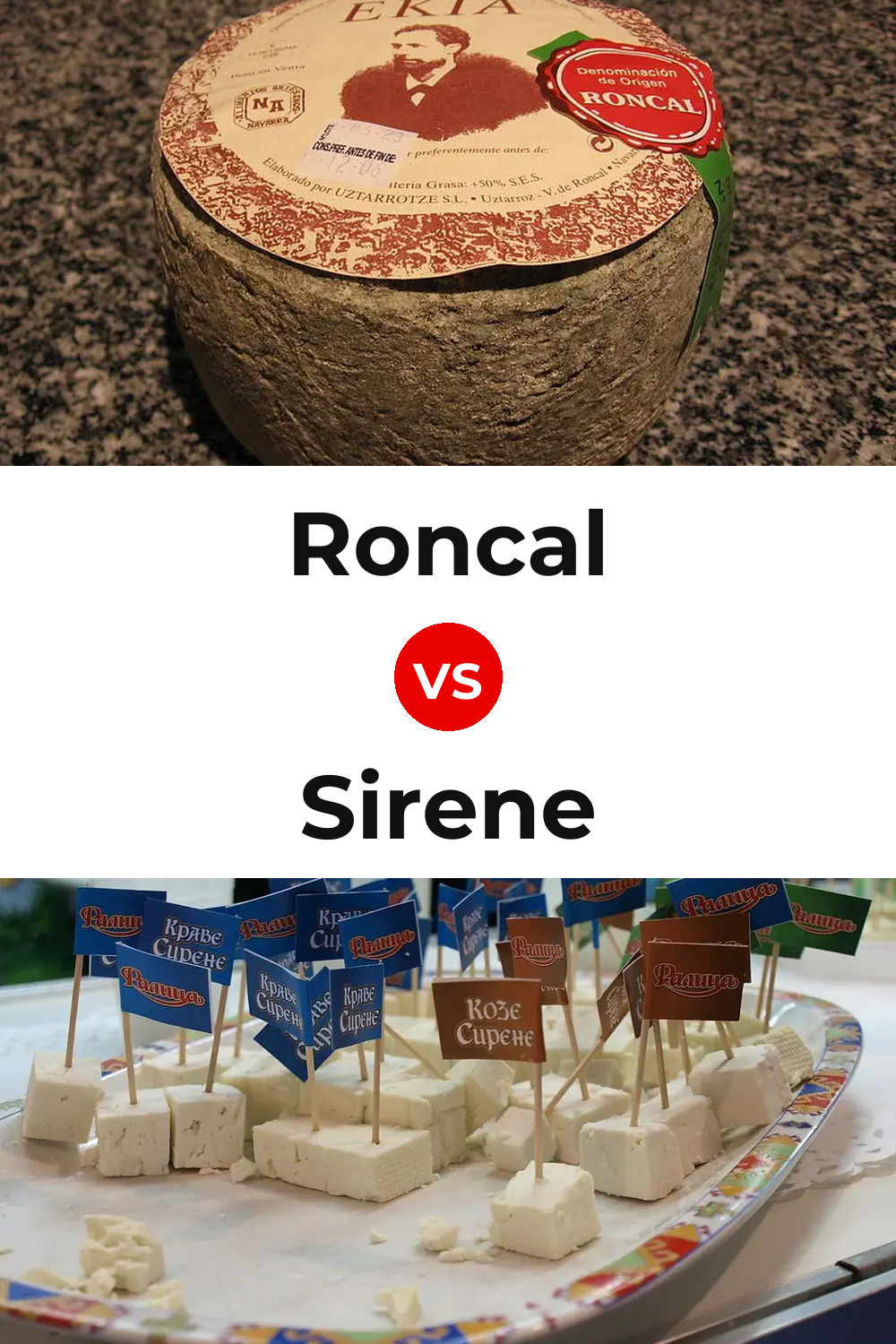
Roncal Cheese is a hard or semihard sheep-milk cheese from Spain, while Sirene Cheese is fresh soft, brined and made from cow, goat, and sheep milk, originating in Albania, Bulgaria, Croatia, Greece, Israel, Macedonia, Romania and Serbia.
Buy Roncal Cheese
Buy Sirene Cheese
What Is Roncal Cheese?
Roncal is a hard cheese made from raw sheep's milk in the Roncal Valley of the Navarrese Pyrenees. In 1981 it became the first Spanish cheese granted a denomination of origin, and it is known for its intense, slightly spicy sheep's milk flavor.
What Is Sirene Cheese?
Sirene is a Bulgarian brined cheese made from goat, sheep, cow or buffalo milk. Slightly crumbly and a little grainy, it is sold in blocks and used as a table cheese, in salads such as shopska, and in baking.
What's the Difference Between Roncal Cheese and Sirene Cheese?
- Origin: Roncal Cheese (Spain), Sirene Cheese (Albania, Bulgaria, Croatia, Greece, Israel, Macedonia, Romania and Serbia)
- Milk type: Roncal Cheese (sheep's milk), Sirene Cheese (cow's, goat's and sheep's milk)
- Milk treatment: Roncal Cheese (unpasteurized), Sirene Cheese (pasteurized or unpasteurized)
- Texture: Roncal Cheese (Hard or semihard), Sirene Cheese (fresh soft, brined)
- Rind: Roncal Cheese (Natural hard brown), Sirene Cheese (natural)
- Taste: Roncal Cheese (Well developed, pronounced), Sirene Cheese (lemony, salty, sharp, tangy)
Side-by-Side Comparison
| Roncal Cheese | Sirene Cheese | |
|---|---|---|
| Country of Origin | Spain | Albania, Bulgaria, Croatia, Greece, Israel, Macedonia, Romania And Serbia |
| Specific Origin | Roncal Valley, Navarra | Bulgaria |
| Milk Type | Sheep's milk | Cow's, goat's and sheep's milk |
| Milk Treatment | Unpasteurized | Pasteurized or unpasteurized |
| Texture | Hard or semihard | Fresh soft, brined |
| Rind | Natural hard brown | Natural |
| Aging | More than 120 days | — |
| Taste | Well developed, pronounced | Lemony, salty, sharp, tangy |
Taste Comparison: Does Roncal Cheese Taste Like Sirene Cheese?
Roncal Cheese reads as well developed, pronounced, while Sirene Cheese brings lemony, salty, sharp, tangy character. On the nose, Roncal Cheese offers straw, mushrooms, dried fruits, contrasted with Sirene Cheese's strong.
Can You Substitute Roncal Cheese for Sirene Cheese?
Roncal Cheese can stand in for Sirene Cheese in many dishes, but the switch will shift the overall character of the recipe. Expect hard or semihard bite and body where the recipe calls for fresh soft, brined. Flavor-wise, Roncal Cheese reads as well developed, pronounced while Sirene Cheese brings lemony, salty, sharp, tangy notes.
Which Is Better, Roncal Cheese or Sirene Cheese?
There's no single winner. It depends on your recipe and the profile you want. If you want a hard or semihard cheese, go with Roncal Cheese. For a fresh soft, brined profile, Sirene Cheese is the better fit. Flavor-wise, Roncal Cheese suits recipes that want well developed, pronounced notes, while Sirene Cheese fits dishes calling for lemony, salty, sharp, tangy.
Which is your favorite?
One click, anonymous. See what others chose.
Frequently Asked Questions
Is Roncal Cheese the same as Sirene Cheese?
No, they're distinct cheeses. Roncal Cheese originates in Spain, while Sirene Cheese comes from Albania, Bulgaria, Croatia, Greece, Israel, Macedonia, Romania and Serbia. Roncal Cheese is made from sheep milk; Sirene Cheese uses cow, goat, and sheep.
Is Roncal Cheese similar to Sirene Cheese?
Not closely. They use different milk bases and have distinct profiles.
Can I substitute Roncal Cheese for Sirene Cheese?
You can, but expect a shift in richness and milk character.
Does Roncal Cheese taste like Sirene Cheese?
Roncal Cheese reads as well developed, pronounced, while Sirene Cheese is lemony, salty, sharp, tangy. Aromas also diverge. Roncal Cheese leans straw, mushrooms, dried fruits, and Sirene Cheese is closer to strong.
What is Roncal Cheese made of?
Roncal Cheese is made from sheep milk (unpasteurized), using animal rennet. It's typically aged more than 120 days. It originates in Spain.
What is Sirene Cheese made of?
Sirene Cheese is made from cow, goat, and sheep milk (pasteurized or unpasteurized). It originates in Albania, Bulgaria, Croatia, Greece, Israel, Macedonia, Romania and Serbia.
Which should I choose, Roncal Cheese or Sirene Cheese?
It depends on the dish. The texture difference is the biggest practical tell. Roncal Cheese is hard or semihard, while Sirene Cheese is fresh soft, brined.