Telemea de Ibăneşti Cheese vs Tilsit Cheese
Telemea de Ibăneşti Cheese
Tilsit Cheese
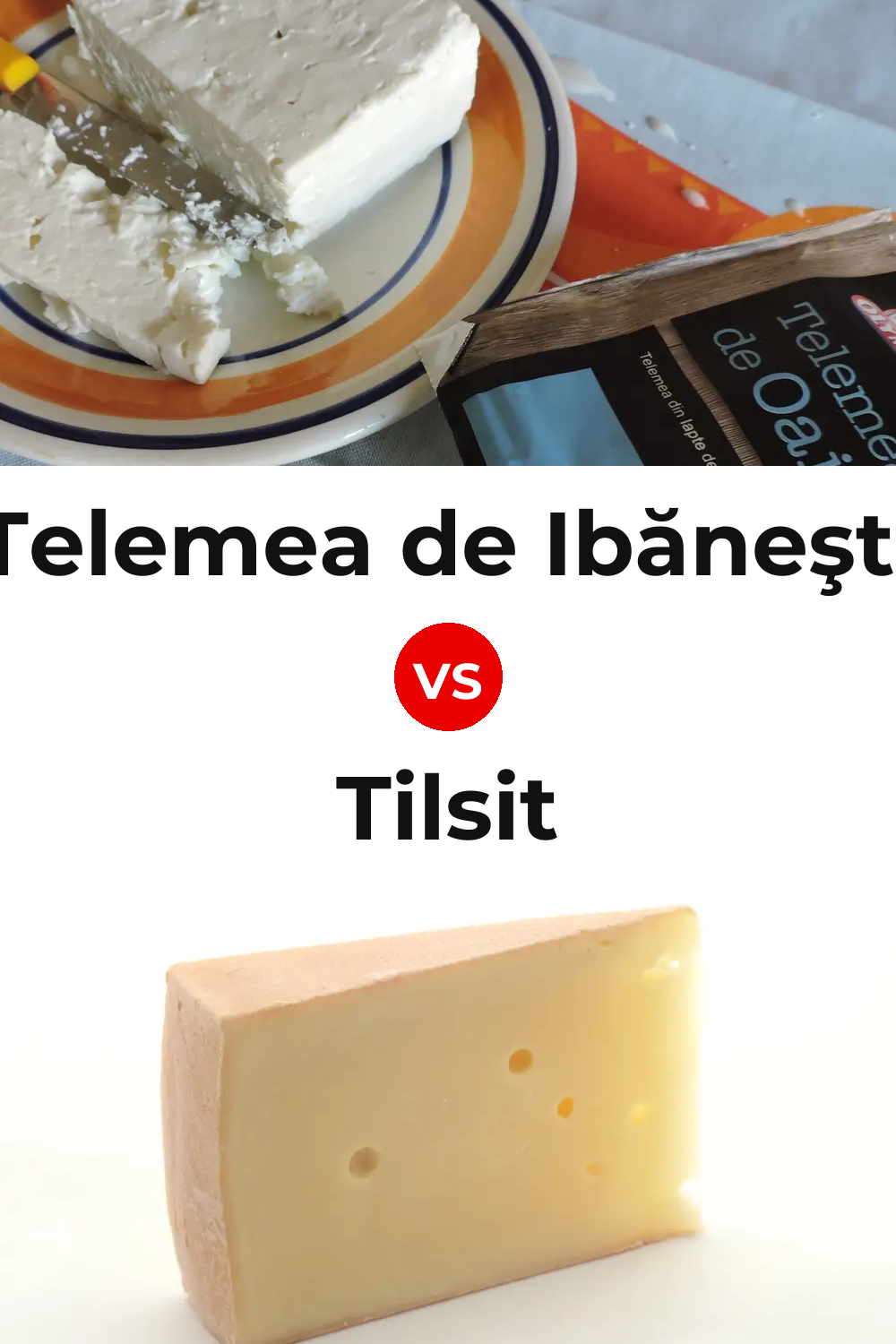
Telemea de Ibăneşti Cheese is a compact, firm, smooth, and buttery cow-milk cheese, while Tilsit Cheese is semi-hard and made from cow milk, originating in Germany.
What Is Telemea de Ibăneşti Cheese?
Telemea de Ibănești is a cheese from Romania, specifically produced in the Gurghiu Valley. It is made from the milk of indigenous cows and is known for its firm, compact texture. The cheese is produced using microbial rennet and is salted with brine from the Orșova salt water well. It has a slightly sweet, sour, and salty taste that intensifies with maturation. The cheese is available in fresh and mature forms, with the mature version requiring a minimum of 20 days of aging. Telemea de Ibănești is recognized for its Protected Designation of Origin (PDO) status, highlighting its unique link to the geographical area and traditional production methods.
What Is Tilsit Cheese?
Tilsiter, or Tilsit, is a semi-hard cheese originally made by Prussian-Swiss immigrants in the town of Tilsit. Made from cow's milk, it has a pungent aroma and a strong, slightly fruity and nutty flavor. The texture is firm yet creamy with irregular holes. It’s used in sandwiches, on cheese platters, or melted in cooking.
What's the Difference Between Telemea de Ibăneşti Cheese and Tilsit Cheese?
- Texture: Telemea de Ibăneşti Cheese (Compact, firm, smooth, and buttery), Tilsit Cheese (Semi-Hard)
- Aging: Telemea de Ibăneşti Cheese (Fresh can be consumed 24 hours after manufacture; mature has a minimum maturation period of 20 days), Tilsit Cheese (3 months / Variable)
- Taste: Telemea de Ibăneşti Cheese (Slightly sweet, sour, and salty), Tilsit Cheese (Pungent, balanced)
Side-by-Side Comparison
| Telemea de Ibăneşti Cheese | Tilsit Cheese | |
|---|---|---|
| Country of Origin | — | Germany |
| Specific Origin | Gurghiu Valley, Mureș County | Northern Germany/Baltic And Northern Switzerland |
| Milk Type | Cow | Cow’s milk |
| Milk Treatment | — | Raw and pasteurized |
| Texture | Compact, firm, smooth, and buttery | Semi-Hard |
| Rind | — | Washed-rind/ Dry rind |
| Aging | Fresh can be consumed 24 hours after manufacture; mature has a minimum maturation period of 20 days | 3 months / Variable |
| Taste | Slightly sweet, sour, and salty | Pungent, balanced |
Taste Comparison: Does Telemea de Ibăneşti Cheese Taste Like Tilsit Cheese?
Telemea de Ibăneşti Cheese reads as slightly sweet, sour, and salty, while Tilsit Cheese brings pungent, balanced character. On the nose, Telemea de Ibăneşti Cheese offers delicate and pleasant, becomes stronger with maturation, contrasted with Tilsit Cheese's pungent, complex. More specifically, Telemea de Ibăneşti Cheese shows becomes stronger with maturation, while Tilsit Cheese leans toward northern: pungent aroma, sweet; swiss: strong, sweetness. Aging plays into this as well. Telemea de Ibăneşti Cheese at fresh can be consumed 24 hours after manufacture; mature has a minimum maturation period of 20 days develops a different profile than Tilsit Cheese at 3 months / variable.
Can You Substitute Telemea de Ibăneşti Cheese for Tilsit Cheese?
In most recipes, Telemea de Ibăneşti Cheese and Tilsit Cheese can be swapped with reasonable results. Both are cow-milk cheeses, so the base character carries over. Expect compact, firm, smooth, and buttery bite and body where the recipe calls for semi-hard. Flavor-wise, Telemea de Ibăneşti Cheese reads as slightly sweet, sour, and salty while Tilsit Cheese brings pungent, balanced notes.
Which Is Better, Telemea de Ibăneşti Cheese or Tilsit Cheese?
There's no single winner. It depends on your recipe and the profile you want. If you want a compact, firm, smooth, and buttery cheese, go with Telemea de Ibăneşti Cheese. For a semi-hard profile, Tilsit Cheese is the better fit. Flavor-wise, Telemea de Ibăneşti Cheese suits recipes that want slightly sweet, sour, and salty notes, while Tilsit Cheese fits dishes calling for pungent, balanced.
Which is your favorite?
One click, anonymous. See what others chose.
Frequently Asked Questions
Is Telemea de Ibăneşti Cheese the same as Tilsit Cheese?
No, they're distinct cheeses. Aging also differs: Telemea de Ibăneşti Cheese is typically aged fresh can be consumed 24 hours after manufacture; mature has a minimum maturation period of 20 days, Tilsit Cheese 3 months / variable.
Is Telemea de Ibăneşti Cheese similar to Tilsit Cheese?
Somewhat. They share a cow-milk base but diverge in texture and flavor.
Can I substitute Telemea de Ibăneşti Cheese for Tilsit Cheese?
You can, but expect a shift in bite and mouthfeel.
Does Telemea de Ibăneşti Cheese taste like Tilsit Cheese?
Telemea de Ibăneşti Cheese reads as slightly sweet, sour, and salty, while Tilsit Cheese is pungent, balanced. Aromas also diverge. Telemea de Ibăneşti Cheese leans delicate and pleasant, becomes stronger with maturation, and Tilsit Cheese is closer to pungent, complex.
What is Telemea de Ibăneşti Cheese made of?
Telemea de Ibăneşti Cheese is made from cow milk, using microbial rennet. It's typically aged fresh can be consumed 24 hours after manufacture; mature has a minimum maturation period of 20 days.
What is Tilsit Cheese made of?
Tilsit Cheese is made from cow milk (raw and pasteurized), using traditional rennet. It's typically aged 3 months / variable. It originates in Germany.
Which should I choose, Telemea de Ibăneşti Cheese or Tilsit Cheese?
It depends on the dish. The texture difference is the biggest practical tell. Telemea de Ibăneşti Cheese is compact, firm, smooth, and buttery, while Tilsit Cheese is semi-hard.