Taleggio Cheese vs Valtellina Casera Cheese
Taleggio Cheese
Valtellina Casera Cheese
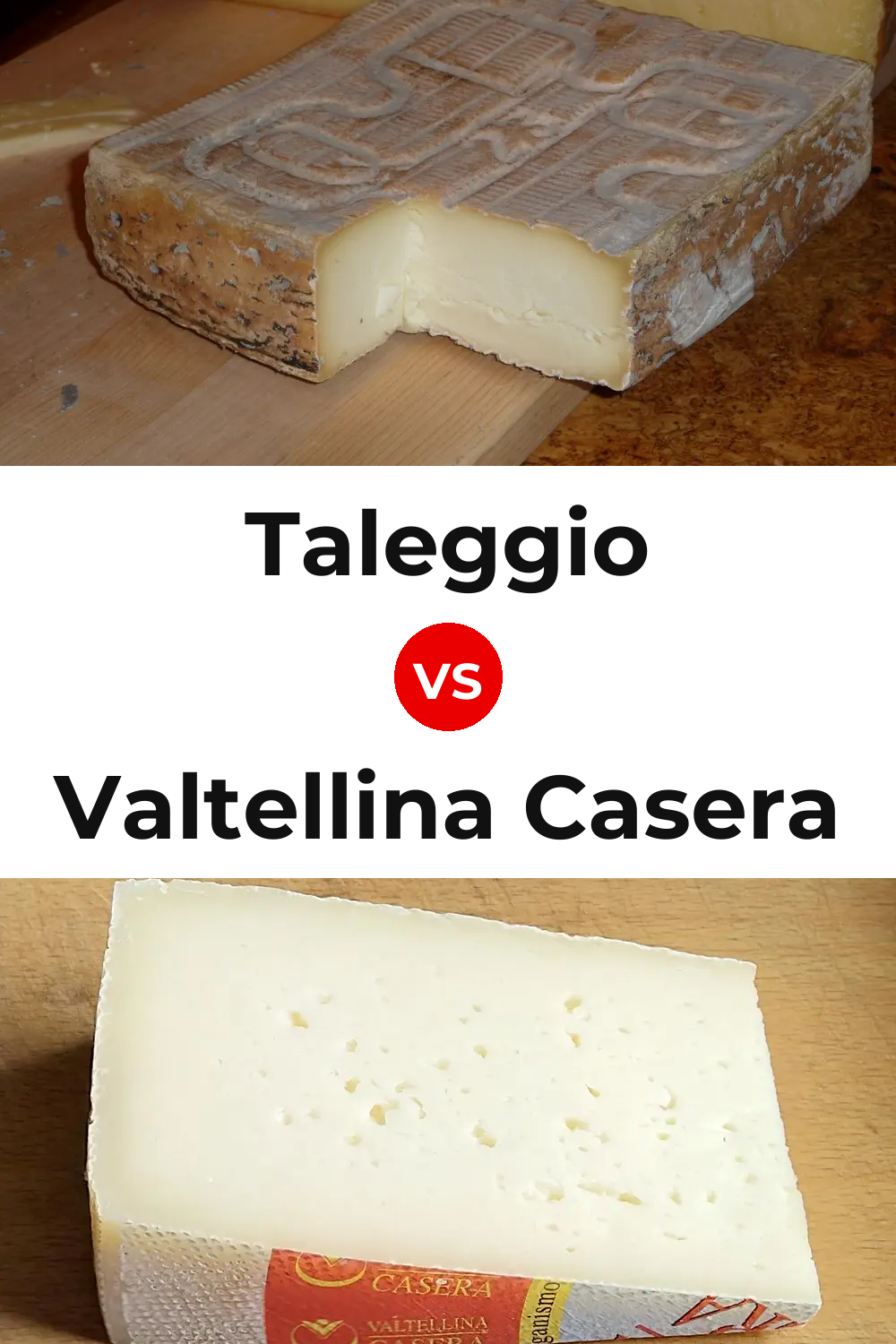
Taleggio Cheese is a soft, slightly melting under the rind, firmer towards the center cow-milk cheese from Italy, while Valtellina Casera Cheese is semihard and made from cow milk, originating in Italy.
What Is Taleggio Cheese?
Taleggio is a semisoft Italian cheese with a washed, smear-ripened rind and a strong smell. The taste is milder than the aroma suggests, creamy and pale yellow inside, with an unusual fruity tang.
What Is Valtellina Casera Cheese?
Valtellina Casera is a cheese made from semi-skimmed cow's milk in the province of Sondrio, northern Italy. It goes back to the sixteenth century, carries PDO status, and turns up in Valtellina buckwheat cooking such as pizzoccheri and sciatt.
What's the Difference Between Taleggio Cheese and Valtellina Casera Cheese?
- Milk treatment: Taleggio Cheese (Heated to 90–95°F), Valtellina Casera Cheese (Partially skimmed)
- Texture: Taleggio Cheese (Soft, slightly melting under the rind, firmer towards the center), Valtellina Casera Cheese (Semihard)
- Rind: Taleggio Cheese (Soft, thin, pinkish-red), Valtellina Casera Cheese (Hard and thin)
- Aging: Taleggio Cheese (At least 35 (up to 50) days), Valtellina Casera Cheese (At least 70 days)
- Taste: Taleggio Cheese (Sweet, delicate, slightly sour), Valtellina Casera Cheese (Milk to hay and nutty)
Side-by-Side Comparison
| Taleggio Cheese | Valtellina Casera Cheese | |
|---|---|---|
| Country of Origin | Italy | Italy |
| Specific Origin | Val Taleggio, Po Valley | Province Of Sondrio |
| Milk Type | Cow's milk | Cow’s milk |
| Milk Treatment | Heated to 90–95°F | Partially skimmed |
| Texture | Soft, slightly melting under the rind, firmer towards the center | Semihard |
| Rind | Soft, thin, pinkish-red | Hard and thin |
| Aging | At least 35 (up to 50) days | At least 70 days |
| Taste | Sweet, delicate, slightly sour | Milk to hay and nutty |
Taste Comparison: Does Taleggio Cheese Taste Like Valtellina Casera Cheese?
Taleggio Cheese reads as sweet, delicate, slightly sour, while Valtellina Casera Cheese brings milk to hay and nutty character. More specifically, Taleggio Cheese shows herbaceous, aromatic, intensifies and becomes more complex over time, while Valtellina Casera Cheese leans toward creamy sensation with flavors changing from milk to hay and nutty. Aging plays into this as well. Taleggio Cheese at at least 35 (up to 50) days develops a different profile than Valtellina Casera Cheese at at least 70 days.
Can You Substitute Taleggio Cheese for Valtellina Casera Cheese?
In most recipes, Taleggio Cheese and Valtellina Casera Cheese can be swapped with reasonable results. Both are cow-milk cheeses, so the base character carries over. Expect soft, slightly melting under the rind, firmer towards the center bite and body where the recipe calls for semihard. Flavor-wise, Taleggio Cheese reads as sweet, delicate, slightly sour while Valtellina Casera Cheese brings milk to hay and nutty notes.
Which Is Better, Taleggio Cheese or Valtellina Casera Cheese?
There's no single winner. It depends on your recipe and the profile you want. If you want a soft, slightly melting under the rind, firmer towards the center cheese, go with Taleggio Cheese. For a semihard profile, Valtellina Casera Cheese is the better fit. Flavor-wise, Taleggio Cheese suits recipes that want sweet, delicate, slightly sour notes, while Valtellina Casera Cheese fits dishes calling for milk to hay and nutty.
Which is your favorite?
One click, anonymous. See what others chose.
Frequently Asked Questions
Is Taleggio Cheese the same as Valtellina Casera Cheese?
No, they're distinct cheeses. Aging also differs: Taleggio Cheese is typically aged at least 35 (up to 50) days, Valtellina Casera Cheese at least 70 days.
Is Taleggio Cheese similar to Valtellina Casera Cheese?
Somewhat. They share a cow-milk base but diverge in texture and flavor.
Can I substitute Taleggio Cheese for Valtellina Casera Cheese?
You can, but expect a shift in bite and mouthfeel.
Does Taleggio Cheese taste like Valtellina Casera Cheese?
Taleggio Cheese reads as sweet, delicate, slightly sour, while Valtellina Casera Cheese is milk to hay and nutty.
What is Taleggio Cheese made of?
Taleggio Cheese is made from cow milk (heated to 90–95°f), using calf rennet. It's typically aged at least 35 (up to 50) days. It originates in Italy.
What is Valtellina Casera Cheese made of?
Valtellina Casera Cheese is made from cow milk (partially skimmed), using calf rennet. It's typically aged at least 70 days. It originates in Italy.
Which should I choose, Taleggio Cheese or Valtellina Casera Cheese?
It depends on the dish. The texture difference is the biggest practical tell. Taleggio Cheese is soft, slightly melting under the rind, firmer towards the center, while Valtellina Casera Cheese is semihard.