Aged Cheddar Cheese vs Blue Cheese
Aged Cheddar Cheese
Blue Cheese
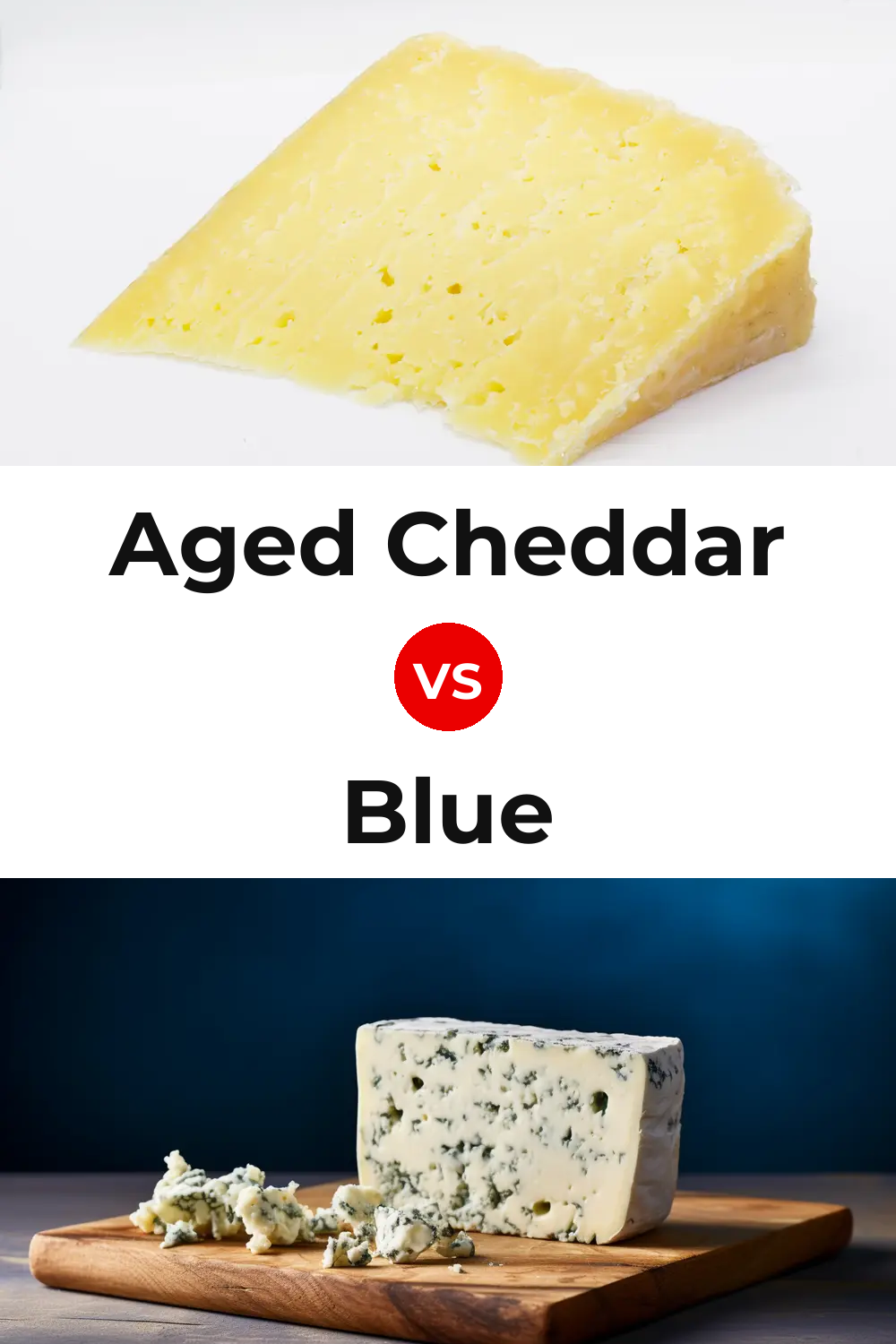
Aged Cheddar Cheese is a cheese, while Blue Cheese is crumbly, creamy, semi-soft and made from cow, goat, or sheep milk, originating in France.
What Is Aged Cheddar Cheese?
Aged Cheddar is a hard cheese originating from England, known for its sharp, tangy flavor and firm texture. As it matures, usually over a period of 12 to 24 months, the cheese develops a crumbly consistency and rich taste that can include nutty and earthy notes. Its color ranges from pale yellow to deep orange, depending on the use of annatto, a natural coloring. Aged Cheddar is often used in cooking or enjoyed on its own, pairing well with fruits, nuts, and wines. Its versatility makes it a staple in cheese boards, sandwiches, and sauces. The aging process enhances its depth of flavor, making it a favorite among cheese enthusiasts worldwide.
What Is Blue Cheese?
A type of cheese injected or inoculated with Penicillium mold to create blue or green veins, resulting in a tangy, sharp flavor and creamy or crumbly texture.
What's the Difference Between Aged Cheddar Cheese and Blue Cheese?
Side-by-Side Comparison
| Aged Cheddar Cheese | Blue Cheese | |
|---|---|---|
| Country of Origin | — | France |
| Milk Type | — | Cow, Sheep, Goat |
| Milk Treatment | — | Pasteurized or Raw |
| Texture | — | Crumbly, Creamy, Semi-Soft |
| Rind | — | Natural |
| Aging | — | Typically aged 2-6 months |
| Taste | — | Sharp, Tangy, Savory, Salty, Pungent |
Pairing Comparison
What works with each cheese — wines, foods, breads, and more.
| Aged Cheddar Cheese | Blue Cheese | |
|---|---|---|
| Best Pairings | Amaro, Apples, Barleywine, Cabernet Franc, Cabernet Sauvignon, Chorizo, Clam Chowder, Crackers, Dirty Martini, Dried Cranberries, Dried Figs, Ginger, Grapes, Green Apple, Hard Cider, Madeira, Malbec, Merlot, Port, Roast Beef, Salami, Scotch, Steak, Tequila | Amaro, Apricot, Asian Pear, Cabernet Sauvignon, Dirty Martini, Dried Figs, Fig Jam, German Riesling, Green Apple, Hard Cider, Honey, Honeycomb, IPA, Malbec, Muscat, Pear, Pecans, Port, Scotch, Steak |
| Other Good Pairings | Apricot, Asian Pear, Bordeaux, Burgundy Red, Dried Fruit, Fig Jam, Pear, Sangiovese | Almonds, Apples, Belgian Blonde, Bordeaux, Burgundy Red, California Viogniers, Dried Cranberries, Grapes, Merlot, Mushrooms, Olives, Prosciutto, Roast Beef |
Which would you pick?
One click, anonymous — see what others chose.
Where to buy Aged Cheddar Cheese and Blue Cheese
Aged Cheddar Cheese
Blue Cheese
Taste Comparison: Does Aged Cheddar Cheese Taste Like Blue Cheese?
Their flavor profiles are distinct.
Can You Substitute Aged Cheddar Cheese for Blue Cheese?
Aged Cheddar Cheese can stand in for Blue Cheese in many dishes, but the switch will shift the overall character of the recipe.
Which Is Better, Aged Cheddar Cheese or Blue Cheese?
There's no single winner. It depends on your recipe and the profile you want.
Frequently Asked Questions
Is Aged Cheddar Cheese the same as Blue Cheese?
No, they're distinct cheeses.
Is Aged Cheddar Cheese similar to Blue Cheese?
Not closely. They use different milk bases and have distinct profiles.
Can I substitute Aged Cheddar Cheese for Blue Cheese?
You can, but expect a shift in flavor and finish.
Does Aged Cheddar Cheese taste like Blue Cheese?
They have distinct flavor profiles. The taste row in the table above is the best direct comparison.
What is Aged Cheddar Cheese made of?
Aged Cheddar Cheese is made from milk.
What is Blue Cheese made of?
Blue Cheese is made from cow, goat, or sheep milk (pasteurized or raw), using traditional (animal rennet) or microbial (varies by producer) rennet. It's typically aged typically aged 2-6 months. It originates in France.
Which should I choose, Aged Cheddar Cheese or Blue Cheese?
It depends on the dish. The table above is the fastest way to decide based on your recipe.
See full profiles: Aged Cheddar Cheese and Blue Cheese.