
Allgäuer Bergkäse Cheese vs Castelmagno Cheese
Allgäuer Bergkäse Cheese
Castelmagno Cheese
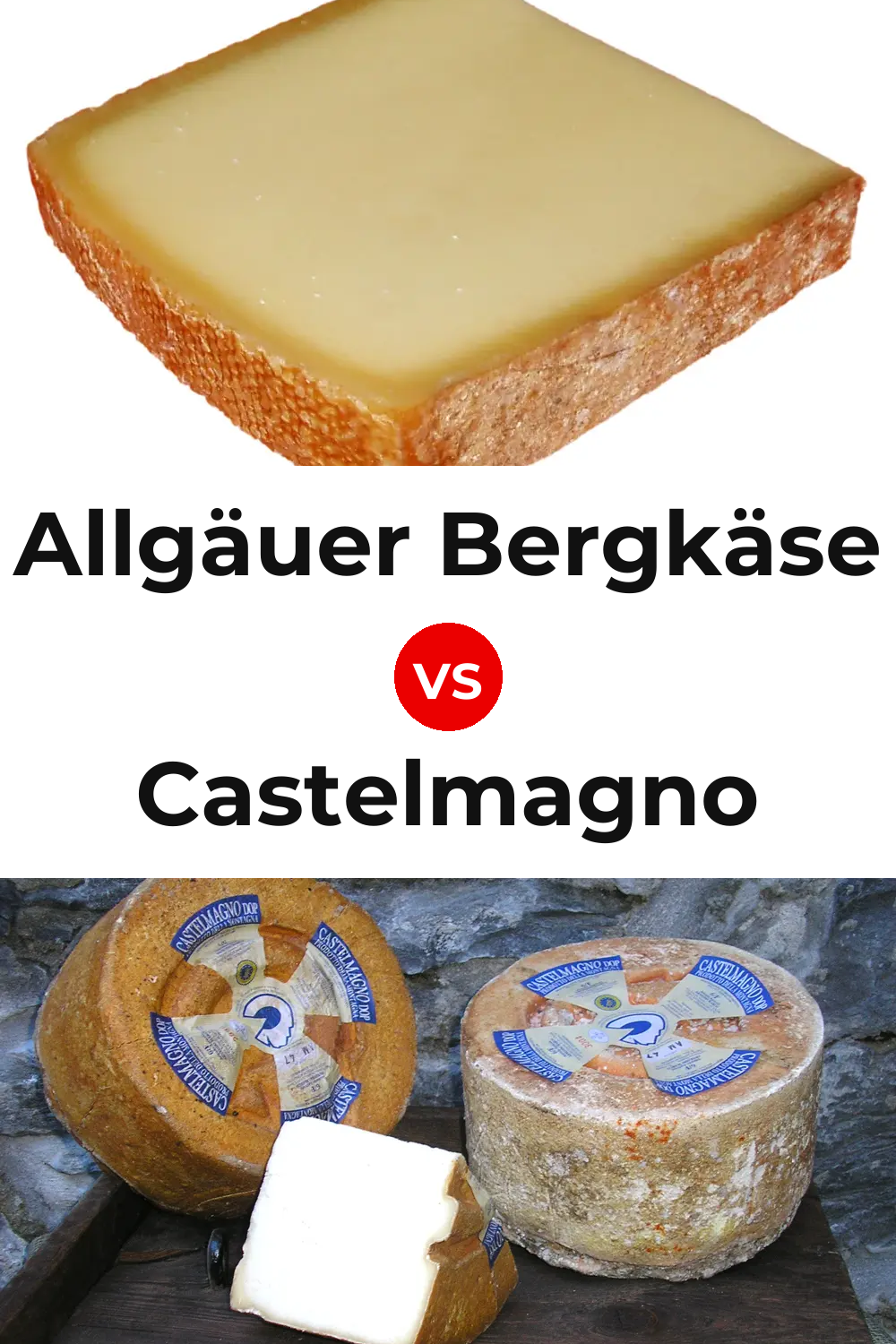
Allgäuer Bergkäse Cheese is a cheese, while Castelmagno Cheese is hard, compact, friable and made from cow, goat, and sheep milk, originating in Italy.
What Is Allgäuer Bergkäse Cheese?
Allgäuer Bergkäse is a German raw milk mountain cheese with a protected designation of origin. Loaves weigh 15 to 50 kg, ripen at least four months, and taste mild, aromatic and nutty, with more punch as the cheese ages.
What Is Castelmagno Cheese?
Castelmagno is a semi-hard Italian cheese from the Valle Grana in Piedmont, made mainly from whole cow's milk. It holds protected designation of origin status and has been made since at least 1277.
What's the Difference Between Allgäuer Bergkäse Cheese and Castelmagno Cheese?
- Milk treatment: Allgäuer Bergkäse Cheese (Raw), Castelmagno Cheese (pasteurized or unpasteurized)
- Rind: Allgäuer Bergkäse Cheese (Yes), Castelmagno Cheese (Wrinkled, hard, reddish-gray)
- Aging: Allgäuer Bergkäse Cheese (4 months), Castelmagno Cheese (60 days to 6 months and beyond)
Side-by-Side Comparison
| Allgäuer Bergkäse Cheese | Castelmagno Cheese | |
|---|---|---|
| Country of Origin | — | Italy |
| Specific Origin | Landkreise Lindau (Bodensee), Oberallgäu, Ostallgäu, Unterallgäu, Ravensburg, Bodenseekreis; Städte Kaufbeuren, Kempten, Memmingen | Castelmagno, Pradleves, Monterosso Grana, Cuneo |
| Milk Type | — | Cow's, goat's and sheep's milk |
| Milk Treatment | Raw | Pasteurized or unpasteurized |
| Texture | — | Hard, compact, friable |
| Rind | Yes | Wrinkled, hard, reddish-gray |
| Aging | 4 months | 60 days to 6 months and beyond |
| Taste | — | Savory, salty |
Taste Comparison: Does Allgäuer Bergkäse Cheese Taste Like Castelmagno Cheese?
Their flavor profiles are distinct. Aging plays into this as well. Allgäuer Bergkäse Cheese at 4 months develops a different profile than Castelmagno Cheese at 60 days to 6 months and beyond.
Can You Substitute Allgäuer Bergkäse Cheese for Castelmagno Cheese?
Allgäuer Bergkäse Cheese can stand in for Castelmagno Cheese in many dishes, but the switch will shift the overall character of the recipe.
Which Is Better, Allgäuer Bergkäse Cheese or Castelmagno Cheese?
There's no single winner. It depends on your recipe and the profile you want.
Which is your favorite?
One click, anonymous. See what others chose.
Frequently Asked Questions
Is Allgäuer Bergkäse Cheese the same as Castelmagno Cheese?
No, they're distinct cheeses. Aging also differs: Allgäuer Bergkäse Cheese is typically aged 4 months, Castelmagno Cheese 60 days to 6 months and beyond.
Is Allgäuer Bergkäse Cheese similar to Castelmagno Cheese?
Not closely. They use different milk bases and have distinct profiles.
Can I substitute Allgäuer Bergkäse Cheese for Castelmagno Cheese?
You can, but expect a shift in flavor and finish.
Does Allgäuer Bergkäse Cheese taste like Castelmagno Cheese?
They have distinct flavor profiles. The taste row in the table above is the best direct comparison.
What is Allgäuer Bergkäse Cheese made of?
Allgäuer Bergkäse Cheese is made from milk (raw). It's typically aged 4 months.
What is Castelmagno Cheese made of?
Castelmagno Cheese is made from cow, goat, and sheep milk (pasteurized or unpasteurized). It's typically aged 60 days to 6 months and beyond. It originates in Italy.
Which should I choose, Allgäuer Bergkäse Cheese or Castelmagno Cheese?
It depends on the dish. The table above is the fastest way to decide based on your recipe.