
Allgäuer Bergkäse 
Allgäuer Bergkäse is a German raw milk mountain cheese with a protected designation of origin. Loaves weigh 15 to 50 kg, ripen at least four months, and taste mild, aromatic and nutty, with more punch as the cheese ages.
Find Allgäuer Bergkäse Cheese
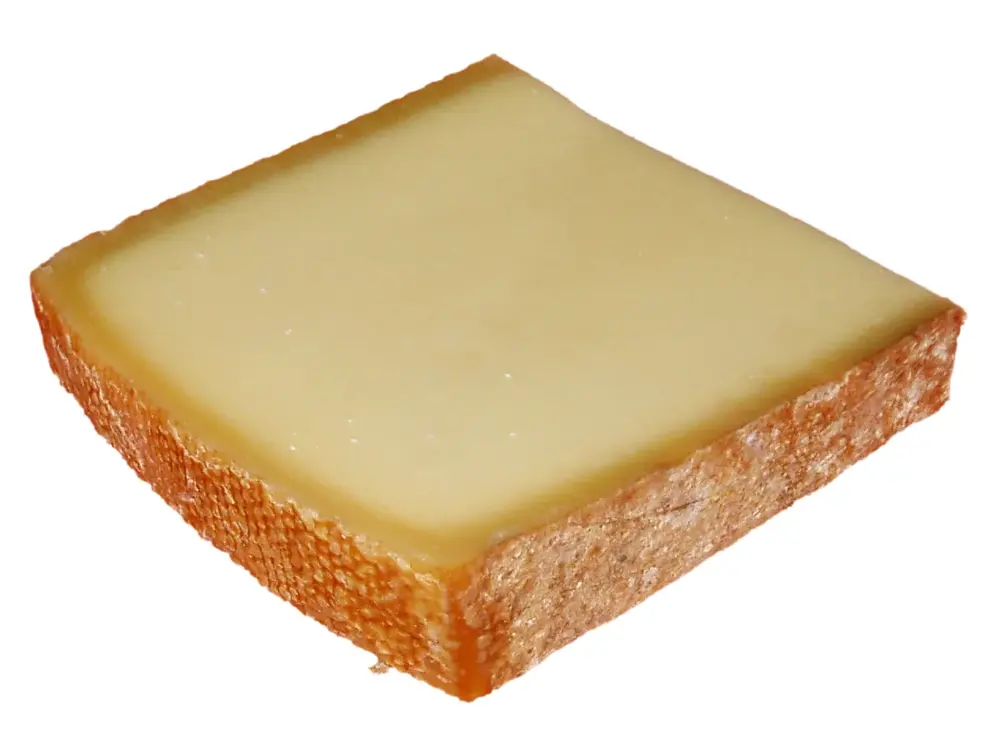
--Xocolatl 15:27, 26 August 2007 (UTC), Public domain, via Wikimedia Commons
Key Facts
| Country of Origin | Germany |
| Specific Origin | Landkreise Lindau (Bodensee), Oberallgäu, Ostallgäu, Unterallgäu, Ravensburg, Bodenseekreis; Städte Kaufbeuren, Kempten, Memmingen |
| Protection | PDO (1997) |
| Milk Treatment | Raw |
| Fat Content | 45 - 49% |
| Rind | Yes |
| Texture | Not Specified |
| Forms | Rindengereifter Rundlaib (rind-ripened round loaf) |
| Age | 4 months |
What is Allgäuer Bergkäse Cheese?
Allgäuer Bergkäse is a German mountain cheese made from raw milk. Its name has been a protected designation of origin since 1997, and it may only be produced in the districts of Bodenseekreis, Lindau (Bodensee), Oberallgäu, Ostallgäu, Ravensburg and Unterallgäu, plus the independent cities of Kaufbeuren, Kempten (Allgäu) and Memmingen. In 2019, 13 operations across the Allgäu used the name.
Like Allgäuer Emmentaler, it usually comes from small producers: the alpine dairy huts of the Allgäu Alps or small valley dairies. The milk is always raw, and the cheese ripens for at least four months. Since 2010 an EU Commission project has promoted its marketing and sales under the label Weltgenusserbe Bayern.
The loaf is smaller and lower than an Emmentaler, with smaller holes and a darker paste. Weights run from 15 to 50 kg. Fat content sits between 45 and 50 percent in dry matter. The flavor is described as mild-aromatic and nutty, and it gets stronger with age.
Most of it is eaten on bread. It also goes into salads, baked casseroles and Kässpätzle.
How Does Allgäuer Bergkäse Cheese Compare?
The most relevant cheeses to compare Allgäuer Bergkäse against.


