Cambozola
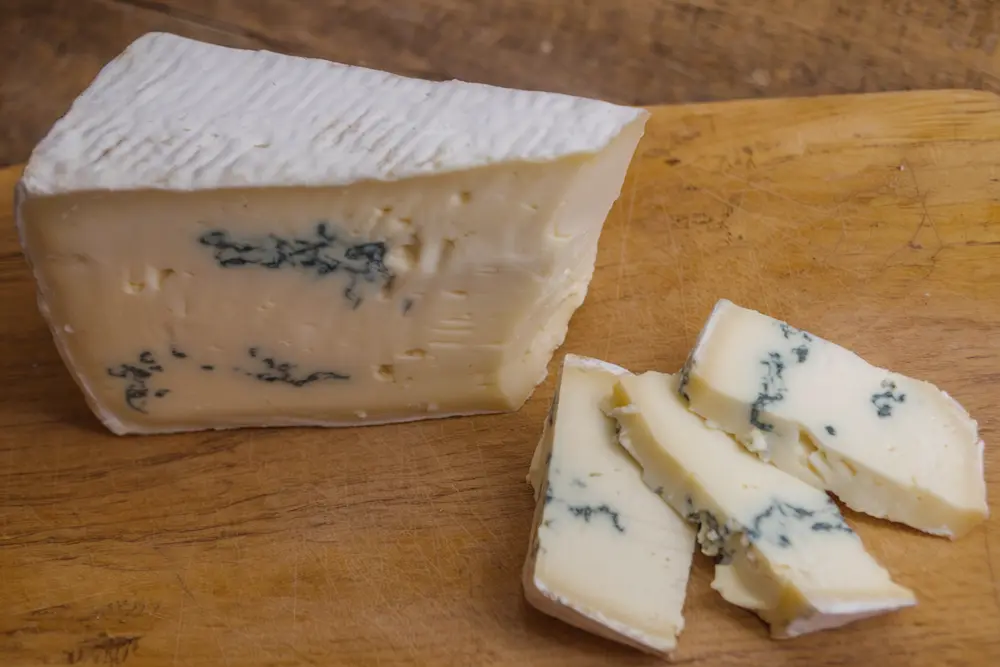
Cambozola is a German soft-ripened blue cheese made by Hofmeister-Champignon and sold since 1983. Extra cream gives it a triple creme consistency, and it is much milder than Gorgonzola piccante.
Key Facts
| Country of Origin | Germany |
| Specific Origin | Germany |
| Milk Type | Cow's milk |
| Milk Treatment | Pasteurized |
| Rind | Bloomy |
| Texture | Soft, soft-ripened |
| Flavor | Mild, creamy, subdued blue |
| Colors | Blue-veined paste, white rind |
| Alternative Spellings | Cambazola |
| Also Known As | blue brie |
What is Cambozola Cheese?
Cambozola is a German soft-ripened blue cheese developed and patented by Hofmeister-Champignon, which produces it industrially for the global market. It has been sold since 1983 and is still made by Champignon. The name echoes the protected designation Gorgonzola. In English-speaking countries it is often marketed as blue brie.
It is made from pasteurized cow's milk with extra cream added, which gives it a consistency closer to a triple creme. Two moulds do the work: Penicillium camemberti for the rind and Penicillium roqueforti, the same blue mould used in Gorgonzola, Roquefort and Stilton. By composition it runs roughly 58.3 percent cow's milk, 20.8 percent cream, 10.4 percent salt, 7.8 percent bacterial cultures and 2.7 percent mould cultures.
The outside carries an edible bloomy rind like that of Camembert. Inside, the paste is blue-veined and smooth. The flavor is creamy and specialty in character, with a subdued blue note that stays considerably milder than Gorgonzola piccante.
A typical serving is 30 g and carries 120 to 130 calories, 12 grams of fat (8 of them saturated), 4 grams of protein, about 200 mg of sodium and 1 to 3 grams of carbohydrate. It is often lactose free.
How Does Cambozola Cheese Compare?
The most relevant cheeses to compare Cambozola against.


