Appenzeller Cheese vs Dorset Blue Cheese
Appenzeller Cheese
Dorset Blue Cheese
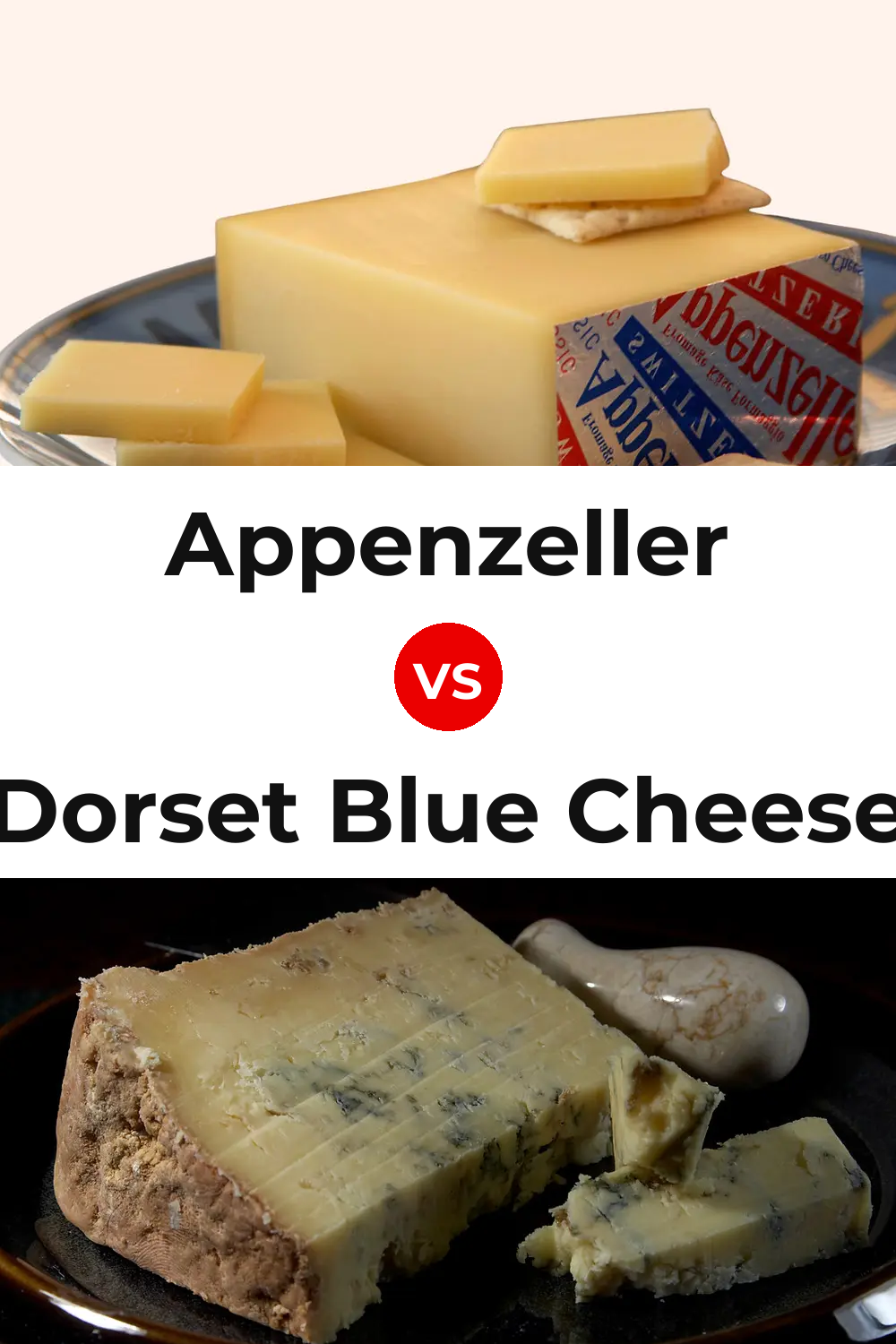
Appenzeller Cheese is a firm cow-milk cheese from Switzerland, while Dorset Blue Cheese is firm and made from cow milk.
What Is Appenzeller Cheese?
Appenzeller cheese hails from northeastern Switzerland and is famed for its rich, nutty flavor that intensifies with age. Treated with a secret blend of herbal brine, this cheese develops a smooth yet firm texture. Aged for a minimum of three months, Appenzeller is a key ingredient in fondue and pairs well with robust wines and ales.
What Is Dorset Blue Cheese?
Dorset Blue Cheese is a lightly pressed, firm-textured blue cheese made in Dorset, England. It has a uniform color with irregular blue-green veining and a rough, dry brown mold coating. The cheese has a piquant, peppery flavor that ranges from mild to strong. Made using skimmed cow’s milk, the tradition of using lower-fat milk dates back to the 18th and 19th centuries when it was made from residual milk left after cream skimming. The production process includes hand-breaking curds, salting, light pressing, and maturing for 12 to 20 weeks. The cheese is pierced after four weeks to develop its signature blue veining. Dorset’s lush pasture, supported by Oxford clay soil, contributes to the unique flavor of the milk used in the cheese.
What's the Difference Between Appenzeller Cheese and Dorset Blue Cheese?
- Milk treatment: Appenzeller Cheese (Raw), Dorset Blue Cheese (Skimmed)
- Rind: Appenzeller Cheese (Washed rind), Dorset Blue Cheese (Rough, dry brown mold coating)
- Taste: Appenzeller Cheese (Piquant, tangy), Dorset Blue Cheese (Piquant, peppery, mild to strong)
Side-by-Side Comparison
| Appenzeller Cheese | Dorset Blue Cheese | |
|---|---|---|
| Country of Origin | Switzerland | — |
| Specific Origin | Appenzell Region | Dorset, England |
| Milk Type | Cow's milk | Cow |
| Milk Treatment | Raw | Skimmed |
| Texture | Firm | Firm |
| Rind | Washed rind | Rough, dry brown mold coating |
| Aging | — | 12 to 20 weeks |
| Taste | Piquant, tangy | Piquant, peppery, mild to strong |
Taste Comparison: Does Appenzeller Cheese Taste Like Dorset Blue Cheese?
Appenzeller Cheese reads as piquant, tangy, while Dorset Blue Cheese brings piquant, peppery, mild to strong character.
Can You Substitute Appenzeller Cheese for Dorset Blue Cheese?
In most recipes, Appenzeller Cheese and Dorset Blue Cheese can be swapped with reasonable results. Both are cow-milk cheeses, so the base character carries over. Flavor-wise, Appenzeller Cheese reads as piquant, tangy while Dorset Blue Cheese brings piquant, peppery, mild to strong notes.
Which Is Better, Appenzeller Cheese or Dorset Blue Cheese?
There's no single winner. It depends on your recipe and the profile you want. Flavor-wise, Appenzeller Cheese suits recipes that want piquant, tangy notes, while Dorset Blue Cheese fits dishes calling for piquant, peppery, mild to strong.
Which is your favorite?
One click, anonymous. See what others chose.
Frequently Asked Questions
Is Appenzeller Cheese the same as Dorset Blue Cheese?
No, they're distinct cheeses.
Is Appenzeller Cheese similar to Dorset Blue Cheese?
Yes, they share close profiles. Same milk base and similar texture make them workable alternatives in many recipes.
Can I substitute Appenzeller Cheese for Dorset Blue Cheese?
Yes, quite easily. The milk base and texture are close enough that most recipes won't notice the swap.
Does Appenzeller Cheese taste like Dorset Blue Cheese?
Appenzeller Cheese reads as piquant, tangy, while Dorset Blue Cheese is piquant, peppery, mild to strong.
What is Appenzeller Cheese made of?
Appenzeller Cheese is made from cow milk (raw). It originates in Switzerland.
What is Dorset Blue Cheese made of?
Dorset Blue Cheese is made from cow milk (skimmed). It's typically aged 12 to 20 weeks.
Which should I choose, Appenzeller Cheese or Dorset Blue Cheese?
It depends on the dish. The table above is the fastest way to decide based on your recipe.