
Caciocavallo Cheese vs Gruyère Cheese
Caciocavallo Cheese
Gruyère Cheese
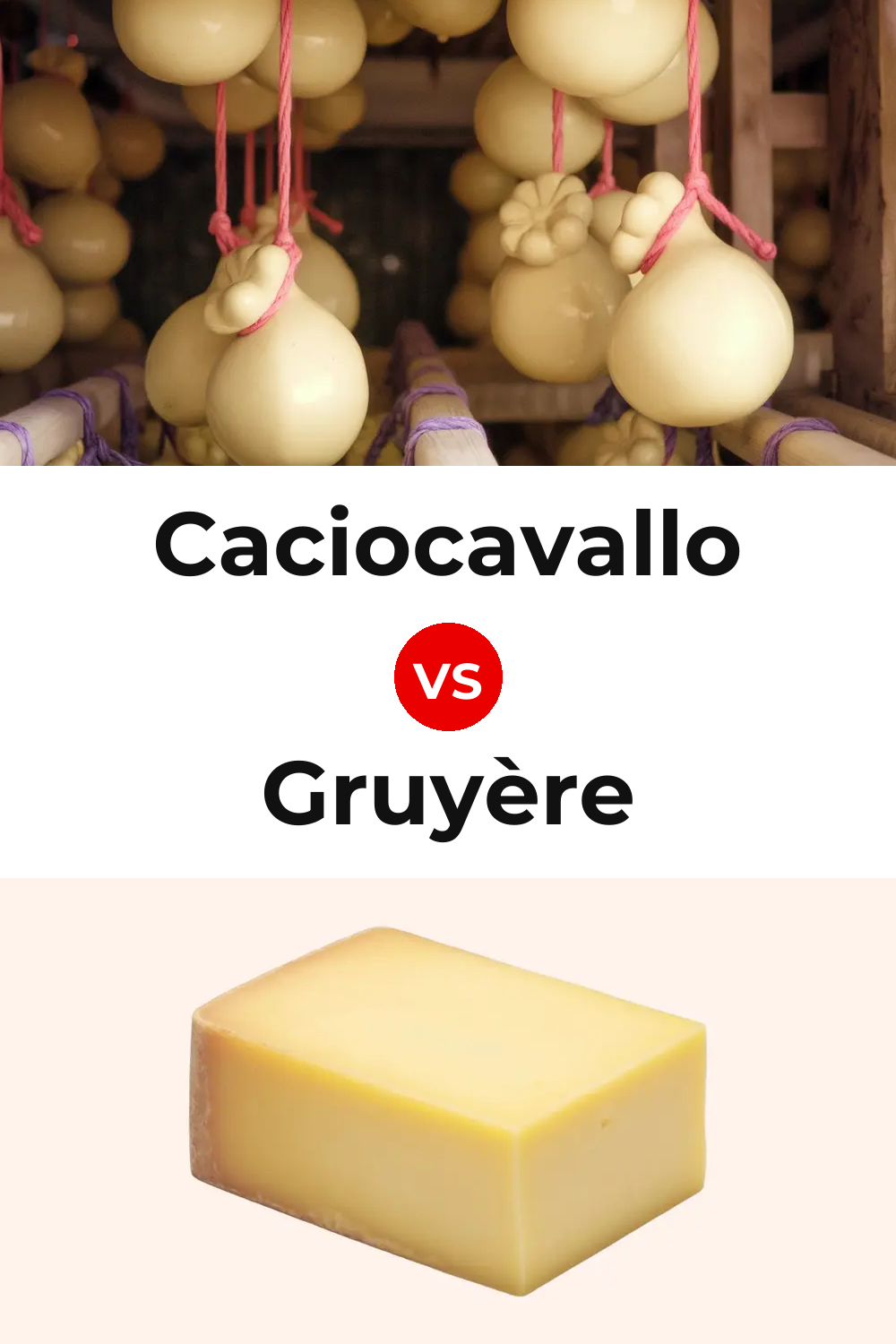
Caciocavallo Cheese is a firm to semihard, chewy to crumbly cow-milk cheese from Italy, while Gruyère Cheese is dense, moister and made from cow milk, originating in Switzerland.
What Is Caciocavallo Cheese?
Caciocavallo is a stretched-curd cheese from southern Italy, made with sheep's or cow's milk and shaped like a teardrop. It has a hard edible rind and tastes much like the aged provolone of the same region.
What Is Gruyère Cheese?
Gruyère is a hard Swiss cheese from the cantons of Fribourg, Vaud, Neuchâtel, Jura and Bern. It is sweet with a salty edge, creamy and nutty when young, sharper and earthier with age, and it melts well enough to carry fondue and French onion soup.
What's the Difference Between Caciocavallo Cheese and Gruyère Cheese?
- Origin: Caciocavallo Cheese (Italy), Gruyère Cheese (Switzerland)
- Texture: Caciocavallo Cheese (Firm to semihard, chewy to crumbly), Gruyère Cheese (Dense, moister)
- Rind: Caciocavallo Cheese (Smooth, thickens with age), Gruyère Cheese (Natural, orangy)
- Aging: Caciocavallo Cheese (2 to 12 months, up to 5 years), Gruyère Cheese (5 months to 24+)
- Taste: Caciocavallo Cheese (Slightly sweet to sharp, piquant, complex), Gruyère Cheese (Nutty, complex)
Side-by-Side Comparison
| Caciocavallo Cheese | Gruyère Cheese | |
|---|---|---|
| Country of Origin | Italy | Switzerland |
| Specific Origin | Apennine Mountain Range | Switzerland, Specifically The Gruyère Region. |
| Milk Type | Cow's milk | Cow’s milk |
| Milk Treatment | — | Raw |
| Texture | Firm to semihard, chewy to crumbly | Dense, moister |
| Rind | Smooth, thickens with age | Natural, orangy |
| Aging | 2 to 12 months, up to 5 years | 5 months to 24+ |
| Taste | Slightly sweet to sharp, piquant, complex | Nutty, complex |
Taste Comparison: Does Caciocavallo Cheese Taste Like Gruyère Cheese?
Caciocavallo Cheese reads as slightly sweet to sharp, piquant, complex, while Gruyère Cheese brings nutty, complex character. On the nose, Caciocavallo Cheese offers earthy, contrasted with Gruyère Cheese's earthy, fruity, possibly barnyardy. More specifically, Caciocavallo Cheese shows sweet when young; intensifies and becomes piquant and complex with age, dotted with small crystals, while Gruyère Cheese leans toward moister and denser than sbrinz, typically with few to no holes. variants include gruyère d'alpage. flavors range from fruity, earthy, to barnyardy, especially in gruyère d'alpage. aged versions (15-24 months for gruyère, up to 40 months for comté) are drier, more granular, with finer and more complex aromas. younger cheese is more meltable and used in cooking, while older cheese has more intense flavors.. Aging plays into this as well. Caciocavallo Cheese at 2 to 12 months, up to 5 years develops a different profile than Gruyère Cheese at 5 months to 24+.
Can You Substitute Caciocavallo Cheese for Gruyère Cheese?
In most recipes, Caciocavallo Cheese and Gruyère Cheese can be swapped with reasonable results. Both are cow-milk cheeses, so the base character carries over. Expect firm to semihard, chewy to crumbly bite and body where the recipe calls for dense, moister. Flavor-wise, Caciocavallo Cheese reads as slightly sweet to sharp, piquant, complex while Gruyère Cheese brings nutty, complex notes.
Which Is Better, Caciocavallo Cheese or Gruyère Cheese?
There's no single winner. It depends on your recipe and the profile you want. If you want a firm to semihard, chewy to crumbly cheese, go with Caciocavallo Cheese. For a dense, moister profile, Gruyère Cheese is the better fit. Flavor-wise, Caciocavallo Cheese suits recipes that want slightly sweet to sharp, piquant, complex notes, while Gruyère Cheese fits dishes calling for nutty, complex.
Which is your favorite?
One click, anonymous. See what others chose.
Frequently Asked Questions
Is Caciocavallo Cheese the same as Gruyère Cheese?
No, they're distinct cheeses. Caciocavallo Cheese originates in Italy, while Gruyère Cheese comes from Switzerland. Aging also differs: Caciocavallo Cheese is typically aged 2 to 12 months, up to 5 years, Gruyère Cheese 5 months to 24+.
Is Caciocavallo Cheese similar to Gruyère Cheese?
Somewhat. They share a cow-milk base but diverge in texture and flavor.
Can I substitute Caciocavallo Cheese for Gruyère Cheese?
You can, but expect a shift in bite and mouthfeel.
Does Caciocavallo Cheese taste like Gruyère Cheese?
Caciocavallo Cheese reads as slightly sweet to sharp, piquant, complex, while Gruyère Cheese is nutty, complex. Aromas also diverge. Caciocavallo Cheese leans earthy, and Gruyère Cheese is closer to earthy, fruity, possibly barnyardy.
What is Caciocavallo Cheese made of?
Caciocavallo Cheese is made from cow milk. It's typically aged 2 to 12 months, up to 5 years. It originates in Italy.
What is Gruyère Cheese made of?
Gruyère Cheese is made from cow milk (raw), using animal rennet. It's typically aged 5 months to 24+. It originates in Switzerland.
Which should I choose, Caciocavallo Cheese or Gruyère Cheese?
It depends on the dish. The texture difference is the biggest practical tell. Caciocavallo Cheese is firm to semihard, chewy to crumbly, while Gruyère Cheese is dense, moister.