Colby Cheese vs Trnič Cheese
Colby Cheese
Trnič Cheese
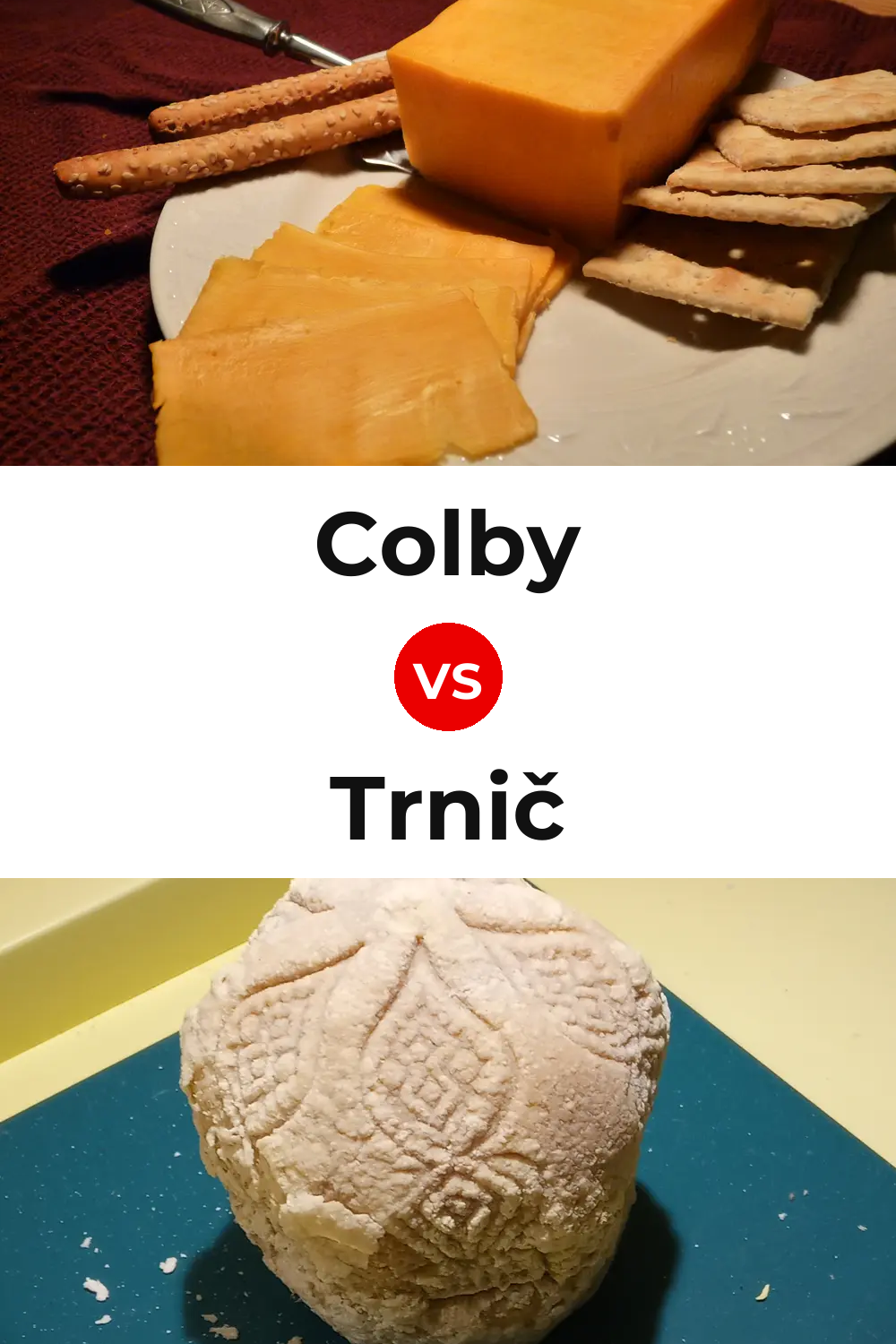
Colby Cheese is a slightly curdy, softer cow-milk cheese from United States, while Trnič Cheese is hard and made from cow milk, originating in Slovenia.
What Is Colby Cheese?
Colby is a semihard orange cheese made from cow's milk, first developed in 1885 in Colby, Wisconsin. Skipping the cheddaring step and washing the curd with cold water leaves it moister, softer and milder than cheddar.
What Is Trnič Cheese?
Trnič is a hard Slovenian cheese made for centuries by shepherds on Velika planina, Mala planina and Gojška planina from sour skimmed milk curd, cream and salt. Shaped by hand and stamped with carved wooden patterns, it was given in pairs as a token of love.
What's the Difference Between Colby Cheese and Trnič Cheese?
- Origin: Colby Cheese (United States), Trnič Cheese (Slovenia)
- Milk treatment: Colby Cheese (Pasteurized), Trnič Cheese (Sour, heated)
- Texture: Colby Cheese (Slightly curdy, softer), Trnič Cheese (Hard)
- Aging: Colby Cheese (< 3 months), Trnič Cheese (4 weeks)
- Taste: Colby Cheese (Mild, milky), Trnič Cheese (Salty and slightly acidic)
Side-by-Side Comparison
| Colby Cheese | Trnič Cheese | |
|---|---|---|
| Country of Origin | United States | Slovenia |
| Specific Origin | Colby, Wisconsin | Velika Planina |
| Milk Type | Cow's milk | Cow’s milk |
| Milk Treatment | Pasteurized | Sour, heated |
| Texture | Slightly curdy, softer | Hard |
| Rind | None | — |
| Aging | < 3 months | 4 weeks |
| Taste | Mild, milky | Salty and slightly acidic |
Taste Comparison: Does Colby Cheese Taste Like Trnič Cheese?
Colby Cheese reads as mild, milky, while Trnič Cheese brings salty and slightly acidic character. More specifically, Colby Cheese shows less acidic than cheddar, mild flavor, consumed young, softer mouthfeel, orange color, while Trnič Cheese leans toward can be slightly piquant; hard, dry, and crumbly. Aging plays into this as well. Colby Cheese at < 3 months develops a different profile than Trnič Cheese at 4 weeks.
Can You Substitute Colby Cheese for Trnič Cheese?
In most recipes, Colby Cheese and Trnič Cheese can be swapped with reasonable results. Both are cow-milk cheeses, so the base character carries over. Expect slightly curdy, softer bite and body where the recipe calls for hard. Flavor-wise, Colby Cheese reads as mild, milky while Trnič Cheese brings salty and slightly acidic notes.
Which Is Better, Colby Cheese or Trnič Cheese?
There's no single winner. It depends on your recipe and the profile you want. If you want a slightly curdy, softer cheese, go with Colby Cheese. For a hard profile, Trnič Cheese is the better fit. Flavor-wise, Colby Cheese suits recipes that want mild, milky notes, while Trnič Cheese fits dishes calling for salty and slightly acidic.
Which is your favorite?
One click, anonymous. See what others chose.
Frequently Asked Questions
Is Colby Cheese the same as Trnič Cheese?
No, they're distinct cheeses. Colby Cheese originates in United States, while Trnič Cheese comes from Slovenia. Aging also differs: Colby Cheese is typically aged < 3 months, Trnič Cheese 4 weeks.
Is Colby Cheese similar to Trnič Cheese?
Somewhat. They share a cow-milk base but diverge in texture and flavor.
Can I substitute Colby Cheese for Trnič Cheese?
You can, but expect a shift in bite and mouthfeel.
Does Colby Cheese taste like Trnič Cheese?
Colby Cheese reads as mild, milky, while Trnič Cheese is salty and slightly acidic.
What is Colby Cheese made of?
Colby Cheese is made from cow milk (pasteurized). It's typically aged < 3 months. It originates in United States.
What is Trnič Cheese made of?
Trnič Cheese is made from cow milk (sour, heated). It's typically aged 4 weeks. It originates in Slovenia.
Which should I choose, Colby Cheese or Trnič Cheese?
It depends on the dish. The texture difference is the biggest practical tell. Colby Cheese is slightly curdy, softer, while Trnič Cheese is hard.