
Herve Cheese vs Tête de Moine Cheese
Herve Cheese
Tête de Moine Cheese
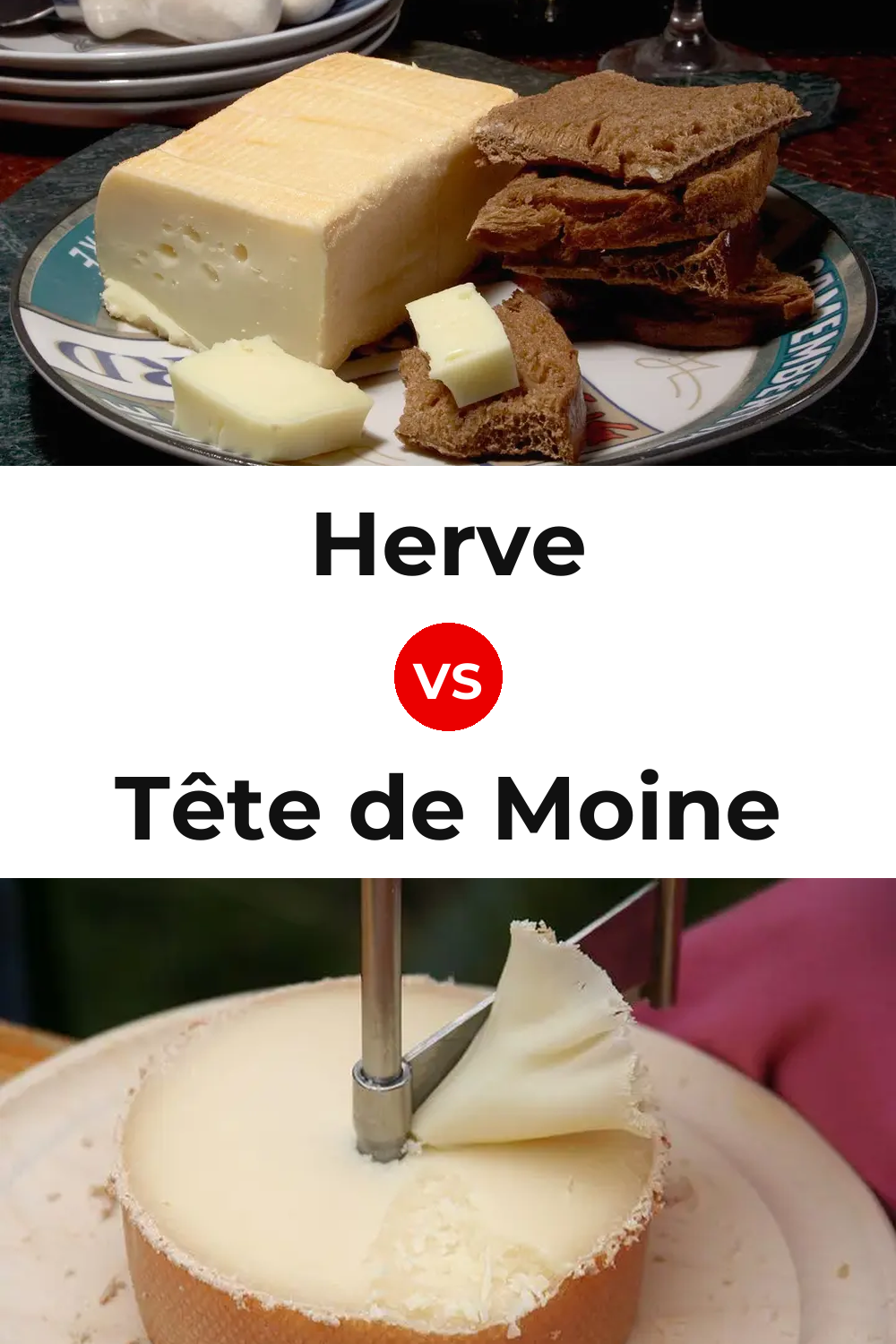
Herve Cheese is a soft cow-milk cheese from Belgium, while Tête de Moine Cheese is semi-hard and made from cow milk, originating in Switzerland.
Buy Herve Cheese
Buy Tête de Moine Cheese
What Is Herve Cheese?
Herve is a Belgian washed rind cheese made from raw cow's milk in the countryside near Liège, where it has been produced since the 15th century. It is known for the powerful smell that Brevibacterium linens gives it after about three months of ripening.
What Is Tête de Moine Cheese?
Tête de Moine AOP is a semi-hard cow's milk cheese from the Swiss Jura, first made by the canons of Bellelay abbey in the 12th century. It is not sliced but pared into thin rosettes with a Girolle.
What's the Difference Between Herve Cheese and Tête de Moine Cheese?
- Origin: Herve Cheese (Belgium), Tête de Moine Cheese (Switzerland)
- Milk treatment: Herve Cheese (raw), Tête de Moine Cheese (unpasteurized)
- Texture: Herve Cheese (Soft), Tête de Moine Cheese (Semi-hard)
- Rind: Herve Cheese (washed), Tête de Moine Cheese (firm, grainy natural crust)
- Aging: Herve Cheese (about 3 months), Tête de Moine Cheese (at least 2½ months)
- Taste: Herve Cheese (smooth, spicy), Tête de Moine Cheese (nutty)
Side-by-Side Comparison
| Herve Cheese | Tête de Moine Cheese | |
|---|---|---|
| Country of Origin | Belgium | Switzerland |
| Specific Origin | Herve, Province Of Liège, Belgium | Bernese Jura And Canton Of Jura, Switzerland |
| Milk Type | Cow's milk | Cow's milk |
| Milk Treatment | Raw | Unpasteurized |
| Texture | Soft | Semi-hard |
| Rind | Washed | Firm, grainy natural crust |
| Aging | About 3 months | At least 2½ months |
| Taste | Smooth, spicy | Nutty |
Taste Comparison: Does Herve Cheese Taste Like Tête de Moine Cheese?
Herve Cheese reads as smooth, spicy, while Tête de Moine Cheese brings nutty character. On the nose, Herve Cheese offers pungent, strong, contrasted with Tête de Moine Cheese's rich. Aging plays into this as well. Herve Cheese at about 3 months develops a different profile than Tête de Moine Cheese at at least 2½ months.
Can You Substitute Herve Cheese for Tête de Moine Cheese?
In most recipes, Herve Cheese and Tête de Moine Cheese can be swapped with reasonable results. Both are cow-milk cheeses, so the base character carries over. Expect soft bite and body where the recipe calls for semi-hard. Flavor-wise, Herve Cheese reads as smooth, spicy while Tête de Moine Cheese brings nutty notes.
Which Is Better, Herve Cheese or Tête de Moine Cheese?
There's no single winner. It depends on your recipe and the profile you want. If you want a soft cheese, go with Herve Cheese. For a semi-hard profile, Tête de Moine Cheese is the better fit. Flavor-wise, Herve Cheese suits recipes that want smooth, spicy notes, while Tête de Moine Cheese fits dishes calling for nutty.
Which is your favorite?
One click, anonymous. See what others chose.
Frequently Asked Questions
Is Herve Cheese the same as Tête de Moine Cheese?
No, they're distinct cheeses. Herve Cheese originates in Belgium, while Tête de Moine Cheese comes from Switzerland. Aging also differs: Herve Cheese is typically aged about 3 months, Tête de Moine Cheese at least 2½ months.
Is Herve Cheese similar to Tête de Moine Cheese?
Somewhat. They share a cow-milk base but diverge in texture and flavor.
Can I substitute Herve Cheese for Tête de Moine Cheese?
You can, but expect a shift in bite and mouthfeel.
Does Herve Cheese taste like Tête de Moine Cheese?
Herve Cheese reads as smooth, spicy, while Tête de Moine Cheese is nutty. Aromas also diverge. Herve Cheese leans pungent, strong, and Tête de Moine Cheese is closer to rich.
What is Herve Cheese made of?
Herve Cheese is made from cow milk (raw). It's typically aged about 3 months. It originates in Belgium.
What is Tête de Moine Cheese made of?
Tête de Moine Cheese is made from cow milk (unpasteurized). It's typically aged at least 2½ months. It originates in Switzerland.
Which should I choose, Herve Cheese or Tête de Moine Cheese?
It depends on the dish. The texture difference is the biggest practical tell. Herve Cheese is soft, while Tête de Moine Cheese is semi-hard.