Kalathaki Limnou Cheese vs Queijo São Jorge
Kalathaki Limnou Cheese
Queijo São Jorge
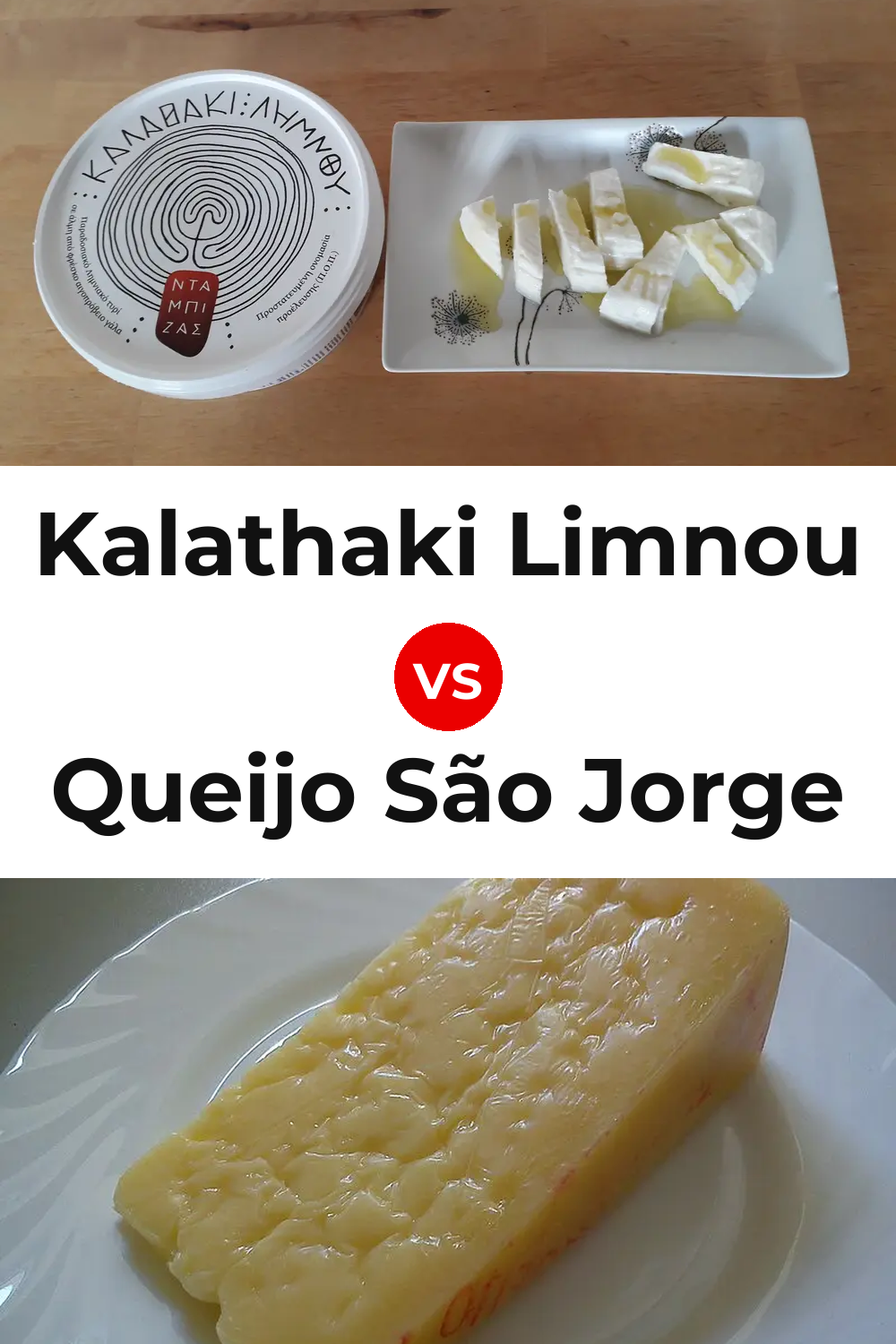
Kalathaki Limnou Cheese is a soft goat or sheep-milk cheese from Greece, while Queijo São Jorge is firm consistency, hard or semi-hard and made from cow milk, originating in Portugal.
What Is Kalathaki Limnou Cheese?
Kalathaki Limnou is a PDO-certified cheese from the island of Lemnos in Greece. It is made primarily from sheep's milk, or a mixture of sheep's and goat's milk. This cheese has a soft texture and a mild, slightly salty flavor. Its unique basket shape (kalathaki means "small basket") gives it a distinctive appearance, and it is often enjoyed in salads or as a table cheese.
What Is Queijo São Jorge?
Queijo São Jorge is a traditional cheese from the Island of São Jorge in the Azores, Portugal. It is made from raw, whole cow's milk and is known for its firm consistency and yellow color. The cheese can be hard or semi-hard and features small, irregular holes throughout. The production of Queijo São Jorge dates back to at least the 19th century. The cheese's unique characteristics are attributed to the natural pastures and specific climatic conditions of the island. It is a certified Denomination of Origin product, ensuring its authenticity and regional significance. The cheese is inspected by the Confraria do Queijo São Jorge.
What's the Difference Between Kalathaki Limnou Cheese and Queijo São Jorge?
- Origin: Kalathaki Limnou Cheese (Greece), Queijo São Jorge (Portugal)
- Milk type: Kalathaki Limnou Cheese (Pasteurized sheep's milk, Goat’s milk (up to 30%)), Queijo São Jorge (Cow)
- Milk treatment: Kalathaki Limnou Cheese (Pasteurized), Queijo São Jorge (Raw)
- Texture: Kalathaki Limnou Cheese (Soft), Queijo São Jorge (Firm consistency, hard or semi-hard)
- Rind: Kalathaki Limnou Cheese (No external rind), Queijo São Jorge (Natural)
- Aging: Kalathaki Limnou Cheese (Three weeks at 14-18°C, then at least two months at <6°C), Queijo São Jorge (Three to nine months)
- Taste: Kalathaki Limnou Cheese (Pleasant, slightly acidic), Queijo São Jorge (Peppery, grassy)
Side-by-Side Comparison
| Kalathaki Limnou Cheese | Queijo São Jorge | |
|---|---|---|
| Country of Origin | Greece | Portugal |
| Specific Origin | Lemnos, Aegean Sea | Island Of São Jorge, Azores |
| Milk Type | Pasteurized sheep's milk, Goat’s milk (up to 30%) | Cow |
| Milk Treatment | Pasteurized | Raw |
| Texture | Soft | Firm consistency, hard or semi-hard |
| Rind | No external rind | Natural |
| Aging | Three weeks at 14-18°C, then at least two months at <6°C | Three to nine months |
| Taste | Pleasant, slightly acidic | Peppery, grassy |
Taste Comparison: Does Kalathaki Limnou Cheese Taste Like Queijo São Jorge?
Kalathaki Limnou Cheese reads as pleasant, slightly acidic, while Queijo São Jorge brings peppery, grassy character. On the nose, Kalathaki Limnou Cheese offers rich, contrasted with Queijo São Jorge's peppery, grassy. More specifically, Kalathaki Limnou Cheese shows soft, white cheese with a slightly acidic taste and rich aroma. carries marks of the baskets used., while Queijo São Jorge leans toward mild, sour aftertaste; musty, earthy, barnyardy (aged). Aging plays into this as well. Kalathaki Limnou Cheese at three weeks at 14-18°c, then at least two months at <6°c develops a different profile than Queijo São Jorge at three to nine months.
Can You Substitute Kalathaki Limnou Cheese for Queijo São Jorge?
Kalathaki Limnou Cheese can stand in for Queijo São Jorge in many dishes, but the switch will shift the overall character of the recipe. Expect soft bite and body where the recipe calls for firm consistency, hard or semi-hard. Flavor-wise, Kalathaki Limnou Cheese reads as pleasant, slightly acidic while Queijo São Jorge brings peppery, grassy notes.
Which Is Better, Kalathaki Limnou Cheese or Queijo São Jorge?
There's no single winner. It depends on your recipe and the profile you want. If you want a soft cheese, go with Kalathaki Limnou Cheese. For a firm consistency, hard or semi-hard profile, Queijo São Jorge is the better fit. Flavor-wise, Kalathaki Limnou Cheese suits recipes that want pleasant, slightly acidic notes, while Queijo São Jorge fits dishes calling for peppery, grassy.
Which is your favorite?
One click, anonymous. See what others chose.
Frequently Asked Questions
Is Kalathaki Limnou Cheese the same as Queijo São Jorge?
No, they're distinct cheeses. Kalathaki Limnou Cheese originates in Greece, while Queijo São Jorge comes from Portugal. Kalathaki Limnou Cheese is made from goat or sheep milk; Queijo São Jorge uses cow. Aging also differs: Kalathaki Limnou Cheese is typically aged three weeks at 14-18°c, then at least two months at <6°c, Queijo São Jorge three to nine months.
Is Kalathaki Limnou Cheese similar to Queijo São Jorge?
Not closely. They use different milk bases and have distinct profiles.
Can I substitute Kalathaki Limnou Cheese for Queijo São Jorge?
You can, but expect a shift in richness and milk character.
Does Kalathaki Limnou Cheese taste like Queijo São Jorge?
Kalathaki Limnou Cheese reads as pleasant, slightly acidic, while Queijo São Jorge is peppery, grassy. Aromas also diverge. Kalathaki Limnou Cheese leans rich, and Queijo São Jorge is closer to peppery, grassy.
What is Kalathaki Limnou Cheese made of?
Kalathaki Limnou Cheese is made from goat or sheep milk (pasteurized), using animal rennet. It's typically aged three weeks at 14-18°c, then at least two months at <6°c. It originates in Greece.
What is Queijo São Jorge made of?
Queijo São Jorge is made from cow milk (raw), using animal rennet. It's typically aged three to nine months. It originates in Portugal.
Which should I choose, Kalathaki Limnou Cheese or Queijo São Jorge?
It depends on the dish. The texture difference is the biggest practical tell. Kalathaki Limnou Cheese is soft, while Queijo São Jorge is firm consistency, hard or semi-hard.