Kashkaval Cheese vs Maasdam Cheese
Kashkaval Cheese
Maasdam Cheese
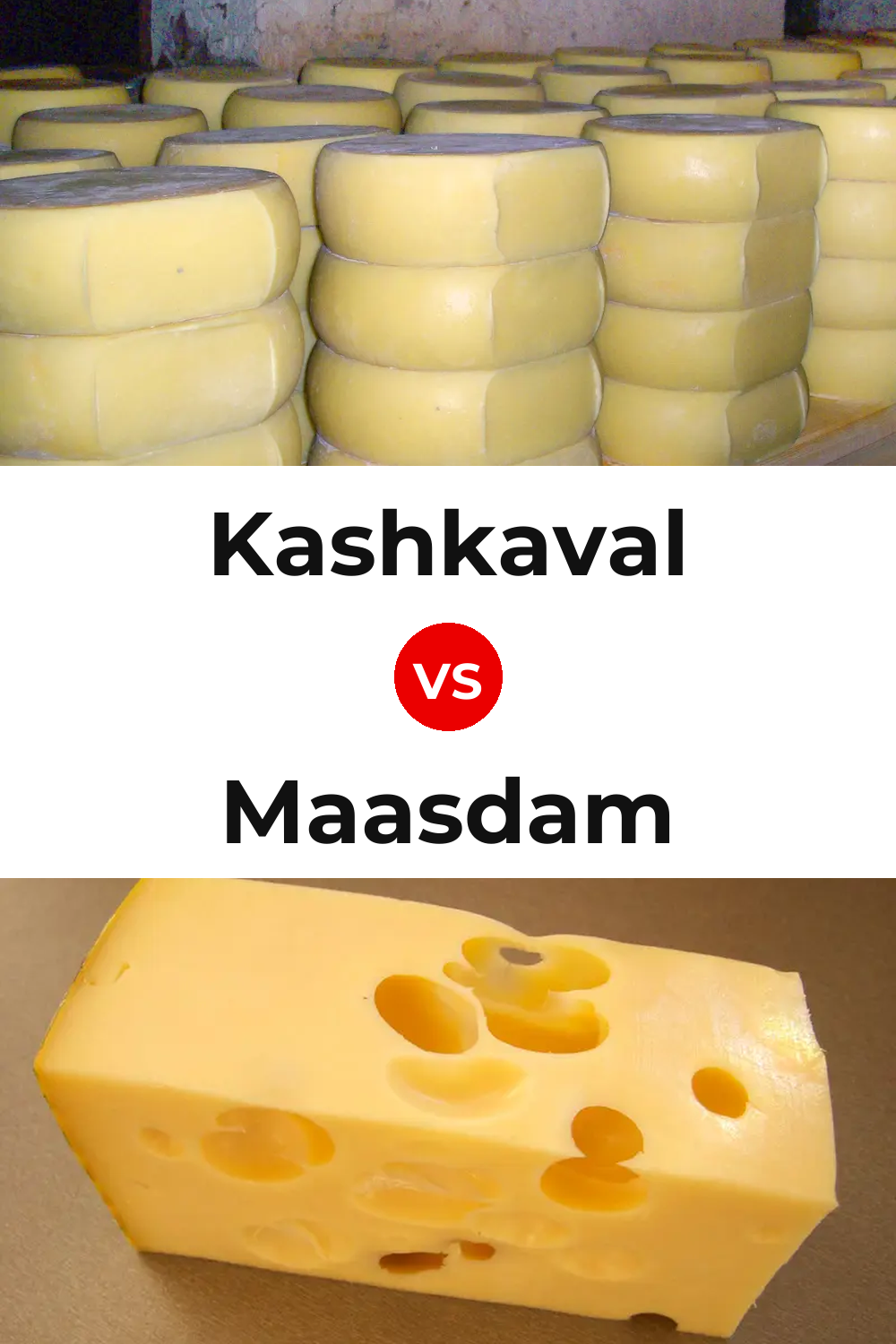
Kashkaval Cheese is a medium-hard to hard, elastic cow or sheep-milk cheese from Bulgaria, Romania, Serbia and Turkey, while Maasdam Cheese is semi-hard and made from cow milk, originating in Netherlands.
What Is Kashkaval Cheese?
Kashkaval is a yellow cheese from the Balkans made with cow, sheep or goat milk, or a mixture of them. It melts and fries well, so it shows up on pizza, inside breakfast pastries and as a filling in Levantine baking.
What Is Maasdam Cheese?
Maasdam is a Dutch cheese made in the style of Swiss Emmental, aged at least four weeks and marked by holes that form as it ripens. It tastes nutty and sweet, and it is softer than Emmental because it holds more moisture.
What's the Difference Between Kashkaval Cheese and Maasdam Cheese?
- Origin: Kashkaval Cheese (Bulgaria, Romania, Serbia and Turkey), Maasdam Cheese (Netherlands)
- Milk type: Kashkaval Cheese (cow's or sheep's milk), Maasdam Cheese (cow's milk)
- Milk treatment: Kashkaval Cheese (Varied), Maasdam Cheese (pasteurized)
- Texture: Kashkaval Cheese (Medium-hard to hard, elastic), Maasdam Cheese (semi-hard)
- Rind: Kashkaval Cheese (Varied), Maasdam Cheese (smooth, sometimes waxed)
- Aging: Kashkaval Cheese (Minimum of two months), Maasdam Cheese (at least 4 weeks)
- Taste: Kashkaval Cheese (Piquant), Maasdam Cheese (nutty, sweet)
Side-by-Side Comparison
| Kashkaval Cheese | Maasdam Cheese | |
|---|---|---|
| Country of Origin | Bulgaria, Romania, Serbia And Turkey | Netherlands |
| Specific Origin | The Balkans, Turkey And The Levant | The Netherlands |
| Milk Type | Cow's or sheep's milk | Cow's milk |
| Milk Treatment | Varied | Pasteurized |
| Texture | Medium-hard to hard, elastic | Semi-hard |
| Rind | Varied | Smooth, sometimes waxed |
| Aging | Minimum of two months | At least 4 weeks |
| Taste | Piquant | Nutty, sweet |
Taste Comparison: Does Kashkaval Cheese Taste Like Maasdam Cheese?
Kashkaval Cheese reads as piquant, while Maasdam Cheese brings nutty, sweet character. Aging plays into this as well. Kashkaval Cheese at minimum of two months develops a different profile than Maasdam Cheese at at least 4 weeks.
Can You Substitute Kashkaval Cheese for Maasdam Cheese?
Kashkaval Cheese can stand in for Maasdam Cheese in many dishes, but the switch will shift the overall character of the recipe. Expect medium-hard to hard, elastic bite and body where the recipe calls for semi-hard. Flavor-wise, Kashkaval Cheese reads as piquant while Maasdam Cheese brings nutty, sweet notes.
Which Is Better, Kashkaval Cheese or Maasdam Cheese?
There's no single winner. It depends on your recipe and the profile you want. If you want a medium-hard to hard, elastic cheese, go with Kashkaval Cheese. For a semi-hard profile, Maasdam Cheese is the better fit. Flavor-wise, Kashkaval Cheese suits recipes that want piquant notes, while Maasdam Cheese fits dishes calling for nutty, sweet.
Which is your favorite?
One click, anonymous. See what others chose.
Frequently Asked Questions
Is Kashkaval Cheese the same as Maasdam Cheese?
No, they're distinct cheeses. Kashkaval Cheese originates in Bulgaria, Romania, Serbia and Turkey, while Maasdam Cheese comes from Netherlands. Kashkaval Cheese is made from cow or sheep milk; Maasdam Cheese uses cow. Aging also differs: Kashkaval Cheese is typically aged minimum of two months, Maasdam Cheese at least 4 weeks.
Is Kashkaval Cheese similar to Maasdam Cheese?
Not closely. They use different milk bases and have distinct profiles.
Can I substitute Kashkaval Cheese for Maasdam Cheese?
You can, but expect a shift in richness and milk character.
Does Kashkaval Cheese taste like Maasdam Cheese?
Kashkaval Cheese reads as piquant, while Maasdam Cheese is nutty, sweet.
What is Kashkaval Cheese made of?
Kashkaval Cheese is made from cow or sheep milk (varied), using varied rennet. It's typically aged minimum of two months. It originates in Bulgaria, Romania, Serbia and Turkey.
What is Maasdam Cheese made of?
Maasdam Cheese is made from cow milk (pasteurized). It's typically aged at least 4 weeks. It originates in Netherlands.
Which should I choose, Kashkaval Cheese or Maasdam Cheese?
It depends on the dish. The texture difference is the biggest practical tell. Kashkaval Cheese is medium-hard to hard, elastic, while Maasdam Cheese is semi-hard.