
Neufchâtel Cheese vs Port Salut Cheese
Neufchâtel Cheese
Port Salut Cheese
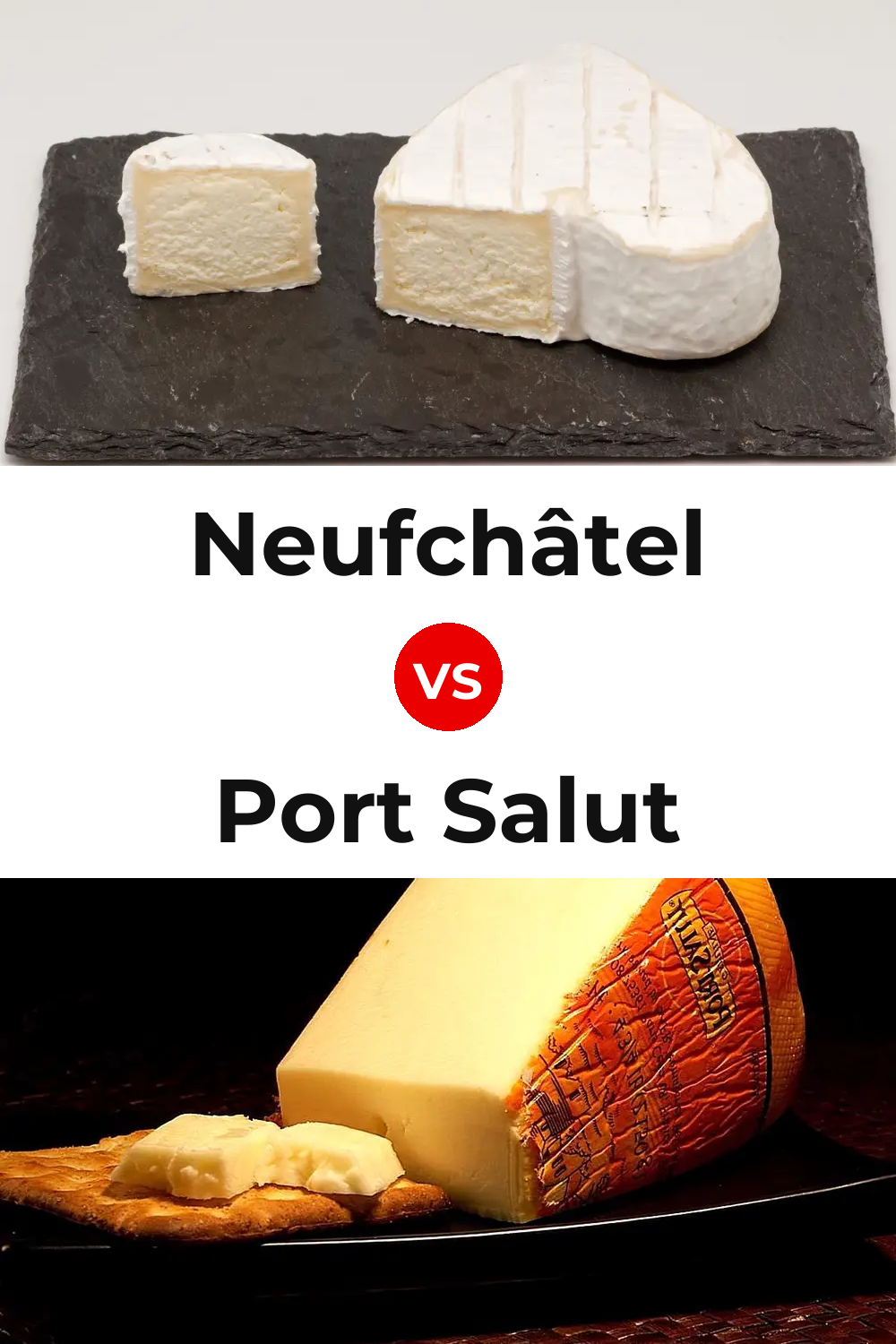
Neufchâtel Cheese is a soft cow-milk cheese from France, while Port Salut Cheese is semi-soft and made from cow milk, originating in France.
Buy Neufchâtel Cheese
Buy Port Salut Cheese
What Is Neufchâtel Cheese?
Neufchâtel is a soft, slightly crumbly, mold-ripened cheese from the Neufchâtel-en-Bray region of Normandy and one of the oldest cheeses in France. It looks like Camembert but tastes saltier and sharper, has a grainy texture, and is usually sold in heart shapes.
What Is Port Salut Cheese?
Port Salut is a semi-soft pasteurized cow's milk cheese from Pays de la Loire, France. Trappist monks developed it in the 19th century, and it is known for its orange rind, its smooth sliceable paste and its mild flavor.
What's the Difference Between Neufchâtel Cheese and Port Salut Cheese?
- Milk treatment: Neufchâtel Cheese (Raw), Port Salut Cheese (pasteurized)
- Texture: Neufchâtel Cheese (Soft), Port Salut Cheese (Semi-soft)
- Rind: Neufchâtel Cheese (Bloomy), Port Salut Cheese (washed)
- Taste: Neufchâtel Cheese (creamy), Port Salut Cheese (acidic, mellow)
Side-by-Side Comparison
| Neufchâtel Cheese | Port Salut Cheese | |
|---|---|---|
| Country of Origin | France | France |
| Specific Origin | Neufchâtel-En-Bray, Normandy | Pays De La Loire, France |
| Milk Type | Cow's milk | Cow's milk |
| Milk Treatment | Raw | Pasteurized |
| Texture | Soft | Semi-soft |
| Rind | Bloomy | Washed |
| Aging | Young: 12-15 days, Mature: 1-3 months | — |
| Taste | Creamy | Acidic, mellow |
Taste Comparison: Does Neufchâtel Cheese Taste Like Port Salut Cheese?
Neufchâtel Cheese reads as creamy, while Port Salut Cheese brings acidic, mellow character. More specifically, Neufchâtel Cheese shows young: accompanies cider/white wine. mature: creamier, pairs with powerful wines., while Port Salut Cheese leans toward mild, with the strength of a mature cheese showing in the smell rather than the taste.
Can You Substitute Neufchâtel Cheese for Port Salut Cheese?
In most recipes, Neufchâtel Cheese and Port Salut Cheese can be swapped with reasonable results. Both are cow-milk cheeses, so the base character carries over. Expect soft bite and body where the recipe calls for semi-soft. Flavor-wise, Neufchâtel Cheese reads as creamy while Port Salut Cheese brings acidic, mellow notes.
Which Is Better, Neufchâtel Cheese or Port Salut Cheese?
There's no single winner. It depends on your recipe and the profile you want. If you want a soft cheese, go with Neufchâtel Cheese. For a semi-soft profile, Port Salut Cheese is the better fit. Flavor-wise, Neufchâtel Cheese suits recipes that want creamy notes, while Port Salut Cheese fits dishes calling for acidic, mellow.
Which is your favorite?
One click, anonymous. See what others chose.
Frequently Asked Questions
Is Neufchâtel Cheese the same as Port Salut Cheese?
No, they're distinct cheeses.
Is Neufchâtel Cheese similar to Port Salut Cheese?
Somewhat. They share a cow-milk base but diverge in texture and flavor.
Can I substitute Neufchâtel Cheese for Port Salut Cheese?
You can, but expect a shift in bite and mouthfeel.
Does Neufchâtel Cheese taste like Port Salut Cheese?
Neufchâtel Cheese reads as creamy, while Port Salut Cheese is acidic, mellow.
What is Neufchâtel Cheese made of?
Neufchâtel Cheese is made from cow milk (raw). It's typically aged young: 12-15 days, mature: 1-3 months. It originates in France.
What is Port Salut Cheese made of?
Port Salut Cheese is made from cow milk (pasteurized). It originates in France.
Which should I choose, Neufchâtel Cheese or Port Salut Cheese?
It depends on the dish. The texture difference is the biggest practical tell. Neufchâtel Cheese is soft, while Port Salut Cheese is semi-soft.