
Neufchâtel Cheese vs Ricotta Cheese
Neufchâtel Cheese
Ricotta Cheese
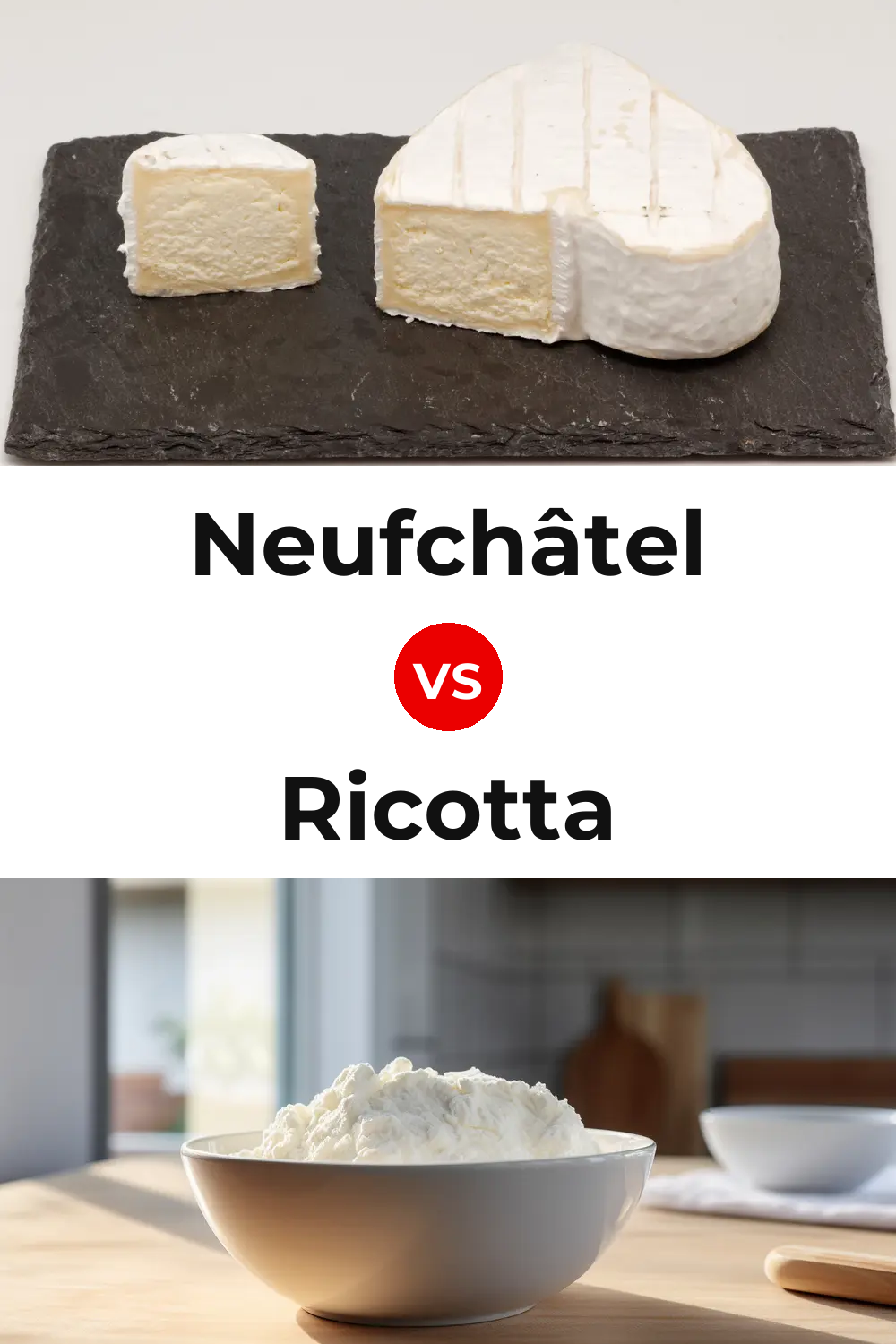
Neufchâtel Cheese is a soft cow-milk cheese from France, while Ricotta Cheese is soft and made from cow, goat, sheep, or buffalo milk, originating in Italy.
Buy Neufchâtel Cheese
Buy Ricotta Cheese
What Is Neufchâtel Cheese?
Neufchâtel is a soft, slightly crumbly, mold-ripened cheese from the Neufchâtel-en-Bray region of Normandy and one of the oldest cheeses in France. It looks like Camembert but tastes saltier and sharper, has a grainy texture, and is usually sold in heart shapes.
What Is Ricotta Cheese?
Ricotta is an Italian whey cheese made from the leftover whey of sheep, cow, goat, or water buffalo milk cheesemaking. The fresh curds are creamy white and slightly sweet, and they turn up in cannoli and cheesecakes as readily as in lasagne and ravioli.
What's the Difference Between Neufchâtel Cheese and Ricotta Cheese?
- Origin: Neufchâtel Cheese (France), Ricotta Cheese (Italy)
- Milk type: Neufchâtel Cheese (Cow's milk), Ricotta Cheese (Cow's, sheep's, goat's or water buffalo's milk)
- Milk treatment: Neufchâtel Cheese (Raw), Ricotta Cheese (Whey)
- Rind: Neufchâtel Cheese (Bloomy), Ricotta Cheese (None)
- Aging: Neufchâtel Cheese (Young: 12-15 days, Mature: 1-3 months), Ricotta Cheese (Fresh)
- Taste: Neufchâtel Cheese (creamy), Ricotta Cheese (Sweet, slightly creamy)
Side-by-Side Comparison
| Neufchâtel Cheese | Ricotta Cheese | |
|---|---|---|
| Country of Origin | France | Italy |
| Specific Origin | Neufchâtel-En-Bray, Normandy | Italy |
| Milk Type | Cow's milk | Cow's, sheep's, goat's or water buffalo's milk |
| Milk Treatment | Raw | Whey |
| Texture | Soft | Soft |
| Rind | Bloomy | None |
| Aging | Young: 12-15 days, Mature: 1-3 months | Fresh |
| Taste | Creamy | Sweet, slightly creamy |
Taste Comparison: Does Neufchâtel Cheese Taste Like Ricotta Cheese?
Neufchâtel Cheese reads as creamy, while Ricotta Cheese brings sweet, slightly creamy character. More specifically, Neufchâtel Cheese shows young: accompanies cider/white wine. mature: creamier, pairs with powerful wines., while Ricotta Cheese leans toward depending on milk source. Aging plays into this as well. Neufchâtel Cheese at young: 12-15 days, mature: 1-3 months develops a different profile than Ricotta Cheese at fresh.
Can You Substitute Neufchâtel Cheese for Ricotta Cheese?
Neufchâtel Cheese can stand in for Ricotta Cheese in many dishes, but the switch will shift the overall character of the recipe. Flavor-wise, Neufchâtel Cheese reads as creamy while Ricotta Cheese brings sweet, slightly creamy notes.
Which Is Better, Neufchâtel Cheese or Ricotta Cheese?
There's no single winner. It depends on your recipe and the profile you want. Flavor-wise, Neufchâtel Cheese suits recipes that want creamy notes, while Ricotta Cheese fits dishes calling for sweet, slightly creamy.
Which is your favorite?
One click, anonymous. See what others chose.
Frequently Asked Questions
Is Neufchâtel Cheese the same as Ricotta Cheese?
No, they're distinct cheeses. Neufchâtel Cheese originates in France, while Ricotta Cheese comes from Italy. Neufchâtel Cheese is made from cow milk; Ricotta Cheese uses cow, goat, sheep, or buffalo. Aging also differs: Neufchâtel Cheese is typically aged young: 12-15 days, mature: 1-3 months, Ricotta Cheese fresh.
Is Neufchâtel Cheese similar to Ricotta Cheese?
Not closely. They use different milk bases and have distinct profiles.
Can I substitute Neufchâtel Cheese for Ricotta Cheese?
You can, but expect a shift in richness and milk character.
Does Neufchâtel Cheese taste like Ricotta Cheese?
Neufchâtel Cheese reads as creamy, while Ricotta Cheese is sweet, slightly creamy.
What is Neufchâtel Cheese made of?
Neufchâtel Cheese is made from cow milk (raw). It's typically aged young: 12-15 days, mature: 1-3 months. It originates in France.
What is Ricotta Cheese made of?
Ricotta Cheese is made from cow, goat, sheep, or buffalo milk (whey), using animal or microbial rennet. It's typically aged fresh. It originates in Italy.
Which should I choose, Neufchâtel Cheese or Ricotta Cheese?
It depends on the dish. The table above is the fastest way to decide based on your recipe.