Oka
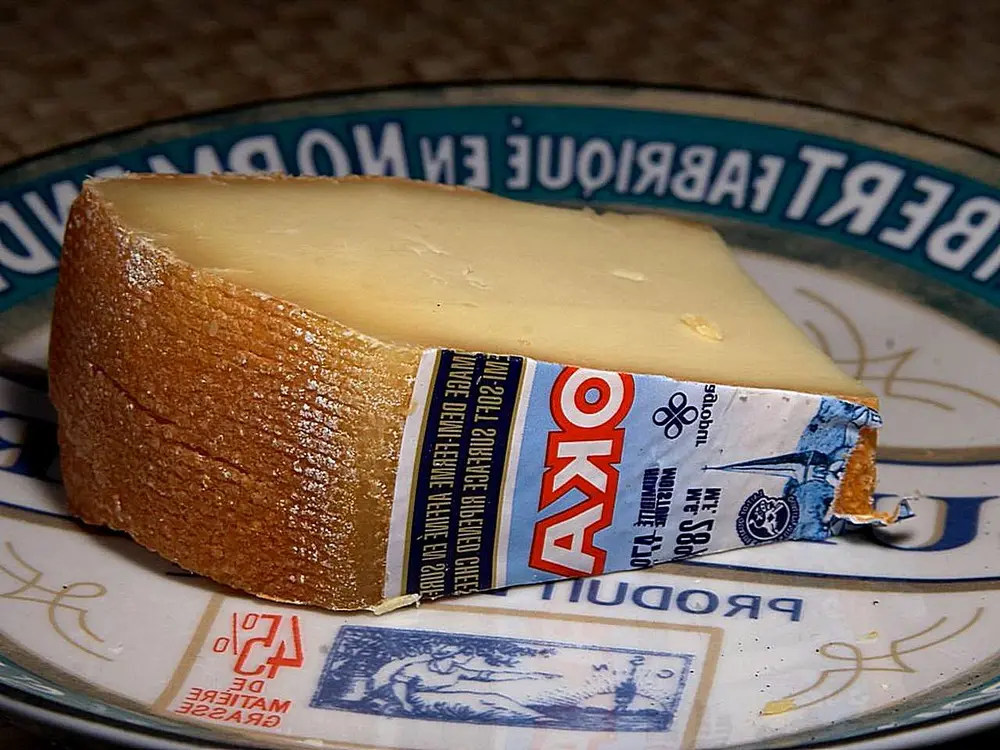
Oka is a semi-soft washed rind cow's milk cheese from Oka, Quebec, made by Trappist monks starting in 1893 and now by Agropur. It is known for its copper-orange rind, pungent smell, and soft creamy taste with nutty, fruity notes.
Key Facts
| Country of Origin | Canada |
| Specific Origin | The Laurentides, Oka |
| Milk Type | Cow |
| Milk Treatment | Pasteurized |
| Rind | Washed |
| Texture | Semi-Soft |
| Flavor | Soft and creamy, nutty and fruity |
| Aroma | Pungent |
| Colors | Copper-orange rind |
What is Oka Cheese?
Oka comes from the town of Oka, Quebec, and carries its name. Brother Alphonse Juin arrived at the Notre-Dame du Lac Monastery in 1893 with a recipe for Port-du-Salut, a cheese the Trappists had brought over from Brittany. He adjusted it, and Oka was the result. The monks sold the recipe to the Agropur cooperative in 1981, and the cheese is still made in Oka today.
The monastery shaped more than one cheese. Through an affiliation with the Université de Montréal, the Cistercian Abbey of Notre-Dame du Lac set up an agricultural school within a few years, and the community became known for its Port-Salut. Trappists at Our Lady of the Prairies Monastery, 8 miles southeast of Holland, Manitoba, made Oka as well. A small Manitoba producer who learned the method from Brother Albéric stopped making the unpasteurized Trappist version in 2019 because provincial regulations cost too much.
The cheese is made from cow's milk and finished with a hand-washed rind that turns copper-orange. It smells pungent. The flavour is soft and creamy, and people often call it nutty and fruity. Unlike colby and cheddar, Oka skips the cheddaring step.
Four types are sold. Regular uses pasteurized milk and ripens four weeks, with Ashed, Mushrooms and Truffle, and a limited edition Maple among its variants. Classic is pasteurized and ripens two months. Providence is far creamier and softer than either. Light matches Regular but with less fat, always pasteurized. A Swiss style Oka comes in regular and smoked, and there is an Oka-branded Raclette.
How Does Oka Cheese Compare?
The most relevant cheeses to compare Oka against.


