Asiago-Style Cheese vs Roquefort Cheese
Asiago-Style Cheese
Roquefort Cheese
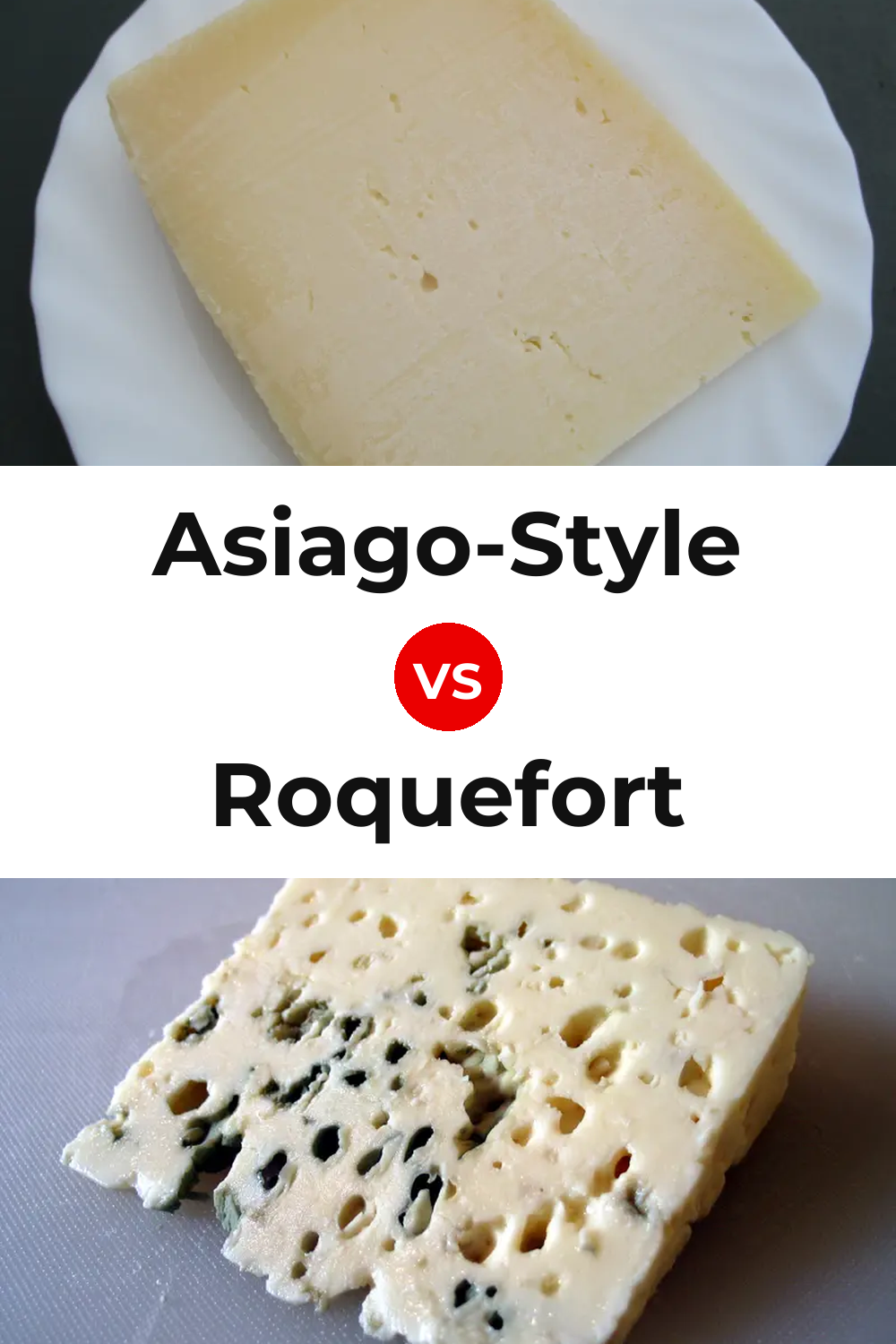
Asiago-Style Cheese is a cheese, while Roquefort Cheese is moist, very creamy and made from sheep milk, originating in France.
What Is Asiago-Style Cheese?
Asiago-Style cheese is a semi-hard cheese that draws inspiration from the traditional Italian Asiago. It is made from cow's milk and offers a flavor profile that ranges from mild and creamy when young to sharper and more crumbly as it ages. The texture can vary from smooth and pliable in its fresher form to a firmer, granular consistency in its older state. This cheese is often used for grating over pasta, salads, or soups when aged, or sliced for sandwiches and crackers when young. Its mild nutty flavor with hints of cream makes it a popular choice for both cooking and snacking. Asiago-Style cheese pairs well with fruits, nuts, and a variety of wines.
What Is Roquefort Cheese?
Roquefort is a blue cheese made from raw Lacaune sheep's milk in southern France. Only cheese ripened in the natural Combalou caves of Roquefort-sur-Soulzon may carry the name. It is tangy and creamy, with no rind and a sharp bite from the blue veins.
What's the Difference Between Asiago-Style Cheese and Roquefort Cheese?
Side-by-Side Comparison
| Asiago-Style Cheese | Roquefort Cheese | |
|---|---|---|
| Country of Origin | — | France |
| Specific Origin | — | Roquefort-Sur-Soulzon, South Of France |
| Milk Type | — | Sheep's milk |
| Milk Treatment | — | Unpasteurized |
| Texture | — | Moist, very creamy |
| Rind | — | None |
| Aging | — | Minimum of 90 days, average of 5 months |
| Taste | — | Mild to strong |
Taste Comparison: Does Asiago-Style Cheese Taste Like Roquefort Cheese?
Their flavor profiles are distinct.
Can You Substitute Asiago-Style Cheese for Roquefort Cheese?
Asiago-Style Cheese can stand in for Roquefort Cheese in many dishes, but the switch will shift the overall character of the recipe.
Which Is Better, Asiago-Style Cheese or Roquefort Cheese?
There's no single winner. It depends on your recipe and the profile you want.
Which is your favorite?
One click, anonymous. See what others chose.
Frequently Asked Questions
Is Asiago-Style Cheese the same as Roquefort Cheese?
No, they're distinct cheeses.
Is Asiago-Style Cheese similar to Roquefort Cheese?
Not closely. They use different milk bases and have distinct profiles.
Can I substitute Asiago-Style Cheese for Roquefort Cheese?
You can, but expect a shift in flavor and finish.
Does Asiago-Style Cheese taste like Roquefort Cheese?
They have distinct flavor profiles. The taste row in the table above is the best direct comparison.
What is Asiago-Style Cheese made of?
Asiago-Style Cheese is made from milk.
What is Roquefort Cheese made of?
Roquefort Cheese is made from sheep milk (unpasteurized), using animal rennet. It's typically aged minimum of 90 days, average of 5 months. It originates in France.
Which should I choose, Asiago-Style Cheese or Roquefort Cheese?
It depends on the dish. The table above is the fastest way to decide based on your recipe.